


If a hurricane floods your car in Florida, the key question is simple: Do you have comprehensive coverage on your auto policy? If you do, your Florida hurricane car insurance may cover the loss. If you do not, the repair or replacement usually comes out of your pocket. For broader protection options in the state, you can also review Florida auto insurance.
What happens if a hurricane floods your car in Florida?
A flooded car is usually handled through your auto insurer, not your homeowners policy. The Florida Department of Financial Services says hurricane wind, flood, and auto losses are often separate coverages or separate policies, so the claim for the vehicle goes to your car insurance company.
When flood damage is covered and when it is not
Flood damage to your own vehicle is generally covered only under the optional comprehensive part of an auto policy. The Insurance Information Institute makes that distinction clearly. That means storm surge, rising water, or standing water after a hurricane may be covered if you bought comprehensive before the storm.
If you only carry the minimum required coverages, your own flooded car is typically not covered. Also, buying flood insurance for a house at the last minute does not solve the car problem. Florida DFS notes that NFIP flood insurance usually has a 30-day waiting period, and that policy does not cover most vehicles anyway.
Why liability, PIP, and property damage liability do not pay for your own flooded car
These coverages serve different jobs. Liability and property damage liability are designed for damage you cause to others. PIP is for injury-related expenses under its terms. None of them are meant to repair your own car after floodwater gets into the engine, electronics, seats, and wiring.
How insurers decide whether the vehicle is repairable or a total loss
After inspection, the insurer compares the repair cost with the vehicle’s value. Under Florida disaster guidance, if the flooded vehicle reaches 80% of its value, it is treated as a total loss. Then salvage-title steps apply before it can be sold or transferred, and the title must be branded as flood-damaged, according to Florida Highway Safety and Motor Vehicles.
Which car insurance coverage actually pays for hurricane flood damage?
For a flooded car in Florida, the coverage that usually pays is comprehensive auto insurance. Basic liability, PIP, and property damage liability are not designed to repair your own vehicle after hurricane water gets inside.
That is the core of Florida hurricane car insurance: if you bought comprehensive before the storm, your policy may respond to the vehicle loss. If you did not, the bill is typically yours.
| Scenario | Typical coverage response |
|---|---|
| Your car is flooded by hurricane storm surge or standing water | Auto comprehensive coverage, if purchased |
| Your home has flood water damage | Separate flood insurance policy, not standard homeowners insurance |
| Your home has hurricane wind damage | Homeowners/wind policy subject to terms and deductible |
| Your car claim after the storm | File with your auto insurance company |
| Flooded vehicle is totaled in Florida | Salvage-title process and flood brand required before sale/transfer |
How comprehensive coverage works for flood, storm surge, and falling objects
Comprehensive coverage generally applies when hurricane damage is not caused by a collision. That includes floodwater, storm surge, and objects that fall onto the car during the storm, according to the Insurance Information Institute.
If your vehicle takes on water in a parking lot, driveway, or street after a hurricane, this is usually the part of the auto policy that matters.
What deductibles apply to a flooded vehicle claim
A flooded car claim under comprehensive is usually subject to your comprehensive deductible. The amount depends on the policy you selected before the storm, and it is separate from the deductibles that may apply to home wind or flood claims.
Florida’s post-storm guidance says these coverages are often separate, so drivers should not assume a homeowners or flood deductible controls the auto claim.
What is usually excluded, even with comprehensive coverage
Comprehensive does not turn every hurricane problem into a covered auto claim. If you never added that coverage, your own flooded car is usually excluded. And home flood insurance is a different product; Florida DFS notes that auto, flood, and hurricane losses are often handled under separate policies.
If the vehicle is damaged badly enough to be declared a total loss, Florida requires flood branding and salvage-title steps before any sale or transfer. That rule applies once the loss reaches 80% of the vehicle’s value, based on Florida Highway Safety and Motor Vehicles disaster guidance.
How much can a flooded car cost without comprehensive coverage?
Without comprehensive coverage, a flooded car can become a full out-of-pocket loss. That is the hard side of Florida hurricane car insurance: if rising water ruins your vehicle and you skipped this optional coverage, there may be no auto payout for repairs or replacement.
That risk gets bigger fast when floodwater reaches the engine, wiring, seats, and electronics. And if the damage is severe enough, Florida treats the vehicle as a total loss once repairs reach 80% of the car’s value, according to Florida Highway Safety and Motor Vehicles.
Repair costs vs. total-loss payout scenarios
If you have comprehensive coverage, the insurer may pay based on the policy terms after inspection. If you do not, you are left choosing between paying the repair shop yourself or replacing the car yourself. There is no homeowner’s shortcut for that vehicle loss.
When the car is totaled, the insurance issue and the title issue are split apart. Florida requires flood branding and salvage-title steps before the sale or transfer of a totaled flooded vehicle.
Comparing the cost of comprehensive coverage with the financial risk of paying out of pocket
The math is usually less about a small monthly premium and more about avoiding a sudden, much larger bill. A driver may be trying to protect a car worth several thousand dollars, while the uncovered loss after a hurricane can hit all at once.
That is why Florida hurricane car insurance decisions should be made before the forecast gets serious, not after streets are already flooding.
Why timing matters before Florida hurricane season starts
Waiting until a storm is close is risky. Florida DFS says new NFIP flood policies for homes usually have a 30-day waiting period, and that coverage does not protect most vehicles anyway.
For your car, the practical move is much simpler: make sure comprehensive is already on the auto policy before hurricane season and before the first named storm threatens your area.
What should you do immediately after your car floods during a Florida hurricane?
Act fast, but do not rush the wrong step. Right after flooding, the safest move is to protect yourself, document the damage, and open the claim with your auto insurer as soon as you can. That is how most Florida hurricane car insurance claims start moving.
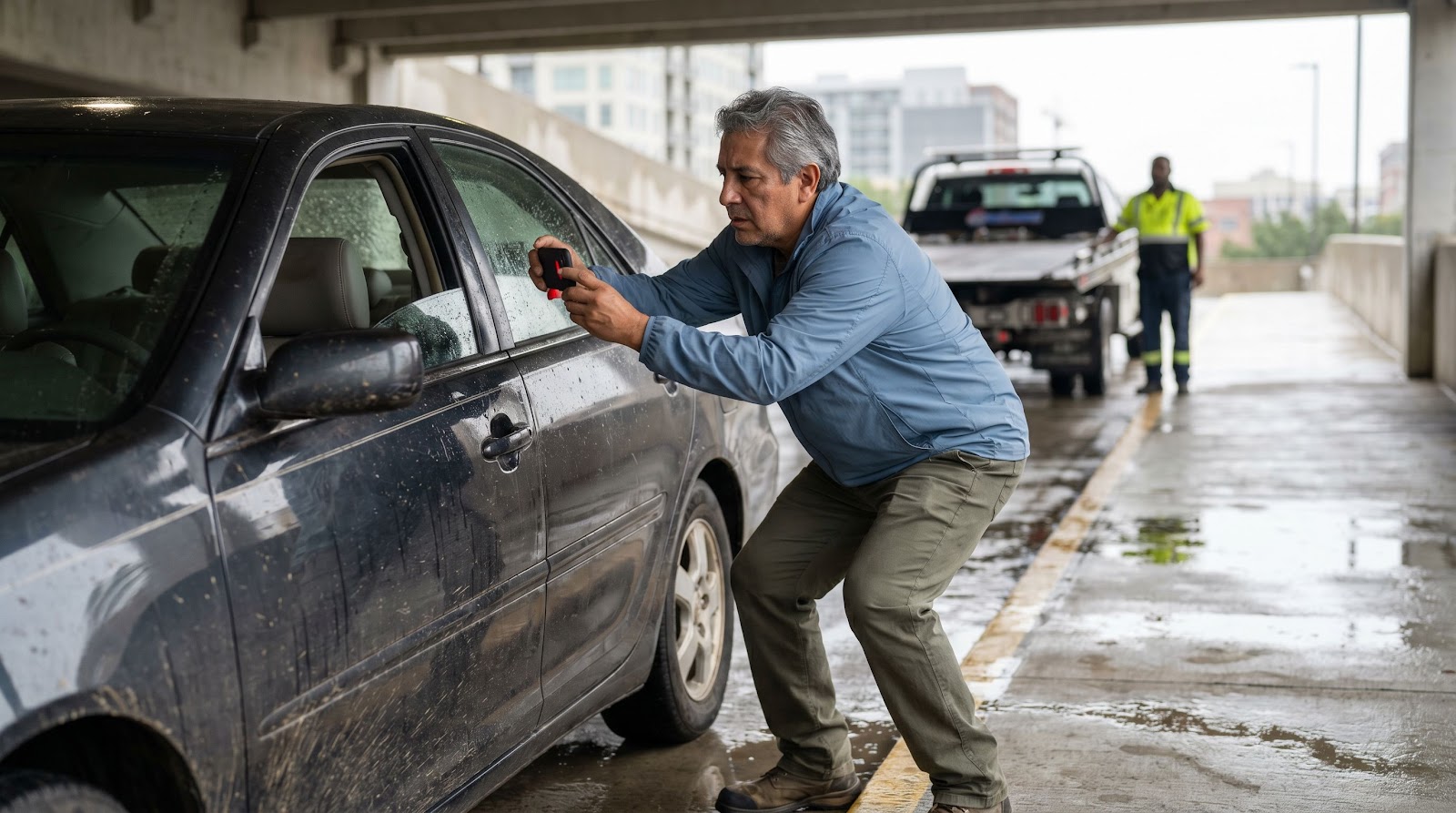
Safety first: when not to start or move the vehicle
If the car sat in standing water, do not start it just to see whether it still runs. Water can get into the engine, electrical system, and interior, and that can make the damage worse.
Do not drive or push the vehicle through floodwater either. If the area is still unsafe, wait until authorities say it is clear to return. Once you can reach the car safely, leave it where it is until your insurer gives instructions, unless it must be moved for emergency reasons.
What photos, videos, and documents to collect for the claim
Take clear photos from all sides of the vehicle. Get close shots of the water line, interior damage, mud, soaked seats, dashboard warnings, and anything visible under the hood if it can be opened safely.
A short video helps too, especially if it shows standing water around the car and the condition of the cabin. Keep your policy number, vehicle registration, title, and any notes about where the car was parked when the hurricane hit. If personal items were inside, separate those from the vehicle damage in your records.
How fast to contact your insurer and arrange towing or inspection
Report the loss as soon as possible to your auto insurance company. The Florida Department of Financial Services says auto losses after a storm should be filed with your auto insurer, because home, flood, and auto claims are usually handled separately.
Ask whether they want the vehicle inspected where it sits or towed first. Also, ask if they will arrange towing or if you need to use an approved provider. If the car is badly damaged and later reaches 80% of its value, Florida may treat it as a total loss, and title branding rules can follow through with the Florida Highway Safety and Motor Vehicles.
Should you file the claim with your auto insurer, homeowners insurer, or flood policy?
For a flooded car, the claim usually goes to your auto insurance company. That is a basic rule in Florida hurricane car insurance, and Florida’s post-storm guidance makes the split clear: auto, home wind, and flood losses are often handled under separate coverages or separate policies.
Why vehicle flood claims usually go through auto insurance
If hurricane water damages your vehicle, the policy that usually responds is the auto policy, specifically comprehensive coverage if you bought it. Your homeowners’ insurance is not the place to file a claim for your own flooded car, even if the vehicle was sitting in your garage or driveway when the storm hit.
The Florida Department of Financial Services says auto losses after a storm should be filed with your auto insurer. So if saltwater, storm surge, or standing water gets into the engine, wiring, or interior, start there.
How home wind and flood damage are handled under separate policies
Homes work differently. Wind damage to the house is usually handled under the homeowners’ or wind policy, subject to its terms and deductible. Flood damage to the home is usually handled under a separate flood insurance policy, not standard homeowners’ insurance.
That separation matters when a hurricane hits both the house and the car on the same day. You may end up opening one claim for the vehicle and a different claim for the home, with different adjusters and different deductibles.
Why NFIP waiting periods matter for homeowners but not for car coverage
The National Flood Insurance Program usually has a 30-day waiting period before new flood coverage starts, according to the Florida Department of Financial Services. For homeowners, that timing can be a real problem if you wait until a storm is already on the map.
For cars, the issue is different. NFIP flood insurance does not cover most vehicles, so the practical protection is to have comprehensive coverage already active on your auto policy before the hurricane threat develops.
What happens if the insurer declares your flooded car a total loss in Florida?
If your insurer totals a flooded vehicle, the insurance claim may end, but the title process does not. In Florida, once the flooded car is treated as a total loss, the vehicle must go through salvage-title steps and be branded as flood-damaged before it can be sold, transferred, or exchanged.
Florida flood branding and salvage title requirements
Florida Highway Safety and Motor Vehicles says a flooded vehicle reported to the owner’s insurer must be branded and reported to the state so the title shows flood damage. Under Florida disaster guidance, the total-loss threshold applies when repair costs reach 80% of the vehicle’s value.
That branding matters because water damage can affect far more than carpet or seats. It can stay hidden in wiring, electronics, and safety systems long after the car looks clean again.
What owners must know before selling, transferring, or retaining the vehicle?
If you keep the vehicle after the claim, or plan to sell it later, you cannot skip the paperwork. Florida requires the salvage-title process first, and the flood brand stays tied to the vehicle’s history.
That means an owner should not try to hand the car off privately, trade it in quietly, or transfer it to another person as if the flood never happened. For Florida hurricane car insurance claims, this is where people often learn that the claim result affects the title just as much as the payout.
What used-car buyers should verify after a storm?
After a hurricane, buyers should be extra careful with used cars that suddenly appear on the market. Florida Highway Safety and Motor Vehicles warns that branding rules differ by state, so a flood-damaged vehicle from another state may arrive in Florida with a clean title.
Before you buy, check FLHSMV records and NMVTIS through Florida Highway Safety and Motor Vehicles guidance. If the seller is vague about where the car was during the storm, that is a reason to slow down.
What are the most common mistakes Florida drivers make with hurricane car insurance?
The biggest mistakes are usually simple: having the wrong coverage, waiting too long, mixing up home and auto protection, and making the damage worse after the water goes down. With Florida hurricane car insurance, small assumptions can turn into an uncovered loss very fast.
Assuming the minimum required coverage protects the vehicle
This is the mistake that hurts the most after a storm. Many Florida drivers carry the required coverages and assume the car itself is protected, but flood damage to your own vehicle is generally handled under optional comprehensive coverage, according to the Insurance Information Institute.
If you only have liability, PIP, and property-damage liability, your flooded car is usually not the part being insured. Minimum required coverage does not typically pay to repair your own flood-damaged vehicle.
Waiting until a storm is near to review or add coverage
Florida drivers often wait until a named storm is approaching to check their policy. By then, your options may be limited, and that timing mistake can leave major gaps.
People also confuse this with home flood insurance timing. The Florida Department of Financial Services says NFIP flood insurance usually has a 30-day waiting period, and that policy does not cover most vehicles anyway. For cars, Florida hurricane car insurance needs to be in place before the threat is on your doorstep.
Confusing home flood insurance with car flood protection
A flooded house and a flooded car may come from the same hurricane, but they usually go through different policies. Florida DFS says auto losses should be filed with your auto insurance company, while home flood and wind losses are usually handled separately.
That means a flood policy for the house is not a backup plan for the vehicle sitting in the driveway, garage, or street.
Trying to drive or restart a water-damaged vehicle before inspection
Another common mistake happens after the storm. A driver sees the water recede and tries to start the car to test it or move it. That can worsen damage to the engine, electronics, and wiring.
If the vehicle takes on water, leave it alone until your insurer or a qualified professional tells you the next step. That approach is safer, and it can prevent avoidable damage during a Florida hurricane car insurance claim.
 Vehicle
  Home & Property
  Commercial
  Life
Life  Health