


Summer makes Texas rush-hour car accident insurance more relevant because the biggest crash volume hits when commuters pack the roads in the late afternoon. If your daily drive includes Texas highways, reviewing your Texas auto insurance options matters before a routine backup turns into an expensive claim.
Why does Texas rush-hour car accident insurance matter more in summer?
Because summer traffic raises your odds of being in a crash, even when the wreck is not fatal. Texas crash data show the afternoon commute creates the state’s heaviest collision exposure, which is exactly where insurance gaps can get costly.
How heavier afternoon congestion increases crash exposure between 4:00 p.m. and 6:59 p.m.
In 2024, Texas logged 124,509 non-fatal crashes from 4:00 p.m. to 6:59 p.m. combined, according to TxDOT. The single busiest crash hour was 5:00 p.m. to 5:59 p.m., with 44,488 non-fatal crashes statewide.
That helps explain why summer commutes feel riskier. More cars on the road, more lane changes, and more braking in tight traffic create more chances for a claim, especially on packed urban corridors and highway feeder roads.
Why do more crashes during rush hour not always mean the single deadliest hour
High crash volume and the highest fatal risk are not the same thing. TxDOT reports the deadliest single hour in Texas in 2024 was 9:00 p.m. to 9:59 p.m., with 243 fatal crashes, not the late-afternoon commute.
That distinction matters for Texas rush-hour car accident insurance. Rush hour may not produce the single deadliest hour, but it does generate far more everyday losses: damaged bumpers, injury treatment, missed work, and multi-car liability claims.
How stop-and-go traffic leads to rear-end damage, chain-reaction losses, and injury claims
Stop-and-go traffic turns one hard brake into two or three impacts fast. A rear-end hit in dense traffic can spread into a chain reaction, leaving several drivers with vehicle damage and at least one person claiming neck, back, or other soft-tissue injuries.
That is where minimum limits can fall short. Texas requires the Texas Department of Insurance minimum liability of 30/60/25, and TDI warns that those limits may be too low for a multi-vehicle crash or a totaled car. Uninsured and underinsured motorist coverage also stays relevant because an estimated 14.5% of Texas drivers were uninsured in 2023, based on TDI and the Insurance Information Institute.
What do Texas crash statistics reveal about rush hour risk versus late-night fatal crashes?
Texas crash data show two different risks. Rush hour creates the most collisions overall, while later nighttime hours produce the deadliest crashes, which is why Texas rush hour car accident insurance should be built for frequent claims and serious losses.
Non-fatal crash peaks during afternoon commuting hours
The heaviest non-fatal crash stretch in Texas was the afternoon commute. TxDOT recorded 124,509 non-fatal crashes from 4:00 p.m. to 6:59 p.m. in 2024, compared with 57,934 from 7:00 a.m. to 8:59 a.m.
The busiest single hour was 5:00 p.m. to 5:59 p.m., with 44,488 non-fatal crashes statewide. That fits what drivers see every day: packed highways, short following distances, sudden braking, and more chances for a rear-end or side-swipe claim.
Why is 9:00 p.m. to 9:59 p.m. deadlier, even if rush hour produces more total crashes
More crashes do not mean more fatal crashes. According to TxDOT, the deadliest single hour in 2024 was 9:00 p.m. to 9:59 p.m., with 243 fatal crashes.
Rush hour puts more vehicles into contact. Late evening often brings a different problem: fewer total wrecks, but a higher chance that a crash becomes severe. That is why a driver can face heavy claim exposure during the commute and still need protection for catastrophic loss later at night.
Why alcohol-related fatal crashes cluster around 2:00 a.m., and what that means for coverage choices
TxDOT says more DUI-alcohol crashes were reported from 2:00 a.m. to 2:59 a.m. than any other hour of the day. For insurance choices, that matters because serious overnight wrecks can quickly exceed Texas 30/60/25 minimum liability limits, especially when injuries stack up.
It also strengthens the case for uninsured or underinsured motorist coverage. Texas insurers must offer it, and TDI says an estimated 14.5% of Texas drivers were uninsured in 2023 based on Insurance Information Institute data.
Are Texas minimum liability limits enough for a multi-car rush-hour wreck?
Usually, no. For a Texas rush-hour car accident insurance decision, the Texas minimum can leave a driver exposed fast when several cars, several repair bills, and more than one injury claim pile up in the same crash.
What does 30/60/25 mean in Texas?
Texas requires liability limits of $30,000 for injuries to one person, $60,000 total for bodily injury per crash, and $25,000 for property damage, according to the Texas Department of Insurance. That is the meaning of 30/60/25.
Those numbers pay for damage you cause to others. They do not mean every driver in a chain-reaction crash gets up to $30,000 each, because the total bodily injury cap for the whole wreck is still $60,000.
How can minimum limits fall short after multi-vehicle property damage and injury claims?
Rush hour is where minimum limits get stressed. One rear-end impact on a packed freeway can push a vehicle into another lane, damage two or three cars, and leave multiple drivers seeking treatment.
The property damage side is often the first problem. TDI warns the minimum may be too low for a multi-vehicle accident or a totaled car. If your policy tops out at $25,000 for property damage, that amount can disappear quickly when more than one vehicle needs major repairs or replacement.
Injuries can create the second gap. If two or three people claim medical costs from the same crash, the $60,000 per accident bodily injury limit has to be split across all covered claims.
When higher bodily injury and property damage limits make financial sense
Higher limits make sense when your routine drive includes dense Texas commuting traffic, especially on highways, feeder roads, and stop-and-go evening routes. That is where one mistake can affect several people at once.
They also make sense if you want more room between a serious liability claim and your personal finances. Since an estimated 14.5% of Texas drivers were uninsured in 2023, based on TDI and the Insurance Information Institute, pairing higher liability with uninsured or underinsured motorist coverage is often a practical next step.
Which coverages best protect commuters in a Texas rush-hour car accident?
The best protection for a daily commuter is usually a mix of coverage for your own car, your injuries, and the other driver’s insurance gap. For Texas rush-hour car accident insurance, that matters because packed traffic often turns one brake check into damage, medical bills, and lost transportation all at once.
Collision coverage for front-end damage in stop-and-go traffic
Collision coverage pays to repair or replace your own car after a crash, even if the damage happens in a low-speed commute wreck. That is a practical fit for front-end damage from stop-and-go traffic, lane merges, and chain-reaction impacts.
Texas Department of Insurance warns that the state minimum includes only liability, not repairs to your own vehicle. If your bumper, hood, grille, or headlights are damaged in a rush-hour pileup, collision is the coverage that keeps that bill from landing fully on you.
Uninsured/underinsured motorist coverage with 14.5% of Texas drivers uninsured in 2023
This coverage is one of the smartest add-ons for commuters. An estimated 14.5% of Texas drivers were uninsured in 2023, based on the Insurance Information Institute data cited by TDI.
If the driver who hits you has no insurance, too little insurance, or leaves after a hit-and-run, uninsured/underinsured motorist coverage can become the difference between a manageable claim and a major out-of-pocket loss.
Medical payments or personal injury protection for immediate injury costs
After a Texas rush-hour car accident, injury costs can start the same day. Personal injury protection is included in Texas auto policies unless you reject it in writing, according to TDI, and it can help with medical bills and lost wages.
That makes it useful for commuters who need quick help after whiplash, back pain, or an ER visit, even before fault is fully sorted out.
Rental reimbursement and roadside assistance for daily commuters
These coverages will not change fault, but they can make a workweek much easier. If your car is in the shop after a rush-hour crash, rental reimbursement helps you keep getting to work. If the accident leaves you stranded on a shoulder or feeder road, roadside assistance can help with immediate transport problems.
For someone who depends on the car every weekday, convenience is not a luxury. It is part of staying employed and keeping life moving.
How much coverage should you carry if your Texas commute includes heavy highway traffic?
If you drive crowded Texas highways every day, carrying only the legal minimum is usually a thin cushion. For Texas rush-hour car accident insurance, the better question is whether your limits can absorb a multi-car claim, your deductible fits your budget, and your lender rules leave you any flexibility.
Texas rush hour brings frequent fender-benders, chain collisions, and property damage claims. TxDOT’s 2024 crash totals show just how concentrated that exposure is during the afternoon commute.
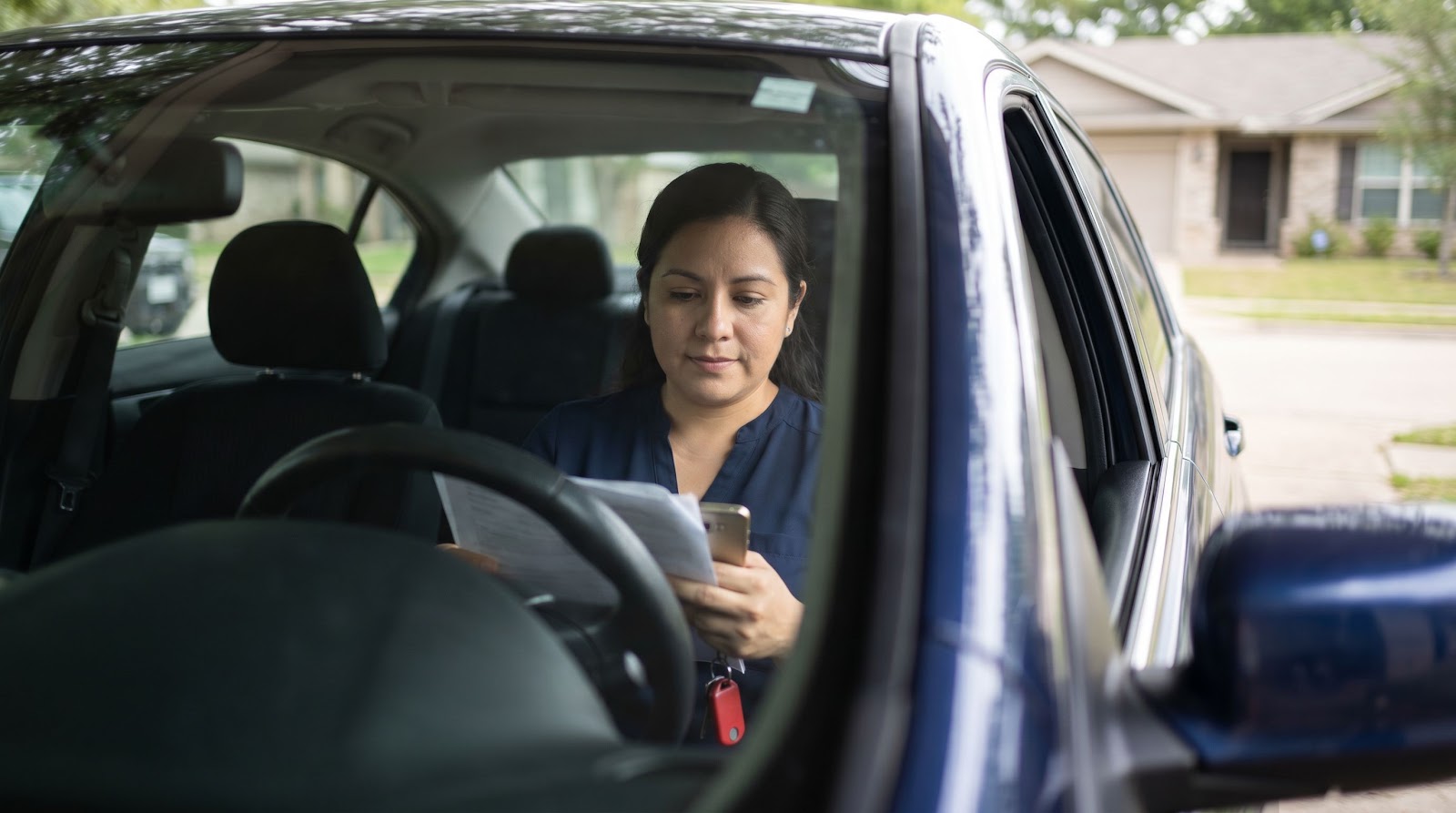
Recommended liability limit ranges for urban commuters
For urban commuters, state minimum liability is often the starting point, not the target. Texas requires 30/60/25, but the Texas Department of Insurance warns that minimums may be too low for a multi-vehicle crash or a totaled car.
A practical approach is to shop above the minimum, especially if your route includes freeways, interchanges, and stop-and-go evening traffic. The heavier the traffic, the easier it is for one mistake to damage several vehicles and spread injury claims across the same loss.
Uninsured or underinsured motorist coverage also deserves attention. An estimated 14.5% of Texas drivers were uninsured in 2023, based on TDI and the Insurance Information Institute.
Deductible choices that balance monthly premium and repair risk
Your deductible should be an amount you can pay without scrambling after a crash. A higher deductible can reduce the monthly premium, but it also means more out of pocket when your own car needs repairs after a rush-hour collision.
That tradeoff matters most for commuters who cannot leave the car parked for long. If a damaged bumper, headlight, or front-end panel would force a fast repair decision, pick a deductible that fits your emergency savings.
How lender or lease requirements can affect collision and comprehensive decisions
If you finance or lease your car, you may not be free to drop collision or comprehensive coverage. Lenders and leasing companies often require them because the vehicle still protects their financial interest.
That means your real choice may be less about whether to carry those coverages and more about how high to set the deductible. For a highway commuter, collision is especially relevant because it pays for your vehicle after a crash, even when traffic backups turn a small hit into a bigger repair bill.
Texas rush hour crash numbers and coverage comparisons
For Texas rush-hour car accident insurance, the key difference is simple: afternoon traffic creates the most crash opportunities, while later hours bring a higher fatal-crash pattern. That affects how much liability protection you may want and whether liability-only coverage is really enough for your commute.
Afternoon crash-volume hours versus later fatal-crash hours
TxDOT data show the afternoon commute is where crash volume spikes hardest. Texas recorded 43,732 non-fatal crashes from 4:00 p.m. to 4:59 p.m., 44,488 from 5:00 p.m. to 5:59 p.m., and 36,289 from 6:00 p.m. to 6:59 p.m. in 2024.
That does not make rush hour the deadliest window. The deadliest single hour was 9:00 p.m. to 9:59 p.m., with 243 fatal crashes statewide, according to TxDOT. So if you drive home in dense summer traffic, your bigger day-to-day exposure is frequent damage and injury claims, not necessarily the single highest fatal-crash hour.
State minimum limits versus stronger liability options
Texas requires $30,000 for one injured person, $60,000 per crash for bodily injury, and $25,000 for property damage. The Texas Department of Insurance warns that those minimums may be too low for a multi-vehicle accident or a totaled car.
Picture a freeway chain reaction involving three cars during the evening commute. Property damage alone can pressure a minimum-limit policy fast, and several injury claims have to share the same bodily injury cap. Stronger liability limits give you more room before costs spill beyond your policy.
Coverage comparison: liability-only policy versus collision plus UM/UIM protection
A liability-only policy helps pay for damage you cause to others. It does not repair your own car after a rush-hour crash. If your front end is damaged in stop-and-go traffic, collision is the coverage that applies to your vehicle.
Adding uninsured or underinsured motorist protection matters too. Texas insurers must offer it, and an estimated 14.5% of Texas drivers were uninsured in 2023, based on Texas Department of Insurance and Insurance Information Institute data. If the other driver carries no insurance, too little insurance, or disappears after a hit-and-run, that extra layer can make a very real difference.
What mistakes do Texas drivers make when buying insurance for rush-hour traffic?
The most common mistake is building a policy for the monthly bill instead of the actual commute. With Texas rush-hour car accident insurance, the weak spots usually show up after a chain-reaction crash, a hit-and-run, or a repair bill you cannot comfortably absorb.
Choosing the cheapest policy without enough property damage protection
A low premium can look fine until your car starts the domino effect in heavy traffic. Texas requires $25,000 for property damage as part of its 30/60/25 minimum, but the Texas Department of Insurance warns that minimums may be too low for a multi-vehicle accident or a totaled car.
That risk is easy to underestimate during the evening commute, when one rear-end hit can damage several vehicles in a few seconds.
Rejecting UM/UIM coverage despite the uninsured driver risk
Some drivers decline this coverage to save money, then regret it when the at-fault driver has no policy or too little coverage. Texas insurers must offer uninsured and underinsured motorist coverage, and TDI says an estimated 14.5% of Texas drivers were uninsured in 2023 based on Insurance Information Institute data.
For Texas rush-hour car accident insurance, that matters because congestion raises the odds of a claim, and the other driver’s coverage may not be enough.
Setting a deductible too high for realistic out-of-pocket repairs
A high deductible can lower the premium, but it also means more cash out of pocket when your own car needs work. In rush hour, damage is often immediate and practical: bumper, lights, grille, hood, sensors.
If paying that deductible would delay repairs or leave you without transportation to work, it is probably set too high.
Assuming minimum coverage will fully protect a financed vehicle
Minimum liability protects others when you cause a crash. It does not repair your own financed car. If you still owe money on the vehicle, your lender may require collision and comprehensive coverage, which changes the real cost decision completely.
That is why Texas rush hour car accident insurance should be checked against both your commute risk and your loan terms, not just the legal minimum.
 Vehicle
  Home & Property
  Commercial
  Life
Life  Health