


A Florida street can look passable and still leave you with major Florida flooded car electrical damage insurance issues. A modern vehicle does not need deep water to suffer serious electronic damage, and if floodwater gets into the car, coverage usually depends on having Florida auto insurance that includes comprehensive.
How can just a few inches of water damage a modern car’s electronics?
Because modern cars carry sensitive electronics low in the vehicle, a shallow flooded street can be enough to start the damage. Florida emergency guidance warns that 6 inches of water can reach the bottom of most passenger cars and cause stalling or loss of control, according to the Florida Division of Emergency Management.
Why six inches of street water can reach critical vehicle components
That water level sounds small until you picture what sits underneath a newer car. The lower body, wiring routes, connectors, splash areas, and parts near the wheel wells are all close to the road.
Once water pushes under the car, it can reach places drivers never see from the outside. You may not have water over the seats or dashboard and still end up with expensive electrical problems.
How water affects wiring, sensors, connectors, and control modules
Water intrusion does not need to “fry” a module instantly to create trouble. It can seep into connectors, contaminate sensors, and compromise wiring insulation. That is one reason Florida consumer guidance says flooded vehicles are often declared a total loss: repairs are complicated and costly.
CARFAX lists brittle wires, moisture in the instrument panel, and electrical accessories that stop working properly as common flood warnings. In a Florida flooded car electrical damage insurance claim, those hidden faults often matter as much as visible water lines.
Why electrical damage may appear days or weeks after driving through floodwater
Some failures show up later because moisture lingers in tight spaces. A car may restart and drive home, then develop warning lights, charging problems, sensor errors, or accessory failures days afterward.
That delayed timeline is what makes shallow flood exposure so risky. The street water is gone, but corrosion and trapped moisture keep working inside the car.
What happens if you drive through flooded streets in Florida?
You can lose power, lose steering feel, or stall much faster than most drivers expect. Florida emergency guidance says 6 inches of water can reach the bottom of most passenger cars and lead to stalling or loss of control, and 1 foot can float a vehicle away.
Immediate risks: stalling, loss of power, and loss of control
The first danger is mechanical and immediate. Water moving under the car can affect traction and reach low components before you see any water inside the cabin.
That is why a street that looks shallow can still leave you stopped in traffic or drifting where you do not want to go. For a driver dealing with Florida flooded car electrical damage insurance issues later, the problem often starts with a short stretch of water that seemed harmless.
Hidden risks after the engine restarts
A restart does not mean the car escaped damage. Moisture can stay inside connectors, wiring paths, modules, and the instrument area, then show up later as warning lights, accessory failures, or erratic electronic behavior.
CARFAX warns about brittle wires, moisture in the instrument panel, and electrical accessories that stop working correctly after flood exposure. That delayed pattern is one reason flood-related electrical claims can become expensive even when the car drives away from the scene.
When a flooded car becomes unsafe to keep driving
If the vehicle has stalled in floodwater, lost control, or starts showing electrical problems afterward, treat it as unsafe until it is inspected. A car that seems normal on the way home can still have hidden damage that affects reliability.
From the insurance side, Florida consumer guidance says flood damage to the car is generally covered only with comprehensive coverage. The Florida Department of Financial Services also says flooded vehicles are often declared a total loss because repairs are complicated and costly, which is a major issue in any Florida flooded car electrical damage insurance claim.
Does insurance cover Florida flooded car electrical damage insurance claims?
Usually, yes, but only if your policy includes comprehensive coverage. For most Florida flooded car electrical damage insurance claims, that is the part of the policy that handles flood-related damage to wiring, sensors, modules, and other electronics.
The Florida Department of Financial Services says flood damage to your car is generally covered only when you carry comprehensive coverage and the policy does not exclude flood. That matters because water damage can turn into a total loss faster than many drivers expect.
Why comprehensive coverage usually matters for flood-related electrical damage
Comprehensive is the coverage people lean on when the damage comes from something other than a crash. The Insurance Information Institute says comprehensive covers flood damage because it applies to disasters such as floods and hurricanes.
That is why a Florida flooded car electrical damage insurance claim usually starts with one basic question: did you have comprehensive on the vehicle when the water hit? If the answer is yes, the claim may move forward. If the electronics are too costly to repair, Florida consumer guidance says flooded vehicles are often declared a total loss.
What collision and liability typically do not cover
Collision coverage is built for impact damage from a crash, not for water intrusion into the car’s electrical system. Liability coverage is different again. It generally pays for damage or injuries you cause to others, not flood damage to your own vehicle.
So if your car takes in street water and later develops module failures, warning lights, or dead accessories, collision and liability are usually not the coverage that solves that problem.
How deductibles and policy limits affect your payout
Your payout is shaped by your deductible first. If you carry a $500 deductible, that amount is generally subtracted from a covered loss before payment.
Policy limits matter too, especially if the vehicle is badly flooded. Florida Highway Safety and Motor Vehicles says a flood-damaged vehicle that is totaled at 80% of the vehicle’s value triggers salvage and branding steps, and the title must show flood damage when required. In plain terms, severe electrical flood damage can affect both what the insurer pays and what happens to the title afterward.
How much can flood-related electrical damage cost compared with the car’s value?
It can get close to the car’s value faster than many owners expect. In Florida, flood-related electrical repairs are often expensive enough that the vehicle is declared a total loss instead of repaired, especially when water reaches modules, wiring, and connectors.
That is the hard part of a Florida flooded car electrical damage insurance claim: the damage may look limited from the outside, while the repair bill keeps growing underneath the trim and dash.
Typical repair categories: modules, wiring harnesses, sensors, and connectors
Electrical flood damage usually spreads across systems, not just one part. A shop may find moisture or corrosion in control modules, wiring harnesses, sensors, and connectors, plus warning lights or accessories that fail later.
CARFAX points to brittle wires, moisture in the instrument panel, and malfunctioning electrical accessories as common signs. That helps explain why repair estimates can rise after teardown and testing.
Why flood-damaged vehicles are often declared a total loss
Florida consumer guidance says flooded vehicles are often totaled because water-damage repairs are complicated and costly. If the loss reaches 80% of the vehicle’s value, Florida Highway Safety and Motor Vehicles says salvage and flood-branding steps apply.
That means a car with hidden electrical damage may cross the total-loss line even if the body looks decent and the engine still starts.
Repair vs. total loss: what owners should compare before authorizing work
Before you approve repairs, compare the estimate with the car’s current value, your deductible, and the risk of additional electrical failures after disassembly. Ask whether water reached multiple electronic systems or just one area.
Also ask how a total-loss decision would affect the title. In Florida, a reported flood-damaged vehicle must be branded when applicable, and that can matter as much as the immediate repair choice in a Florida flooded car electrical damage insurance claim.
What should you do immediately after floodwater reaches your car?
Do not try to “see if it still runs.” The safest move after floodwater reaches your car is to stop, avoid restarting it, and treat the vehicle as a possible electrical-damage claim from the first minute.
That matters in Florida because water can reach critical lower components fast, and flood damage to your car is generally covered only if you carry comprehensive coverage, according to the Florida Department of Financial Services.
Steps to take before starting or restarting the vehicle
If the engine is off, leave it off. If it stalled in water, do not crank it again just to test it. A car that looks fine can still have water in connectors, wiring paths, or electronic modules.
Move yourself and passengers to a safe place first. Then note how high the water got, whether warning lights came on, and whether the car lost power or stalled. Florida emergency guidance says 6 inches of water can reach the bottom of most passenger cars and cause stalling or loss of control.
How to document damage for a Florida insurance claim
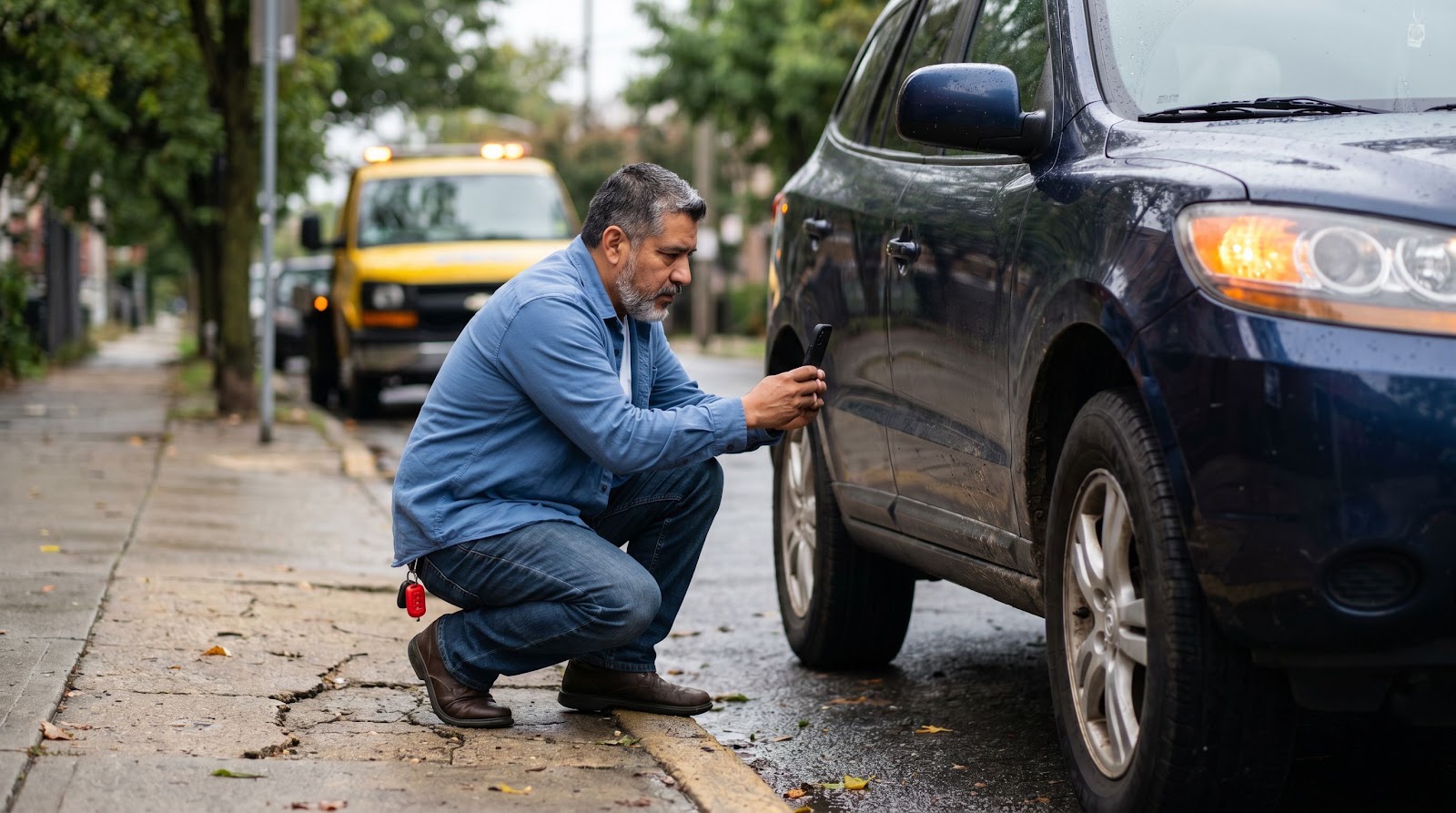
Take clear photos before the car is cleaned or inspected. Get shots of the water line, wet carpeting, warning lights, mud or debris, and the street conditions if you can do it safely.
Write down the date, location, and what happened in order: driving through standing water, stall, restart attempt, dashboard alerts, or accessory failures. For a Florida flooded car electrical damage insurance claim, that timeline helps show the damage started with flood exposure, even if electrical problems appear later.
When to tow the car instead of driving it
Tow it if the car stalled, if water reached the cabin, or if you notice warning lights, rough running, dead accessories, or erratic electronics afterward. That is usually the smarter move than risking more damage by driving.
It also protects your claim position. Florida consumer guidance says flooded vehicles are often declared a total loss because repairs are complicated and costly, and Florida Highway Safety and Motor Vehicles says reported flood-damaged vehicles must be branded on the title when required.
What title branding rules apply to flood-damaged vehicles in Florida?
Florida requires title branding when a flood-damaged vehicle is reported to the insurer and when the loss qualifies for salvage handling. That matters in Florida flooded car electrical damage insurance cases because a car can look repairable at first, yet still end up with a permanently branded title.
When Florida requires a flood or total-loss brand on the title
According to Florida Highway Safety and Motor Vehicles, when a flooded vehicle is reported to the owner’s insurer, the insurer brands the vehicle and reports it to the state. Florida law requires the title to show that the vehicle is flood damaged.
If the flooded car is totaled, it also cannot be offered for sale, sold, or exchanged until the salvage title or certificate of destruction application is filed and the title is branded as a flooded vehicle. FLHSMV says this applies when the loss reaches 80% of the vehicle’s value.
Why title branding matters for owners settling claims
For owners, title branding affects more than paperwork. It can shape whether the insurer treats the vehicle as a repair candidate or a total loss, and it can affect what happens if you keep the car after settlement.
That is especially relevant with electrical flood damage. Florida consumer guidance says flooded vehicles are often declared a total loss because water-damage repairs are complicated and costly. So in a Florida flooded car electrical damage insurance claim, the title outcome may follow the repair estimate.
How buyers can reduce the risk of purchasing a rebuilt flood car
Start with the title itself. If a vehicle has flood history, the branding is one of the clearest warnings a buyer can get.
Then look for the kinds of signs CARFAX flags after flood exposure: moisture in the instrument panel, brittle wires, and electrical accessories that do not work correctly on a test drive. A rebuilt car with unexplained warning lights, intermittent electronics, or damp interior trim deserves extra caution.
For Florida buyers, this is where paperwork and the road test need to match. If the title raises a flood question, treat hidden electronics as part of the risk, not a small cosmetic issue.
What mistakes do Florida drivers make after minor street flooding?
The biggest mistake is treating shallow street water like a small event. In many Florida flooded car electrical damage insurance cases, the real damage starts after the driver keeps using the car as if nothing happened.
Florida emergency guidance says 6 inches of water can reach the bottom of most passenger cars and cause stalling or loss of control. Yet many drivers still make a quick restart attempt, drive home, and wait for warning lights to get worse before reporting anything.
That delay can hurt in two ways. First, moisture may keep spreading through connectors, wiring, and modules. Second, the claim becomes harder to explain clearly when the timeline is vague, and the car has been driven for days after the flood exposure.
Another common mistake is assuming liability or collision will handle the damage. For Florida flooded car electrical damage insurance claims, the Florida Department of Financial Services says flood damage to the car generally requires comprehensive coverage, assuming flood is not excluded.
Drivers also underestimate what “minor” flooding can do to electronics. A car may start the next morning and still have hidden issues that show up later as dead accessories, instrument-panel moisture, or brittle wires, which are warning signs noted by CARFAX.
One more mistake comes at claim time: authorizing repairs too quickly without understanding the bigger picture. Florida consumer guidance says flooded vehicles are often declared a total loss because repairs are complicated and costly, and Florida Highway Safety and Motor Vehicles requires flood branding on the title when applicable. That is why even a short drive through street water can turn into more than a repair-shop problem.
How can you reduce the chance of catastrophic electrical damage during Florida flooding?
The best way to reduce the chance of catastrophic electrical damage is simple: do not drive into street water at all, and do not restart a car that has already taken water. For Florida flooded car electrical damage insurance problems, prevention usually matters more than any repair decision that comes later.
Florida emergency guidance says 6 inches of water can reach the bottom of most passenger cars and cause stalling or loss of control. That means the safest choice is often turning around, waiting, or taking a longer route instead of gambling on a flooded block.
If water does reach the vehicle, stop using it as if nothing happened. A car that seems fine can still have moisture inside wiring, connectors, or modules, and those are the kinds of hidden issues that later become expensive claim disputes or total-loss discussions.
Coverage planning matters too. The Florida Department of Financial Services says flood damage to the car is generally covered only with comprehensive coverage, assuming flood is not excluded. The Insurance Information Institute says comprehensive coverage covers flood damage, and its average annual cost is about $134 per year.
There is also a practical buying decision here. If your car has lower ground clearance and you live in an area that sees repeated street flooding, even shallow water exposure creates more risk than many owners realize.
And if the worst happens, act early. Document the water exposure, avoid extra driving, and let the insurer guide the next step before a small flood event turns into a much larger Florida flooded car electrical damage insurance claim.
 Vehicle
  Home & Property
  Commercial
  Life
Life  Health