


If your own garage roof crashes onto your car, the claim usually gets split fast: the car goes to auto insurance, and the garage goes to homeowners insurance. The catch is that basic Florida auto limits do not fix your vehicle, which surprises many drivers shopping for Florida auto insurance.
What actually happens when your garage roof collapses onto your car in Florida?
In a Florida garage roof collapse car insurance situation, insurers usually treat this as two separate losses under two different policies. One adjuster may look at the car, while another reviews the garage structure and the cause of the collapse.
Why the claim usually splits between auto insurance and homeowners insurance
Your car and your garage are not insured the same way. Florida’s required auto coverage includes $10,000 in Personal Injury Protection and $10,000 in Property Damage Liability, but that liability coverage is for damage you cause to other people’s property, according to the Florida Department of Financial Services.
When the damage to your car is handled under comprehensive coverage
If you bought comprehensive coverage, that is usually the part of the auto policy that responds. The Florida Office of Insurance Regulation places comprehensive under physical-damage coverage, and the Insurance Information Institute lists falling objects as a standard comprehensive-type loss.
If you only carry the Florida minimums, your own car may have no coverage for this loss.
When the garage structure is evaluated under homeowners policy collapse language
The garage side is usually reviewed under your homeowners policy. If the garage is detached, it may fall under other structures coverage. If it is attached, it is generally evaluated as part of the dwelling. The National Association of Insurance Commissioners makes the bigger point: the exact policy wording controls whether a collapse is covered.
Why wear and tear, neglect, and maintenance history can change the outcome
This is where many claims get difficult. If the roof failed because of long-term deterioration, wear and tear, or neglect, the homeowners’ carrier may look closely at exclusions. Maintenance records, prior inspections, and the age and condition of the roof can all affect the decision.
Florida law does give some protection on roof-age underwriting. An insurer cannot refuse or nonrenew solely because a roof is under 15 years old, and for an older roof, an inspection showing 5 years of useful life remaining can matter under Florida Statutes section 627.7011.
Will car insurance cover a collapsed garage roof if the car is parked on your own property?
Usually, yes, only if your policy includes comprehensive coverage. In a Florida garage roof collapse car insurance claim, being parked on your own property does not automatically create coverage under the Florida minimum auto policy.
Why Florida’s required auto insurance does not pay for damage to your own vehicle
Florida requires $10,000 in Personal Injury Protection and $10,000 in Property Damage Liability for registered vehicles. But Property Damage Liability pays for damage you cause to someone else’s property, not damage to your own car, according to the Florida Department of Financial Services.
That is the part many drivers miss. If your worn-out garage roof caves in and crushes your parked vehicle, liability-only coverage does not step in just because the car was legally insured.
How optional comprehensive coverage applies to falling objects and storm-related collapse
For the car itself, comprehensive is the coverage that usually matters. The Florida Office of Insurance Regulation treats comprehensive as physical-damage coverage, and the Insurance Information Institute includes falling objects under comprehensive losses.
So if rafters, shingles, or the whole roof section drops onto the hood or windshield, that is generally the type of event comprehensive was built for. The same idea can apply when a storm contributes to the collapse, although the insurer will still review the facts and the policy language.
What deductible, actual cash value, and total-loss rules mean for a brand new car
Even with comprehensive coverage, payment is not always the full sticker price of a brand new vehicle. Your deductible comes off first, and the carrier will evaluate the car under the policy’s settlement terms.
If the damage is severe, the claim may be handled as a total loss based on the vehicle’s actual cash value rather than what you originally paid at the dealership. That can be frustrating when the car is new, because a recent purchase price and current claim value are not always the same thing.
Does homeowners insurance pay for the garage roof collapse in Florida?
Sometimes, but not automatically. In a Florida garage roof collapse car insurance claim, homeowners insurance may pay for the garage structure if the policy treats the collapse as a covered loss and the cause is not excluded.
That is the hard line on the home side. The National Association of Insurance Commissioners says the structure and other structures can be covered, but the actual policy language decides whether this specific collapse makes it through.
When a collapsed garage may be considered a covered loss
A homeowners claim is stronger when the insurer sees a sudden collapse event rather than a roof that simply failed after years of decline. If the garage is attached, the loss is usually reviewed as part of the dwelling. If it is detached, it may fall under other structures coverage.
The key question is cause. If the adjuster finds a covered peril triggered the collapse, the garage damage may be paid under the home policy. If the file points instead to wear, rot, or neglected upkeep, the claim can move in the other direction fast.
How insurers evaluate aging roofs, deferred maintenance, and long-term deterioration
Insurers usually look past the moment of collapse and ask what had been happening for months or years. A roof that was sagging, leaking, or showing obvious decline before the loss will get extra scrutiny.
Florida law gives some underwriting protection based on roof age, but it does not guarantee a claim payment. Under section 627.7011, an insurer may not refuse or nonrenew solely because a roof is under 15 years old, and for an older roof, an inspection showing at least 5 years of useful life can matter. That still does not erase exclusions for deterioration or neglect.
What documents, inspection findings, and repair records may support or weaken the claim?
Records help when they show the roof was maintained and evaluated before the collapse. Think inspection reports, invoices for patching or reinforcement, and photos showing the garage condition over time.
The same documents can also hurt. If an old inspection warned about advanced deterioration and nothing was repaired, the insurer may use that history to argue the collapse came from deferred maintenance. When a dispute follows, the Florida Department of Financial Services offers mediation for residential property claims.
Which policy pays what, and where do Florida drivers get confused most often?
The biggest confusion in a Florida garage roof collapse car insurance claim is simple: people expect one policy to handle everything. It usually does not. The car and the garage are reviewed under different coverages, and Florida’s required auto coverage is narrower than many drivers think.
| Issue | What current Florida/industry sources indicate |
|---|---|
| Damage to your own car | Typically an auto physical-damage claim only if you purchased comprehensive coverage, because III identifies falling objects under comprehensive and Florida OIR separates comprehensive/collision from liability coverages. |
| Damage to the garage structure | Potential homeowners claim under dwelling/other-structures coverage, but NAIC and Florida consumer materials stress that exclusions and actual policy wording control; wear and tear or neglected deterioration may be excluded. |
| Florida required auto minimums | Required PIP and Property Damage Liability do not repair your own vehicle; PD is for property belonging to someone else. |
| If the claim is denied or underpaid | Florida DFS offers residential property mediation for home-side disputes and automobile mediation for certain auto property-damage disputes. |
Car damage versus structure damage: a side-by-side responsibility breakdown
If the roof falls onto your parked car, the vehicle side usually points to auto coverage, specifically comprehensive if you bought it. The garage itself points to homeowners insurance, where the adjuster will look at whether the collapse fits covered policy language or falls into exclusions tied to deterioration.
Why property damage liability coverage does not apply to your own garage or your own car
This is where Florida drivers get tripped up most often. The required $10,000 in Property Damage Liability is for damage you cause to someone else’s property, according to the Florida Department of Financial Services. It does not fix your own car, and it does not repair your own garage.
Common overlap myths between homeowners insurance and auto insurance
A common myth is that homeowners insurance should pay for the car because the car was sitting at home. Another is that auto insurance should pay for the garage because the garage damaged the vehicle. In practice, insurers separate the property involved and then apply the policy written for that item.
If either side is disputed, Florida Department of Financial Services mediation may be available for residential property claims and certain automobile property-damage disputes.
How much could this cost out of pocket if coverage is denied or limited?
A Florida garage roof collapse car insurance problem can get expensive fast when one policy pays less than expected or refuses the loss. The biggest surprise is that your out-of-pocket cost may come from several gaps at once, not just one denied claim.
Comparing the potential cost of replacing a newer vehicle versus repairing a garage roof
If the car has major damage, the vehicle side can create the larger cash shock, especially when the car is newer, and the settlement is based on actual cash value. On the garage side, the homeowners carrier may focus hard on whether the collapse was tied to wear, deterioration, or neglect.
That means you could face a painful split: the car claim reduced by policy terms, and the garage claim reduced or denied because the roof condition falls into an exclusion.
How deductibles from two separate policies can increase your total out-of-pocket expense
When both policies respond, you may still owe two deductibles, one under auto and one under homeowners. That is easy to miss because this feels like one event, but insurers often handle it as two separate losses.
Even when the claims are approved, your total out-of-pocket cost can rise before any repair starts. If either side is disputed, the Florida Department of Financial Services offers mediation for residential property claims and certain auto property-damage disputes.
When depreciation, policy limits, and excluded damage create the biggest financial gap
The widest gap usually appears when three things stack up together: depreciation on the car, a homeowners limit that does not fully match the garage repair bill, and excluded damage tied to long-term roof deterioration.
Also, do not confuse Florida’s required $10,000 property damage liability with protection for your own vehicle. The Florida Department of Financial Services says that coverage is for damage you cause to someone else’s property, so it does not close this gap for your car.
What should you do immediately after a Florida garage roof collapse car insurance claim situation?
First, protect people, then protect the claim. In a Florida garage roof collapse car insurance case, your next few steps can affect both the auto side and the homeowners side because each insurer will want clear proof of what fell, what was damaged, and what happened right after the collapse.
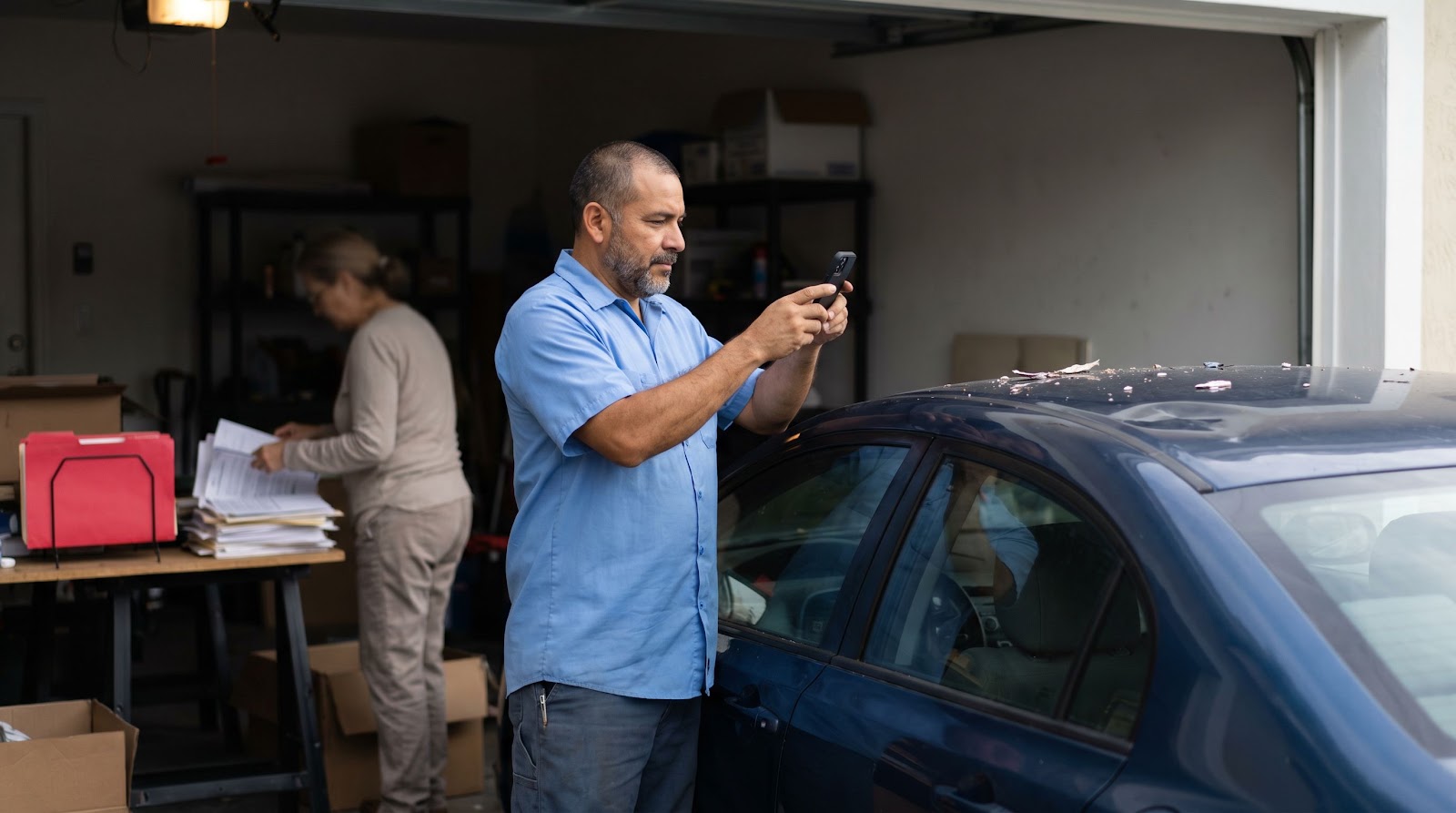
How to document the scene safely with photos, videos, and storm evidence
Do not step under hanging beams, sagging panels, or loose roofing. Take wide shots first, then closer photos of the car, the roof section, debris patterns, broken glass, water entry, and anything that suggests storm involvement, such as wet insulation or wind-blown material.
Record a short video from a safe distance. If weather played a role, save timestamps, weather alerts, and fresh photos taken before anything is moved.
Which insurer to call first and how to report a split-loss claim
Call both carriers the same day if you can. Report the car damage to your auto insurer as a possible comprehensive loss, since the Insurance Information Institute places falling objects under comprehensive. Report the garage damage separately to your homeowners insurer and explain that the structure and the vehicle were damaged in the same event.
Use the same basic timeline with both companies. Keep it factual and simple.
What not to say or throw away before inspections happen
Do not guess about the cause. Avoid statements like “the roof was probably too old” or “I knew this would happen.” Those comments can end up in the file before the inspections do.
Also, do not throw away broken roofing, damaged sections, or car parts unless they create a safety hazard and must be removed.
How emergency mitigation can help prevent additional denied damage
You can usually take reasonable emergency steps to stop more damage, like tarping an opening or keeping water off the car and contents. The point is to prevent a bad loss from becoming worse.
Before work starts, photograph everything again and save every invoice, receipt, and work order. That paper trail helps show the difference between the original collapse damage and any later damage the insurer may argue could have been prevented.
What can you do if the insurer says the collapse was caused by wear and tear or neglect?
You can challenge that position, but you need to get specific fast. In a Florida garage roof collapse car insurance dispute, the turning point is often the exact wording the insurer used, not the adjuster’s short explanation on the phone.
How to review the denial language and identify the exact exclusion cited
Ask for the denial or partial denial in writing if you do not already have it. Then read the part that quotes the policy, especially the exclusion the carrier says applies to wear and tear, deterioration, or neglect.
Do not settle for broad phrases like “old roof” or “poor maintenance.” The National Association of Insurance Commissioners makes the key point here: policy language controls. You want the insurer to point to the exact provision used to deny the garage, and you want that reason separated from the auto claim for the car.
When to request engineer reports, contractor opinions, or a second claim review
If the cause is still debatable, ask what inspections or reports the insurer relied on. If an engineer report exists, request it. If the decision was based mainly on an adjuster inspection, it may make sense to get a licensed contractor’s opinion or ask the carrier for a second review.
This matters when the facts are mixed. A roof can be old, yet the file may still need a closer look at whether a sudden event contributed to the collapse. Keep your request narrow and document-based.
How Florida state-run mediation can help in residential property and certain auto property-damage disputes
If the disagreement continues, Florida offers state-run mediation through the Florida Department of Financial Services. That program is available for disputed residential property claims and also for certain automobile property-damage disputes.
Mediation does not guarantee payment. It does give you a formal path to challenge a denial or underpayment without jumping straight into a bigger fight.
 Vehicle
  Home & Property
  Commercial
  Life
Life  Health