


Leave your car behind during a Florida evacuation, and your claim may go one of two ways: paid under comprehensive, or denied. That Florida car insurance abandonment hurricane mistake gets even worse when drivers assume minimum coverage is enough. If you need to review your options, start with Florida auto insurance.
What happens to your claim if you leave your car behind during a Florida hurricane evacuation?
If the car is parked and floodwater reaches it, the key question is simple: do you carry comprehensive coverage? In Florida, that is the part of the policy that generally pays for flood- and storm-related vehicle damage. Without it, your insurer is generally not responsible for the loss.
When hurricane and flood damage is covered under comprehensive insurance
Comprehensive, also called “other than collision,” is what usually responds when a parked car is damaged by flood, windstorm, fire, theft, or vandalism. The Florida Department of Financial Services says flood damage is not covered unless you still have comprehensive and flood is not excluded.
This matters because comprehensive is optional in Florida. The Insurance Information Institute also notes that flood losses to cars are covered under the optional comprehensive part of a standard auto policy. If your vehicle takes on water, the damage can be severe enough that the insurer declares it a total loss and reports it to FLHSMV for a branded title.
Why collision and liability do not pay for a flooded parked vehicle
Collision coverage is for impact losses. Liability pays for damage or injuries you cause to others. Neither one is designed to pay when a parked vehicle is flooded during an evacuation.
That is where many Florida car insurance abandonment hurricane disputes begin. A driver may have the state-required coverages and still have no payment for flood damage to their own car.
How insurers may view avoidable loss, delay, and negligence after a known evacuation warning
Insurers usually look closely at timing. Florida disaster guidance says carriers do not accept new applications or requests to increase coverage once a tropical storm or hurricane watch or warning has been issued anywhere in Florida, according to the Florida Department of Financial Services.
That means waiting until the storm is close can leave you stuck with the policy you already have. It also leaves less time to move the vehicle. Florida emergency officials urge residents to know their evacuation zone and move to higher ground when flooding threatens. And the National Weather Service warns that 12 inches of rushing water can carry away most cars.
Which Florida car insurance coverage actually pays for hurricane flood damage?
For most drivers, the answer is straightforward: comprehensive coverage. If your car is damaged by floodwater during a hurricane evacuation, that is usually the part of the Florida auto policy that responds.
That point matters in any Florida car insurance abandonment hurricane situation, because many people assume their basic policy covers storm damage to their own vehicle. It usually does not.
| Scenario | Likely consequence |
|---|---|
| You evacuate without moving the car to higher ground and you do not carry comprehensive coverage | Flood damage to the vehicle is generally not covered by your auto insurer |
| You evacuate without moving the car, and the vehicle is flood-damaged with comprehensive coverage | Claim may be covered, but flooded vehicles are often declared total losses and reported to FLHSMV for a branded title |
| You wait until a storm watch or warning is issued to add protection | Florida guidance says insurers do not accept new applications or requests to increase coverage after a tropical storm or hurricane watch/warning is issued in Florida |
| You try to drive through rising water instead of relocating early | Just 12 inches of rushing water can carry away most cars, increasing risk of loss of both vehicle and life |
Comprehensive coverage is the key protection for storm surge, flooding, falling objects, and wind damage
The Florida Department of Financial Services says comprehensive, sometimes called “other than collision,” is the coverage for flood, windstorm, fire, theft, vandalism, and similar non-collision losses. That includes the kind of damage a parked car can suffer from storm surge, rising water, or debris falling during a hurricane.
If you do not carry it, flood damage to your car is generally not covered.
What Florida law requires versus what lenders may require on financed vehicles
Florida law does not require comprehensive coverage. So a driver can be fully legal on the road and still have no protection for hurricane flood damage to their own vehicle.
What changes the conversation is financing. A lender may require broader physical damage protection on a financed car, even though the state does not. That requirement comes from the loan contract, not from Florida’s minimum insurance rules.
Deductibles, claim limits, and common exclusions drivers misunderstand before storm season
Before storm season, check the declarations page for your deductible and whether comprehensive is active right now, not later. Florida DFS warns that you must still have comprehensive coverage and verify flood is not excluded, or the insurer is not responsible for flood damage.
Another misunderstanding is assuming a repairable flooded car will always come back with a clean history. Florida DFS says flooded vehicles are often declared total losses, then reported to FLHSMV for a branded title.
How much can the mistake of abandoning a car in a flood zone cost?
It can cost far more than one repair bill. In a Florida car insurance abandonment hurricane scenario, the damage may turn into a total loss, extra fees, and a vehicle that is harder to sell later even if it still runs.
Total loss risk after saltwater or freshwater flooding
Flooded cars are often declared total losses in Florida. The Florida Department of Financial Services says water damage is complicated and costly to repair, which is why insurers frequently total these vehicles instead of fixing them.
That risk gets worse when the car sits in a flood zone too long. The National Weather Service warns that 12 inches of rushing water can carry away most cars, and 2 feet can carry away SUVs and trucks. Once water gets into electrical systems, upholstery, sensors, and engine components, the claim can escalate quickly.
Hidden financial losses: deductible, towing, storage, rental gaps, and out-of-pocket replacement costs
Even when comprehensive applies, the loss is rarely painless. You may still be responsible for your deductible, and an abandoned or derelict vehicle can bring towing, parking, or storage charges. Florida law and FLHSMV forms expressly reference liens tied to towing and storage on abandoned vehicles.
If the car is unusable, you may also face days or weeks of transportation problems. That can mean paying for a rental yourself, covering the difference on a replacement vehicle, or coming up with cash fast while the claim is being processed.
Why a flood-damaged vehicle can end up with a branded title and reduced resale value
A flood claim can follow the car long after the storm. Florida DFS says that when a flooded vehicle is declared a total loss, the insurer must report it to FLHSMV, and the title will be branded as a total loss or flooded vehicle.
That brand matters in the real market. Buyers, dealers, and lenders usually treat flood history as a red flag, which can reduce value and make the vehicle much harder to sell.
Why is waiting too long to move your vehicle so dangerous?
Because the risk changes fast. In a Florida car insurance abandonment hurricane situation, a car that was safe an hour ago can end up trapped by water, blocked roads, or evacuation traffic before you have a realistic chance to move it.
That delay also pushes drivers into bad decisions: leaving the car behind in a low spot, or trying to drive it out through rising water at the last minute.
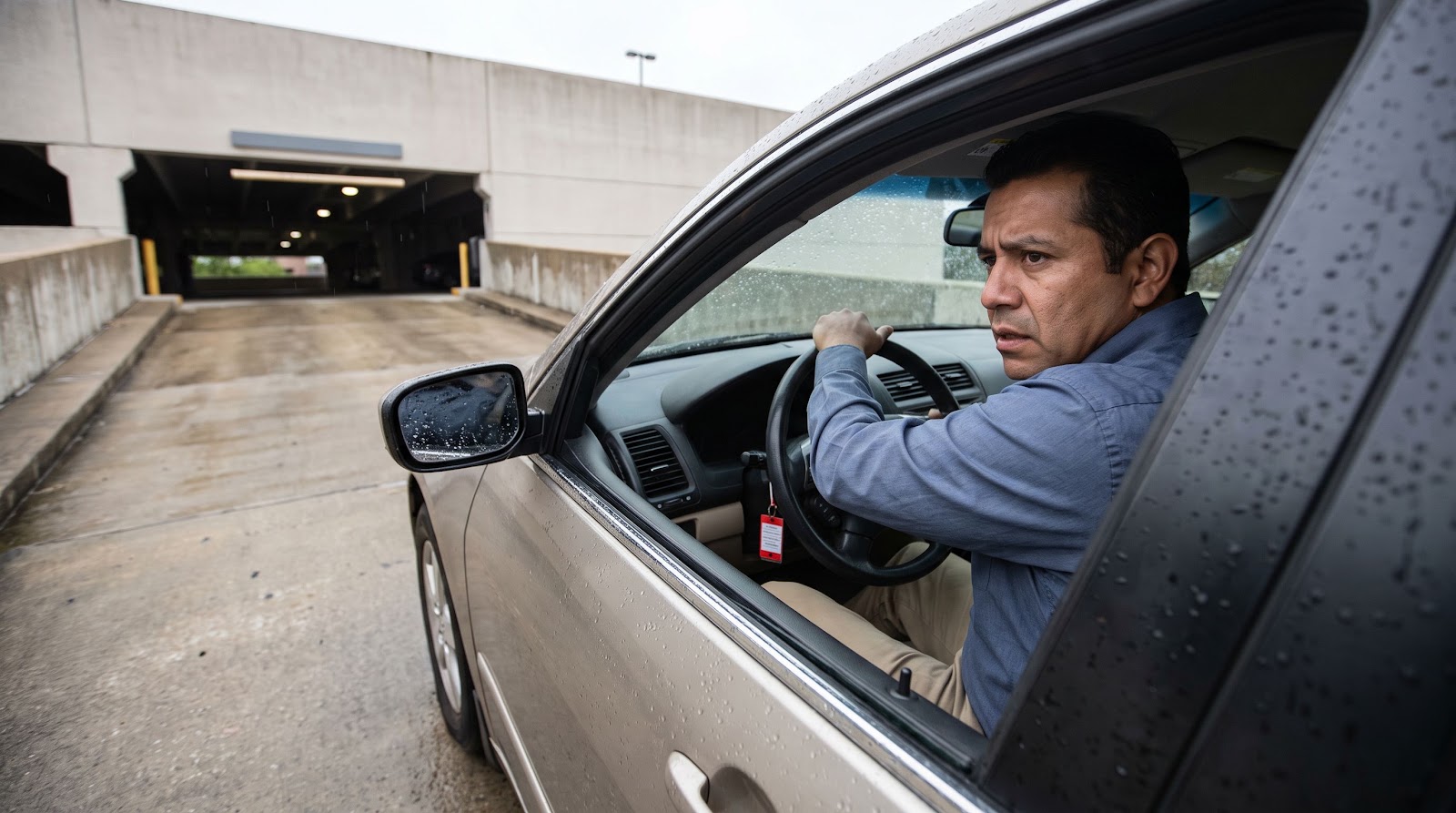
How as little as 12 inches of moving water can sweep away a vehicle
The danger is not deep water. It is moving water. The National Weather Service warns that 12 inches of rushing water can carry away most cars, and 2 feet can carry away SUVs and trucks.
That is why “I’ll just move it later” can fail so quickly. Once water starts crossing the road, your vehicle may no longer be something you can protect. It becomes a hazard.
Why evacuation timing matters more than trying to protect the car at the last minute
Florida emergency guidance tells residents to know their evacuation zone and move to higher ground when flooding threatens, according to the Florida Division of Emergency Management. Early action gives you choices. Late action leaves you with fewer roads, less visibility, and more pressure.
There is another insurance angle here. Florida Department of Financial Services guidance says carriers do not accept new applications or requests to increase coverage once a tropical storm or hurricane watch or warning has been issued in Florida. If you waited on coverage and waited on evacuation, you may be out of options twice.
The safest parking choices: higher ground, garages, and locations outside flood-prone areas
The best parking choice is simple: higher ground outside flood-prone areas. A garage can help, but only if it is not in a location that floods. A covered spot in a low-lying area is still a bad bet.
If you have time, move the car well before heavy rain bands arrive. Think in practical terms: uphill locations, structures above known flood zones, and places you can reach without driving through standing water.
What should Florida drivers do before a hurricane to avoid an insurance disaster?
Start early. In a Florida car insurance abandonment hurricane situation, the best protection usually happens before the forecast gets serious: confirm coverage, know where you will move the car, and gather the information you will need if the vehicle is damaged.
That matters because Florida Department of Financial Services guidance says insurers do not accept new applications or requests to increase coverage once a tropical storm or hurricane watch or warning has been issued anywhere in Florida.
Verify comprehensive coverage before storm season starts
Check your declarations page now, not when a storm is already approaching. If your car is exposed to flood risk, comprehensive coverage is generally what pays for flood and storm damage to your vehicle in Florida.
If that coverage is missing, a flooded parked car may leave you with no payment for your own vehicle damage. The Florida Department of Financial Services and the Insurance Information Institute both make that point clearly.
Check your evacuation zone and identify higher-ground parking options
Do not wait until roads are crowded to figure out where the car should go. The Florida Division of Emergency Management urges residents to know their evacuation zone and move to higher ground when flooding threatens.
Pick two realistic parking options ahead of time: a garage or lot on higher ground, and a backup spot outside low-lying areas. Keep in mind that the National Weather Service warns that 12 inches of rushing water can carry away most cars.
Document your vehicle condition, policy details, and contact information before landfall
Take clear photos of the exterior, interior, wheels, and current mileage. Save screenshots or printouts of your policy number, deductible, roadside assistance details, and claims phone number.
Also keep the title, registration, and lender contact information in a safe place you can access during evacuation. If the car is later flooded and declared a total loss, Florida DFS says it may be reported to FLHSMV for a branded title, so having your records ready can save time when the claim starts.
What should you do immediately if your car is flooded after the storm?
Act fast, but do not try to drive it home. In a Florida car insurance abandonment hurricane claim, your first moves should be to report the loss, document the damage, and keep the vehicle still until the insurer or a qualified shop can inspect it.
How to report the claim promptly and what evidence to gather
Call your insurer as soon as you can and say the vehicle took on floodwater after the storm. Have your policy number, the vehicle location, and a clear timeline ready. If you carry comprehensive coverage, that is usually the part of the policy that may respond to flood damage, according to the Florida Department of Financial Services.
Take photos of the waterline, exterior, interior, dashboard, seats, trunk, and current mileage. Add pictures of debris around the car, the parking spot, and any visible mud or standing water. Keep towing receipts, storage receipts, and notes about when you found the damage.
Why you should not start or drive a flooded vehicle
Do not turn the key. Do not test whether it still runs. Water can reach the engine, electronics, sensors, brakes, and airbags, and one start attempt can make the damage worse.
This is also a safety issue. The National Weather Service warns that 12 inches of rushing water can carry away most cars, so if water is still moving around the vehicle, stay back and wait for conditions to improve.
When to tow, inspect, and decide whether repair or total loss is more likely
If the car is sitting in a wet area, has visible water inside, or cannot be safely accessed, arrange a tow rather than driving it. A flooded vehicle should be inspected before any restart decision is made.
Be prepared for the possibility of a total loss. Florida DFS says flooded vehicles are often declared total losses because water damage is complicated and costly to repair, and if that happens, the insurer must report the vehicle to FLHSMV for a branded title.
 Vehicle
  Home & Property
  Commercial
  Life
Life  Health