


One sick customer can trigger far more than a basic injury claim. In Florida, Florida restaurant food poisoning liability usually means two problems at once: state regulatory action and private lawsuits. That is why restaurant owners often review coverage beyond a standard general liability policy before the busy season turns ugly.
What does Florida restaurant food poisoning liability actually include?
It includes a regulatory track under Chapter 509 and a civil track under negligence law. If the allegation gains traction, the restaurant may face inspections, food control orders, public records exposure, and a bodily injury claim at the same time.
Regulatory exposure under Florida Chapter 509
Florida’s Division of Hotels and Restaurants regulates public food service establishments under Chapter 509. That law allows stop-sale orders and supervised destruction when food is considered a threat to public safety, or when a health authority says the restaurant’s food may have contributed to a foodborne illness incident or outbreak.
If a case becomes a confirmed foodborne illness, the inspection pressure rises fast. Under Florida’s risk-based system, a Level 4 restaurant is subject to 4 inspections per year, the highest tier in the framework, according to MyFloridaLicense. The Florida DBPR annual report for FY 2024-2025 shows 42 establishments were already in that confirmed illness category.
Complaints also move quickly. The Florida Department of Health lets consumers report suspected food poisoning online or by email, which can turn a customer allegation into an official investigation very quickly.
Civil liability under Florida negligence law
Separate from regulators, the restaurant can be sued for bodily injury. Florida’s comparative fault statute, Section 768.81, treats negligence actions broadly, covering theories that can include negligence, strict liability, products liability, and breach of warranty. A claimant who is more than 50% at fault cannot recover, but that does not make these cases simple.
Timing matters too. Florida’s general limitations statute, Section 95.11, gives negligence actions a 4-year limitations period.
Why a food poisoning claim is not just a routine premises liability loss
A slip-and-fall claim usually focuses on one hazard in one moment. Food poisoning claims can involve ingredients, handling, storage, multiple diners, health department involvement, and whether contaminated product must be pulled or destroyed.
That is why Florida restaurant food poisoning liability can outgrow a routine premises liability loss. Insurance Information Institute guidance notes that contamination events may require protection beyond a basic package, including contamination coverage, product liability, and recall insurance.
What happens if a customer claims your Florida restaurant caused food poisoning?
A food poisoning allegation can move fast, even before anyone files a lawsuit. For many owners, the real shock is how quickly Florida restaurant food poisoning liability turns from one complaint into a health investigation, product control problem, and a much bigger injury claim.
Immediate health department involvement and reporting
A customer does not need to start with a lawyer. In Florida, suspected food poisoning can be reported directly to the Florida Department of Health through its online complaint system or by email. That means a diner who got sick on Saturday can trigger official attention almost immediately.
Once regulators connect your restaurant to a confirmed foodborne illness, the inspection pressure changes. Under Florida’s risk-based system, that establishment moves into Level 4, which requires 4 inspections per year, according to MyFloridaLicense. The Florida DBPR annual report for FY 2024-2025 shows 42 establishments were in that confirmed illness category.
When stop-sale or food destruction orders can hit
This is where the operational damage starts. Chapter 509 allows stop-sale orders and supervised destruction if food is considered a threat to public safety, or if a health authority notifies the restaurant that its food may have contributed to an illness or outbreak.
In plain terms, you may be told not to sell certain food, and you may have to destroy it under supervision. That can happen while the liability claim is still developing, which is why Florida restaurant food poisoning liability often costs more than the injured customer’s medical bills.
How hospitalization changes claim severity and lawsuit risk
If the customer ends up in the hospital, the claim usually gets more serious. More serious medical damages tend to bring harder questions about food handling, ingredient sources, and whether the restaurant acted reasonably at every step.
That also raises the odds of a negligence suit, and Florida gives plaintiffs a 4-year limitations period for negligence actions under Section 95.11. If you carry only a basic commercial insurance policy, this is often the point where owners learn contamination-related losses can stretch beyond what they expected.
How do Florida inspections change after a confirmed foodborne illness?
They get tougher and more frequent. For Florida restaurant food poisoning liability, a confirmed illness does not stay in the file as a one-time event. It changes how the state watches the restaurant going forward.
Florida’s risk-based inspection tiers explained
Florida uses a risk-based inspection system for public food service establishments. The framework has four levels, and the inspection load rises with the risk tier.
According to MyFloridaLicense, Level 1 requires 1 inspection per year, Level 2 requires 2, Level 3 requires 3, and Level 4 requires 4 inspections per year. Level 4 is reserved for restaurants identified by the Florida Department of Health in a confirmed foodborne illness.
Why confirmed illness cases trigger four inspections per year
The state treats a confirmed foodborne illness as a sign that the operation needs closer oversight. That is why the restaurant moves into the highest inspection tier instead of staying on a lighter routine schedule.
This is not a rare rule sitting on the books unused. The Florida DBPR / Division of Hotels and Restaurants Annual Report for FY 2024-2025 shows 42 establishments were in the Level 4 confirmed foodborne illness category. For an owner, that means more visits, more documentation pressure, and more chances for inspection findings to build a paper trail around the same incident.
How public inspection records can be used by customers and plaintiffs
Public inspection records matter because customers, reporters, and plaintiff lawyers can review them without much trouble. If a suspected illness is reported to the Florida Department of Health, that complaint can quickly become part of a broader public-health review, and the restaurant’s inspection history may start getting looked at alongside it.
In a liability dispute, those records can be used to argue that food handling problems were isolated or repeated. That does not decide the case by itself, but it can shape how a bodily injury claim is valued, defended, or filed under Florida negligence law.
How much can a food poisoning case cost a Florida restaurant?
Potentially far more than the customer’s doctor bill. With Florida restaurant food poisoning liability, the real cost usually spreads across claims, operations, and reputation at the same time.
That is why a summer outbreak allegation can feel financially bigger than many owners expect. A bodily injury claim may be only one part of the damage.
Direct costs: medical claims, legal defense, settlements, and judgments
The direct claim starts with the customer’s alleged injury, but it can expand quickly if more diners report illness or if the case turns into a negligence suit. Florida’s comparative fault statute applies broadly to negligence-related theories, and Florida’s general limitations statute gives these cases a 4-year limitations period.
That means a restaurant may be dealing with defense costs and claim exposure long after the sick customer leaves the dining room. Depending on the policy structure, owners may also find that a basic excess liability policy matters when one incident produces more than one claimant.
Operational costs: lost inventory, shutdowns, spoiled food, and staff disruption
This is where the loss often gets ugly. Under Chapter 509, Florida can authorize stop-sale action and supervised destruction when food is a threat to public safety or when health authorities say the restaurant’s food may have contributed to illness.
So the restaurant may lose product before any lawsuit is resolved. Staff time gets pulled into cleaning, documentation, interviews, and follow-up. If the case becomes a confirmed foodborne illness, the restaurant moves into Level 4 and faces 4 inspections per year, the highest frequency in Florida’s system, according to MyFloridaLicense.
Reputation costs: public records, reviews, cancellations, and repeat-business loss
Reputation damage can outlast the inspection. Complaint activity is real: the Florida DBPR annual report shows 7,958 full complaint visits for public food service establishments in FY 2024-2025, and inspection history is easy for the public to review.
Once an allegation becomes part of the public record, regular customers, event planners, and delivery app users may see it before they order again. That kind of loss does not always fit neatly inside standard liability coverage, which is why contamination events can hit harder than a routine restaurant claim.
Which insurance gaps create the biggest problems after a contamination event?
The biggest gap is simple: many owners expect a basic liability policy to handle a food poisoning mess from start to finish. With Florida restaurant food poisoning liability, that expectation often breaks down once product controls, lost inventory, and interrupted operations enter the picture.
| Risk tier | Required inspections per year |
|---|---|
| Level 1 | 1 |
| Level 2 | 2 |
| Level 3 | 3 |
| Level 4 – confirmed foodborne illness | 4 |
What general liability may cover
General liability may help with the bodily injury side of the claim. If a customer alleges illness after eating at your restaurant, this is the policy owners usually expect to respond first to defense costs and potential liability tied to that injury claim.
That matters because Florida food poisoning cases can still develop as negligence actions, and those claims can stay alive for a while under the state’s 4-year limitations period in Section 95.11.
What general liability often does not cover
What surprises owners is everything happening around the injury claim. Chapter 509 allows stop-sale action and supervised destruction when food is treated as a public safety threat or when health authorities say the food may have contributed to illness.
If chicken, sauces, produce, or prepared meals must be pulled and destroyed, that is not the same thing as paying a customer’s injury claim. The Insurance Information Institute says businesses facing contamination may need contamination coverage in addition to product liability and recall insurance.
Why contamination-related business interruption and product loss can exceed expectations
A contamination event can shut down revenue while expenses keep running. Food may be unsellable, staff may be diverted into cleanup and inspections, and the restaurant may land in Level 4, which means 4 inspections per year, the highest frequency in Florida’s system.
That table matters because confirmed illness changes the operating burden after the event, not just the claim file. For Florida restaurant food poisoning liability, the gap that hurts most is often the one between injury coverage and the real cost of lost product and disrupted business.
What mistakes make restaurant food poisoning liability worse in August heat?
Three mistakes usually make Florida restaurant food poisoning liability worse fast: weak temperature control, missing records, and a slow response after a complaint. In August, heat does not create liability by itself, but it makes bad handling harder to defend.
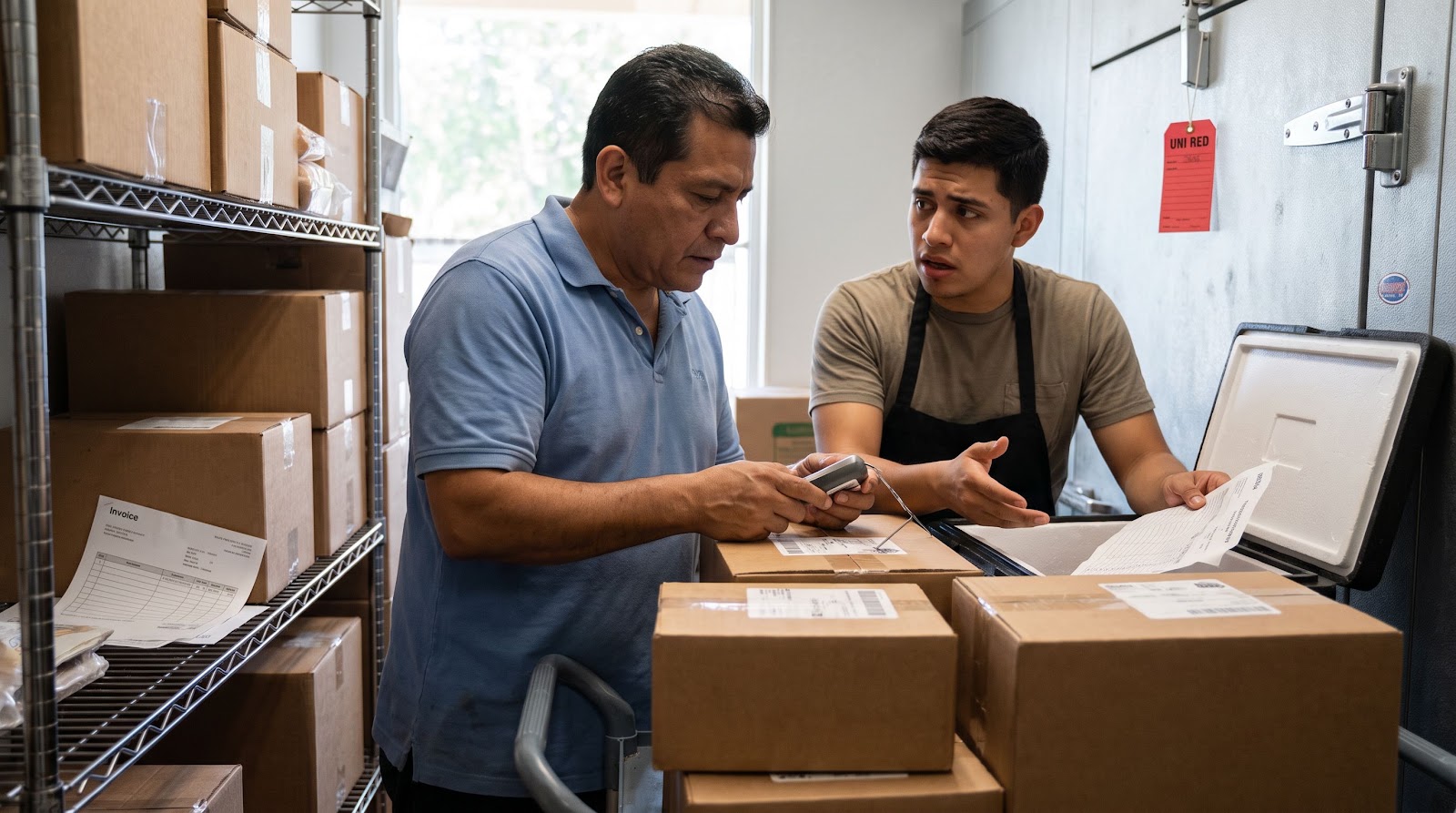
That matters because once a diner reports suspected illness, the Florida Department of Health gives that complaint a direct path into an official review. If regulators later tie the restaurant to a confirmed foodborne illness, Florida moves that establishment into Level 4, with 4 inspections per year under the MyFloridaLicense risk-based system.
Temperature control failures for sensitive ingredients
The damaging mistake is usually not one dramatic event. It is the quiet chain of small lapses: seafood sitting too long during delivery, sauces left out during prep, cut produce moved in and out of coolers, or hot items held inconsistently through a lunch rush.
When a customer gets sick, those gaps can make it easier to argue the restaurant handled food carelessly. And if health authorities believe the food may have contributed to illness, Chapter 509 allows stop-sale orders and supervised destruction.
Poor documentation of receiving, storage, and holding procedures
If there is no clear record of what was received, where it was stored, and how it was held, the restaurant loses one of its best defenses. Missing logs do not prove contamination, but they make it harder to show reasonable handling after the fact.
That becomes even more serious because inspection history and complaint activity are not hidden. Florida DBPR reported 7,958 full complaint visits for public food service establishments in FY 2024-2025.
Delays in response after a customer complaint or health authority notice
Waiting a day or two to check inventory, isolate suspected food, or gather staff information is a costly mistake. A slow response can widen the operational mess and leave more questions unanswered.
It also increases the odds that regulators, customers, and plaintiff lawyers will see a business that reacted late instead of a business that acted promptly and carefully.
What should restaurant owners do right now to reduce Florida restaurant food poisoning liability?
Start with the basics you can control today: complaint response, food handling discipline, and insurance review. That will not erase Florida restaurant food poisoning liability, but it can reduce the damage when a claim or investigation starts moving fast.
Create a response plan for illness complaints and suspected outbreaks
Write down who takes the complaint, what details get collected, and who inside the restaurant gets notified immediately. If a diner says several guests got sick, your team should know how to isolate the suspected menu items, preserve records, and pause service on questionable product.
Speed matters because consumers can report suspected food poisoning directly to the Florida Department of Health online or by email. Once health authorities notify a restaurant that its food may have contributed to an illness or outbreak, Chapter 509 allows stop-sale action and supervised destruction.
Review vendor controls, cold-chain handling, and disposal procedures
Look closely at receiving, storage, prep, holding, and disposal. If you cannot show where the food came from, how it stayed controlled, and what was discarded, it gets harder to defend your handling decisions later.
This is also the moment to check vendor communication. If an ingredient looks questionable, your staff should know who can reject it, who documents it, and how affected product is separated from saleable inventory.
Audit insurance, inspection readiness, and employee food-safety training
Do not assume a standard business owners policy covers every contamination-related cost. Triple-I warns that businesses facing contamination may need coverage beyond a basic package, including contamination protection, product liability, and recall insurance.
Then audit your inspection readiness. If a case is tied to a confirmed foodborne illness, Florida places the restaurant in Level 4, requiring 4 inspections per year under the MyFloridaLicense system. Train employees like those records may be reviewed later, because they very well may be.
 Vehicle
  Home & Property
  Commercial
  Life
Life  Health