


A washing machine leak can be covered in Florida, but only when it’s sudden and accidental. If water shoots out from a failed hose or the appliance suddenly overflows, your home insurance policy may respond very differently than it would for slow leaks or outside floodwater.
Does Florida home insurance cover a washing machine leak?
Usually, yes, if the Florida home insurance washing machine leak claim involves a sudden appliance failure inside the home. Standard homeowners coverage generally treats this as a non-weather water loss, not a flood loss.
The key issue is cause. NAIC guidance says water damage from a home’s plumbing is typically covered, while flood damage is not. Citizens Property Insurance also lists accidental discharge or overflow of water from a household appliance as an eligible non-weather water loss for certain programs.
What counts as sudden and accidental water damage
Think of a washer hose that bursts during a cycle, or a machine that suddenly overflows and sends water across the laundry room floor. That kind of event is abrupt, visible, and easy to tie to a specific moment.
Florida’s consumer homeowners toolkit from the Florida Department of Financial Services uses a sudden burst pipe as an example of a covered peril. The same logic often applies when a washing machine fails without warning. If mold follows a covered loss, it is often covered too, though limits may apply. The same toolkit notes $10,000 as a common mold-related limit.
What is usually excluded: neglect, wear and tear, long-term seepage, and floodwater
A Florida home insurance washing machine leak claim gets much harder when the damage built up over time. If the hose has been dripping behind the machine for months, or the flooring shows long-term seepage, insurers may treat it as maintenance, deterioration, or neglect rather than a covered event.
Floodwater is a separate issue. The Florida Office of Insurance Regulation states that homeowners policies do not cover flood damage. That means water entering from outside is handled differently from water released by your appliance inside the house.
Why a burst washing machine hose is treated differently from rising water
A burst hose starts inside the home and fits the accidental water discharge category. Rising water comes from an external flood event, which standard homeowners insurance excludes.
That distinction matters fast. Citizens says policyholders should report a claim as soon as they become aware of or suspect damage, and Florida’s Homeowner Claims Bill of Rights guide says you should take precautions to protect the property, including shutting off utilities when needed. Water losses are common, too: the Insurance Information Institute says about 1 in 67 homes has a water-damage-or-freezing claim each year.
What should you do in the first 24 hours after a washing machine floods your house?
Act fast. In the first day, your job is to stop the water, keep damage from spreading, and create a clear record for a possible Florida home insurance washing machine leak claim.
That matters because Florida consumer guidance tells homeowners to protect the property after damage, including turning off utilities when needed. It also helps show the loss was sudden, not ongoing.
How to stop the water, protect the property, and prevent more damage
Shut off the washing machine water supply first. If you cannot stop the leak there, turn off the home’s main water valve. If outlets, cords, or appliances are sitting in wet areas, cut power to that part of the house only if you can do it safely.
Then move fast on protection. Pull rugs, towels, clothing, and small furniture out of the wet area. If water is spreading into nearby rooms, start removing it with towels, a mop, or a wet vacuum. Open airflow if safe. A delayed response can make a simple appliance loss much harder once staining, swelling, or mold begin.
What evidence to document before cleanup and repairs
Before you throw anything away, take wide and close photos of the washer, the failed hose or overflow area, standing water, damaged walls, baseboards, flooring, and personal items. Record a short video showing where the water started and where it traveled.
Keep the damaged hose, connector, or machine part if possible. Make a simple list of affected rooms and items. Save receipts for emergency supplies, drying equipment, and temporary protective work. If mold appears later, documentation matters even more because the Florida Department of Financial Services says mold from a covered water loss is often covered, but limits commonly apply, often $10,000.
When to call your insurer, plumber, and water mitigation company
Call your insurer as soon as you become aware of or suspect damage. Citizens Property Insurance gives that instruction directly, and quick notice can help your Florida home insurance washing machine leak claim stay focused on a sudden accidental event.
Call a plumber when the source is still active, or the machine, valve, or hose needs repair. Call a water mitigation company the same day if water reached walls, cabinets, or multiple rooms, or if drying the area with household fans will clearly not be enough.
If water came from outside rather than the appliance, that is a different insurance issue. Standard homeowners coverage does not handle flood damage, according to the National Association of Insurance Commissioners.
Why are some washing machine leak claims denied in Florida?
Some claims are denied because the insurer sees the loss as a maintenance problem, not a sudden accident. With a Florida home insurance washing machine leak, the fight usually comes down to cause, timing, and the exact words in the policy.
How insurers distinguish sudden discharge from maintenance failure
A washer that suddenly dumps water across the floor during one cycle looks very different from a slow drip behind the machine. Standard homeowners coverage generally responds to sudden accidental water discharge from a household appliance, while long-term seepage, wear and tear, or neglected maintenance are often excluded or disputed.
That is why adjusters look for clues like staining, warped baseboards, repeated moisture, or damage that clearly built up over time. Citizens Property Insurance specifically recognizes accidental discharge or overflow of water from a household appliance as an eligible non-weather water loss for certain programs. But if the facts point to gradual deterioration, the same Florida home insurance washing machine leak claim can be treated very differently.
How delayed drying can lead to mold limits or claim disputes
Waiting too long to dry the area can make a bad claim worse. Florida consumer guidance says mold resulting from a covered peril is typically covered, but mold-related coverage is often limited.
The Florida Department of Financial Services notes that $10,000 is a common mold limit. So if water sits in drywall, cabinets, or under flooring, the insurer may question whether part of the later damage came from the original sudden event or from delayed mitigation after it.
That is one reason Florida guidance tells homeowners to protect the property after damage, and Citizens says to report the claim as soon as you become aware of or suspect damage.
Policy wording that often decides whether damage is covered
The most important language is usually the part that covers accidental discharge or overflow, and the part that excludes flood, neglect, wear and tear, or repeated seepage. A Florida home insurance washing machine leak may be covered for water released inside the home, yet denied if the carrier decides the damage was ongoing or came from outside floodwater instead.
The National Association of Insurance Commissioners and the Florida Office of Insurance Regulation both make the same basic distinction: standard homeowners insurance typically covers sudden internal water losses, but not flood damage.
How much can a washing machine water loss cost compared with your deductible in Florida?
A Florida home insurance washing machine leak can get expensive fast, often well beyond what feels like a small household mishap. The problem is not the machine itself. It is everything water touches before you stop it.
Even if your claim is covered, your deductible still comes first. And in Florida, homeowners are already paying a lot just to keep coverage in place.
Water damage claim frequency and why this peril matters
Water losses are common enough that every homeowner should take them seriously. The Insurance Information Institute says water-damage-or-freezing losses affect 1.5% of insured homes in a typical year span, or about 1 in 67 homes annually.
That matters with a washing machine because the leak often starts in a small room but spreads into hallways, baseboards, adjacent bedrooms, or kitchen cabinets before anyone notices. A short cycle can turn into a multi-surface cleanup.
Florida premium reality versus national homeowners insurance averages
Florida is already a tough insurance market. The Insurance Information Institute, citing NAIC data, puts the state’s average HO-3 homeowners premium at $2,677 per house-year in 2022, with an affordability index of 4.07% of median household income.
So when a Florida home insurance washing machine leak happens, many families are weighing two costs at once: the out-of-pocket deductible now and the broader pressure of already high home insurance costs in Florida.
Flooring, drywall, cabinetry, and mitigation costs that drive claim severity
The severity usually comes from layered damage, not from one broken hose. Water can soak flooring, wick into drywall, swell baseboards, stain lower cabinets, and require drying equipment or professional mitigation the same day.
If moisture lingers behind walls or under floors, mold becomes part of the risk. Florida’s consumer homeowners toolkit says mold resulting from a covered peril is often covered, but limits commonly apply, and $10,000 is a common mold-related cap.
What parts of the loss are usually covered and what do you pay out of pocket?
With a Florida home insurance washing machine leak, the policy usually pays for the sudden water damage to covered parts of the home, but not every related expense. Your out-of-pocket share usually starts with the deductible, and it can grow if the problem involves maintenance, wear, or excluded damage.
| Scenario | Typical insurance treatment based on cited sources |
|---|---|
| Sudden accidental washing machine hose/appliance discharge inside the home | Typically handled as a covered non-weather water loss, subject to policy terms, deductible, and prompt mitigation |
| Long-term seepage, wear and tear, or neglected maintenance | Often disputed or excluded because standard policies do not cover gradual deterioration or neglected maintenance |
| Floodwater entering the home from outside | Not covered by standard homeowners insurance; separate flood insurance is needed |
| Mold after a covered water loss | Often covered only if resulting from a covered peril, but limits commonly apply; Florida toolkit notes $10,000 is a common limit |
Dwelling damage versus personal property damage
Dwelling damage is the structure itself: drywall, baseboards, built-in cabinets, and flooring attached to the home. Personal property is the stuff water ruins along the way, like towels, clothing, or a laundry basket stored nearby.
That split matters because insurers often evaluate the house and your belongings under different parts of the policy, even when the same washer leak caused both.
Tear-out, drying, and temporary living expenses
If a sudden leak soaks walls or floors, professional drying is often part of the covered loss when it is needed to protect the property from further damage. Tear-out can also become part of the claim when materials must be opened or removed to access and dry hidden wet areas.
Temporary living expenses may apply if the home becomes unfit to live in during repairs, but that depends on the policy terms and the severity of the damage.
The appliance itself, hose replacement, and maintenance-related costs
This is where many homeowners get surprised. The Florida home insurance washing machine leak claim may cover the water damage the machine caused, while leaving you to pay for the failed hose, the broken appliance, or overdue maintenance yourself.
If the facts show neglect, long-term seepage, or ordinary wear and tear, that portion is often excluded or disputed. The National Association of Insurance Commissioners and Citizens Property Insurance both support the bigger distinction: sudden discharge is treated very differently from a maintenance problem.
How does Citizens Property Insurance treat accidental water discharge from a household appliance?
Citizens generally treats a sudden washing machine leak as a non-weather water loss when water is accidentally discharged or overflows from a household appliance. For a Florida home insurance washing machine leak, that wording matters because it lines up with the kind of loss a failed washer hose or overflow usually causes.
Why Citizens matters for Florida homeowners
Citizens is highly relevant in Florida because it is the state’s insurer of last resort. If your home is insured there, the way Citizens classifies water damage can shape how your claim is handled from day one.
Citizens says eligible non-weather water losses include accidental discharge or overflow of water or steam from a household appliance. That gives Florida homeowners a clear starting point when the leak began inside the house and was sudden.
What non-weather water loss means in practical claim terms
In plain English, non-weather water loss means the problem did not come from rain, storm surge, or rising water outside the home. It came from something internal, like plumbing or an appliance.
That distinction keeps a washer leak separate from flood damage, which standard homeowners insurance does not cover, according to the National Association of Insurance Commissioners and the Florida Office of Insurance Regulation. It also helps explain why prompt notice matters. Citizens tells policyholders to report a claim as soon as they become aware of or suspect damage.
How this applies to washing machine failures
If your washing machine suddenly dumps water across the laundry room, into the hallway, and under nearby flooring, that is the kind of event Citizens may view as an eligible appliance discharge loss. If the facts instead point to an old slow drip, long-term seepage, or ignored maintenance, the same Florida home insurance washing machine leak can be disputed very differently.
That is why the first photos, the failed hose, and the timeline matter so much with this kind of claim.
How can Florida homeowners prevent a washing machine leak claim before it happens?
Yes, a lot of these claims can be prevented. With a Florida home insurance washing machine leak, the best defense is to reduce the odds of a sudden hose failure and avoid any signs of neglect if water damage ever happens.
That matters in Florida, where homeowners already face high insurance costs. The Insurance Information Institute cites an average HO-3 premium of $2,677 per house-year in the state.
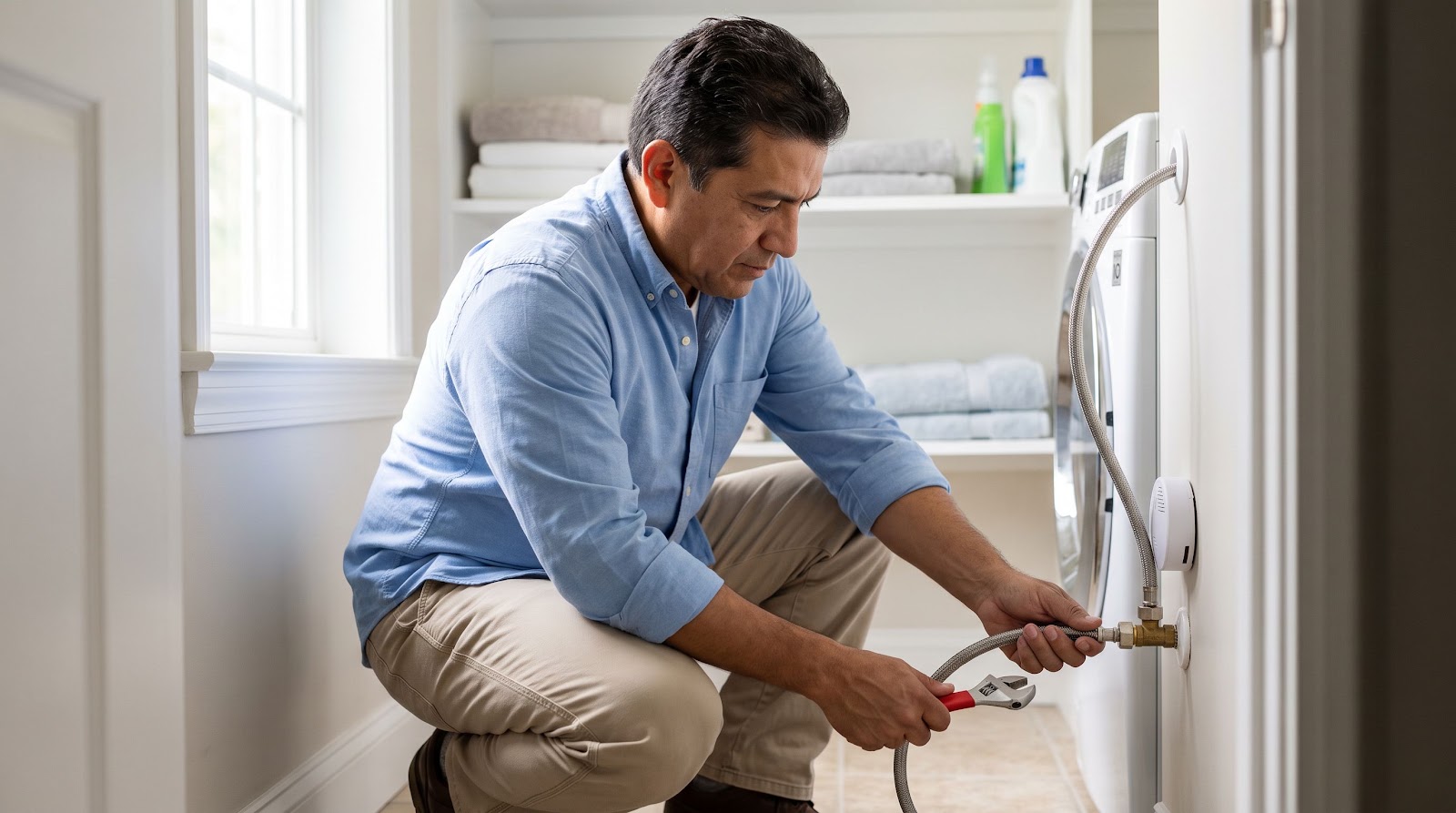
When to replace aging rubber hoses with braided lines
If your washer still uses older rubber supply hoses, replacing them before they crack is a smart move. Braided lines are commonly chosen because they are built for tougher use and are less likely to split under pressure.
You do not need visible flooding to have a problem. A hose can bulge, kink, or show moisture near the connector long before it bursts. If you see that, replace it now, not after the next wash cycle.
How shut-off valves, leak alarms, and routine inspections reduce risk
A working shut-off valve lets you stop the water fast. That alone can limit damage to one room instead of several. Leak alarms help when the laundry area is out of sight, especially if the washer runs while you are in another part of the house.
Do a quick inspection every so often: look behind the machine, check the wall connection, and look for damp drywall, staining, or warped baseboards. Water damage and freezing claims affect about 1 in 67 homes each year, according to the Insurance Information Institute.
Simple maintenance habits that help avoid coverage disputes
Keep the area behind the washer clean and visible. Do not pack boxes, detergent jugs, or baskets so tightly that you cannot spot a slow drip.
After a cycle, glance at the floor. If you travel often or leave a second home empty, consider shutting off the washer supply before you go. These habits help you catch trouble early and help show that any Florida home insurance washing machine leak was sudden, not the result of long-term seepage or ignored maintenance.
 Vehicle
  Home & Property
  Commercial
  Life
Life  Health