


If you are worried about Florida home insurance dropped roof issues, watch what your insurer does before renewal. The earliest clues are usually an inspection order, a request for fresh roof proof, or new policy terms that make roof claims harder. If you want to compare options, start with home insurance guidance from Univista.
How do you know a Florida insurer is preparing to drop home coverage over your roof?
You usually know by changes in underwriting, not by a blunt warning letter. When a carrier starts digging into roof condition, documents, or deductibles, it often means your renewal is under closer review.
Florida gives homeowners some protection, but only up to a point. According to the Florida Department of Financial Services, an insurer cannot refuse to issue or renew a homeowners policy on a roof under 15 years old solely because of age. For roofs 15 years or older, the company must allow an authorized inspection, and if that inspection shows at least 5 years of useful life, age alone cannot be the reason for denial.
Inspection orders that flag wear, damage, or visible deterioration
An inspection order is one of the clearest early signs. If the report notes cracked shingles, soft spots, patchwork repairs, sagging areas, or visible deterioration, the carrier may be building the file for restrictions or nonrenewal.
Citizens says underwriting field surveys can be required during the policy term or as a condition of coverage, and those surveys can lead to required repairs for hazards or deficiencies. Age protection does not stop a carrier from acting when the roof’s actual condition is poor.
Renewal notices that request new roof documents, photos, or repair proof
When renewal paperwork suddenly asks for updated roof photos, contractor invoices, or proof of repairs, take it seriously. That request usually means the insurer wants evidence that the roof still has enough useful life left.
For older homes, this gets more specific. Citizens requires a four-point inspection for properties more than 20 years old, and that inspection includes the roof’s age, type, and condition.
Policy changes that quietly add tougher roof terms before renewal
Sometimes the warning is buried in the renewal packet. A separate roof deductible or other tighter roof language can mean the insurer is still willing to renew, but on stricter terms.
Florida consumer guidance says policyholders must be notified if a roof deductible is added at renewal, and they must be allowed to decline it. Even so, that kind of change is a strong signal that the company sees more roof risk than it did last year.
What roof age triggers extra underwriting scrutiny in Florida?
For Florida home insurance dropped roof concerns, the key age breakpoint is 15 years. Below that, a carrier cannot refuse to issue or renew a homeowner’s policy solely because of roof age under Florida consumer guidance. Once the roof is 15 years or older, underwriting usually gets more hands-on.
Why roofs under 15 years old have stronger protection against age-only decisions
A newer roof gives you a clearer legal shield, but only against one narrow issue: age by itself. The Florida Department of Financial Services says insurers cannot deny issuance or renewal just because a roof is under 15 years old.
That matters when a homeowner hears vague comments like “the roof is getting older.” If the file shows age alone and nothing else, that is not enough for an age-only refusal.
What can insurers still do when the condition is poor or the remaining useful life is under five years?
This is where many owners get surprised. The age protection does not force an insurer to ignore cracked materials, soft spots, visible deterioration, or a bad inspection report.
For roofs 15 years or older, the insurer must allow an authorized inspection before requiring replacement for issuance or renewal. If that inspection shows at least 5 years of useful life, the carrier cannot refuse coverage solely because of age, according to the Florida Department of Financial Services. But if the condition is poor or the remaining life comes in under five years, the company can still tighten terms or walk away from the risk.
Why older roofs often trigger inspection demands instead of automatic approval
Older roofs tend to trigger proof requests because underwriters want conditions, not guesses. That is why a homeowner with an older roof may suddenly be asked for an authorized roof inspection, updated photos, or contractor documentation before renewal moves forward.
Citizens make this especially clear. It requires a four-point inspection for property-owner applications on homes more than 20 years old, and that inspection includes the roof’s age, type, and condition. For some older roof types, Citizens also requires documentation showing at least five years of remaining useful life.
Which renewal changes are giant warning signs that your coverage is about to get restricted or dropped?
If your renewal starts shifting roof costs or adding tighter compliance rules, treat that as a real warning. For many Florida home insurance dropped roof cases, the insurer does not cancel first. It changes the terms first.
Separate roof deductibles and what they mean for your out-of-pocket risk
A separate roof deductible means your roof claim may be handled under a different deductible than the rest of the policy. That can leave you paying more out of pocket after wind or storm damage, even if the policy technically renews.
Florida consumer guidance says insurers can offer policies with a separate roof deductible. If that term is added at renewal, the company must give notice of the policy change and let you decline it, according to the Florida Department of Financial Services. When that language appears for the first time, it usually means the carrier is pulling back on roof risk.
Actual cash value roof settlement terms versus replacement cost
If the renewal changes the roof loss settlement from replacement cost to actual cash value, your payout may reflect depreciation instead of the full cost to replace similar materials. That is a major downgrade in practical protection.
Look closely at any endorsement that changes how roof damage is paid. A policy can stay active while becoming much less helpful when the roof claim arrives.
Short response deadlines for inspections, repairs, and underwriting documents
Tight deadlines are another warning sign. If the insurer asks for an inspection, repair receipts, updated photos, or underwriting forms with very little time to respond, your file is likely under active review.
This matters even more for older homes. Citizens says it may require underwriting field surveys, and homes more than 20 years old need a four-point inspection that includes roof age, type, and condition. For some older roofs, Citizens also requires proof of at least 5 years of remaining useful life. Miss the deadline, and the renewal problem can get worse fast.
What does Florida law protect, and where can insurers still nonrenew your policy?
Florida law gives homeowners a real defense against age-only decisions, but it is narrower than many people think. If you are facing a Florida home insurance dropped roof problem, the law may protect the roof’s age alone, not the roof’s actual condition.
The rule against denying solely because of roof age for roofs under 15 years old
For roofs under 15 years old, Florida consumer guidance says an insurer cannot refuse to issue or renew a homeowners policy solely because of age. That matters when renewal pressure seems to rest on a simple statement like “the roof is getting old.”
Age by itself is not enough in that situation. The protection comes from the Florida Department of Financial Services, and it can help homeowners push back when the file does not show real damage, deterioration, or another underwriting problem.
The homeowner’s right to submit an inspection for older roofs
Once the roof is 15 years old or older, the rule changes. The insurer must allow the homeowner to obtain an authorized roof inspection before requiring replacement for issuance or renewal.
If that inspection shows at least 5 years of useful life, the carrier cannot refuse coverage solely because of roof age, according to the Florida Department of Financial Services. This is one of the clearest legal protections Florida homeowners have when a renewal starts turning into a Florida home insurance dropped roof dispute.
The legal gap: poor condition, unrepaired damage, and limited remaining useful life
This is the part that catches people off guard. The law does not force an insurer to ignore a roof in poor condition, visible deterioration, unrepaired damage, or limited remaining useful life.
So even when age alone cannot be used against you, the company may still non-renew if the inspection shows the roof is failing in practice. That is why a bad report, missing repair proof, or a useful-life finding below five years can still put the policy at risk.
How much can it cost if you lose standard Florida home insurance?
It can get expensive fast. If a Florida home insurance dropped roof issue that pushes you out of the standard market, you may face higher premiums, tighter roof terms, and less room to delay repairs.
Florida remains the most expensive state for HO-3 homeowners coverage on the latest NAIC-based data published by the Insurance Information Institute. The average premium was $2,677 in 2022, compared with $2,603 in Louisiana and $2,268 in Oklahoma.
Why Florida remains the highest-cost state for HO-3 homeowners coverage
That ranking matters because losing a regular policy in the highest-cost state leaves less margin for error. The Insurance Information Institute also reported a $3,340 statewide average home premium in 2023, citing NAIC and Florida OIR data.
Standard market coverage versus last-resort or more limited options
When standard coverage disappears, the replacement is not always equal. A homeowner may end up with stricter underwriting, more documentation demands, or a policy that covers roof losses on less favorable terms.
Citizens can be a path for some owners, but it openly requires inspections and repair follow-up in many cases. For older homes, a four-point inspection becomes part of the process, which can add time and pressure when renewal is already at risk.
How a roof-related nonrenewal can raise premiums, deductibles, and repair timing pressure
A roof problem rarely raises just one cost. It can mean a higher premium, a new separate roof deductible, and a faster repair deadline all at once.
If your renewal packet adds a roof deductible, Florida Department of Financial Services guidance says you must be notified and allowed to decline that change. But even when you decline it, the bigger message is hard to miss: the carrier may be moving away from your roof risk.
Why are citizens’ document requests and four-point inspections a serious early signal?
Because they usually mean your home has moved from routine servicing into active underwriting review. In Florida, home insurance dropped roof cases; that shift often shows up before any nonrenewal notice does.
Citizens openly says it may require underwriting field surveys during the policy term or as a condition of coverage, and those inspections can lead to required repairs for hazards or deficiencies. When the company starts asking for more proof, assume the renewal file is being tested.
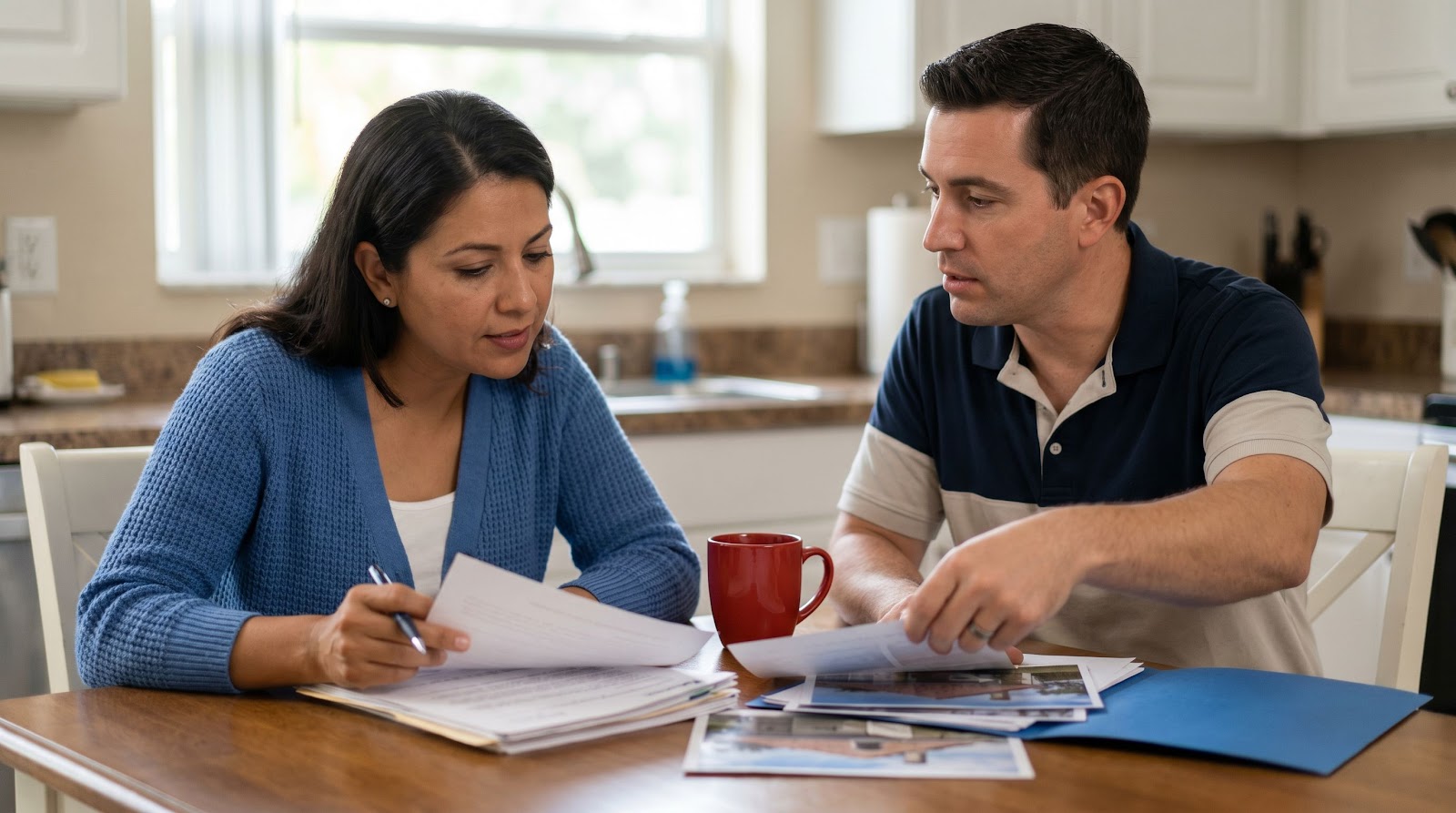
When older roofs require extra documentation
Older roofs often trigger a second layer of scrutiny. Citizens say soft roofs older than 25 years or hard roofs older than 50 years need documentation showing at least 5 years of remaining useful life.
If that proof does not show enough life left, Citizens requires evidence of full roof replacement before the policy is written. That is not casual paperwork. It is a sign the roof has reached a point where eligibility is being questioned directly.
Why homes over 20 years old often face four-point inspection requirements
For homes more than 20 years old, Citizens requires a four-point inspection for property-owner applications. That inspection includes the roof’s age, type, and condition, according to Citizens Property Insurance Corporation.
Once that request lands, the insurer is no longer relying on old file notes or a general assumption. It wants a current underwriting snapshot of the home’s main systems, with the roof front and center.
How to treat these requests as a renewal warning rather than routine paperwork
Treat every document request like a deadline tied to coverage, not like a clerical follow-up. Gather roof photos, prior repair invoices, and any inspection reports quickly, because delay can make a shaky renewal look worse.
If the request comes from Citizens or appears right before renewal, read it as a practical warning that Florida home insurance roof trouble may be close. The safest move is to respond fast and review your coverage options before the file turns into a nonrenewal problem.
What should homeowners do right away if their Florida home insurance drops and the roof becomes a real risk?
Act early. When Florida home insurance drops, roof concerns start showing up. The best move is to build a cleaner underwriting file before renewal, not after a nonrenewal notice arrives.
That means getting current roof proof, fixing what is fixable, and shopping for coverage before deadlines get tight. In Florida’s market, waiting usually costs options.
Get an independent roof inspection before renewal
If your roof is getting closer to the problem zone, order an independent inspection before the carrier forces the issue. For a roof 15 years or older, Florida Department of Financial Services guidance says the insurer must allow an authorized inspection before requiring replacement for issuance or renewal.
Your goal is simple: find out what the report will say before underwriting does. If the inspection supports at least 5 years of useful life, that can help block an age-only denial.
Prioritize repairs, certifications, and documentation that underwriters want to see
Do not send scattered paperwork. Send the documents that answer underwriting questions fast: inspection results, repair invoices, dated roof photos, and any contractor certification that addresses remaining useful life.
This matters even more for older homes and older roof types. Citizens requires a four-point inspection on properties more than 20 years old, and some older roofs need proof showing at least five years of remaining useful life.
Shop coverage early to avoid rushed placement into expensive or limited policies
Start shopping before the renewal decision is final. Florida remains a very expensive homeowners market, and losing standard placement can leave you choosing from tighter or costlier options under pressure.
Early shopping gives an agent time to present inspection results and repair proof in the best light instead of trying to explain a bad file at the last minute.
Common mistakes that make a roof-related nonrenewal more likely
The biggest mistakes are waiting, ignoring document requests, and assuming roof age protection solves everything. It does not. Florida law helps with age-only decisions, but poor condition and limited useful life can still sink a renewal.
Another mistake is treating a new roof deductible or inspection demand like routine paperwork. Those are signs your insurer may already be tightening its roof risk appetite.
 Vehicle
  Home & Property
  Commercial
  Life
Life  Health