


A speeding ticket usually raises Texas car insurance costs, but there is no official flat dollar increase in Texas. What changes is your rate profile, and that can affect your next renewal for years. If you want to compare options in the state, start with Texas auto insurance.
How much does a speeding ticket raise car insurance in Texas?
There is no single statewide price jump for a speeding ticket in Texas. Insurers set their own surcharges for convictions, so two drivers can get very different premium increases after a similar ticket.
Why is there no single fixed dollar increase in Texas
Texas does not publish a standard insurer penalty for speeding convictions. The Texas Department of Insurance confirms that companies use driving-record surcharges tied to convictions and at-fault accidents, and their statistical reporting still tracks those surcharges as percentages.
That means the increase is not a fixed dollar amount and not even a fixed percentage. A carrier can rate a conviction one way in one territory and another way for a driver with a different history, vehicle, or coverage level.
The main pricing factors insurers use after a speeding conviction
Insurers in Texas report major and minor convictions separately for core coverages. That tells you something practical: severity matters.
Beyond the conviction itself, the rate impact usually depends on your overall driver profile, where you live, the coverages you carry, and the company’s rating rules. A driver carrying only Texas minimum liability limits of $30,000/$60,000/$25,000 may see a different premium result than someone with broader protection.
How long can the surcharge affect your premium?
A speeding ticket can stay visible long enough to affect multiple renewals. Texas DPS sells a $6.00 three-year driver record that includes moving violations for three years from the offense date, according to the Texas Department of Public Safety.
There is one possible off-ramp for some drivers. Under Texas Transportation Code Chapter 542, eligible drivers may take a driving safety course for dismissal in certain speeding cases, including when the driver was going less than 10% over the posted limit and not in a school crossing zone.
What happens after a speeding ticket goes on your Texas driving record?
Once the ticket becomes a conviction, it can start affecting speeding ticket Texas car insurance pricing at renewal. The hit is not fixed, but insurers in Texas do rate convictions, and that is where the extra cost usually begins.
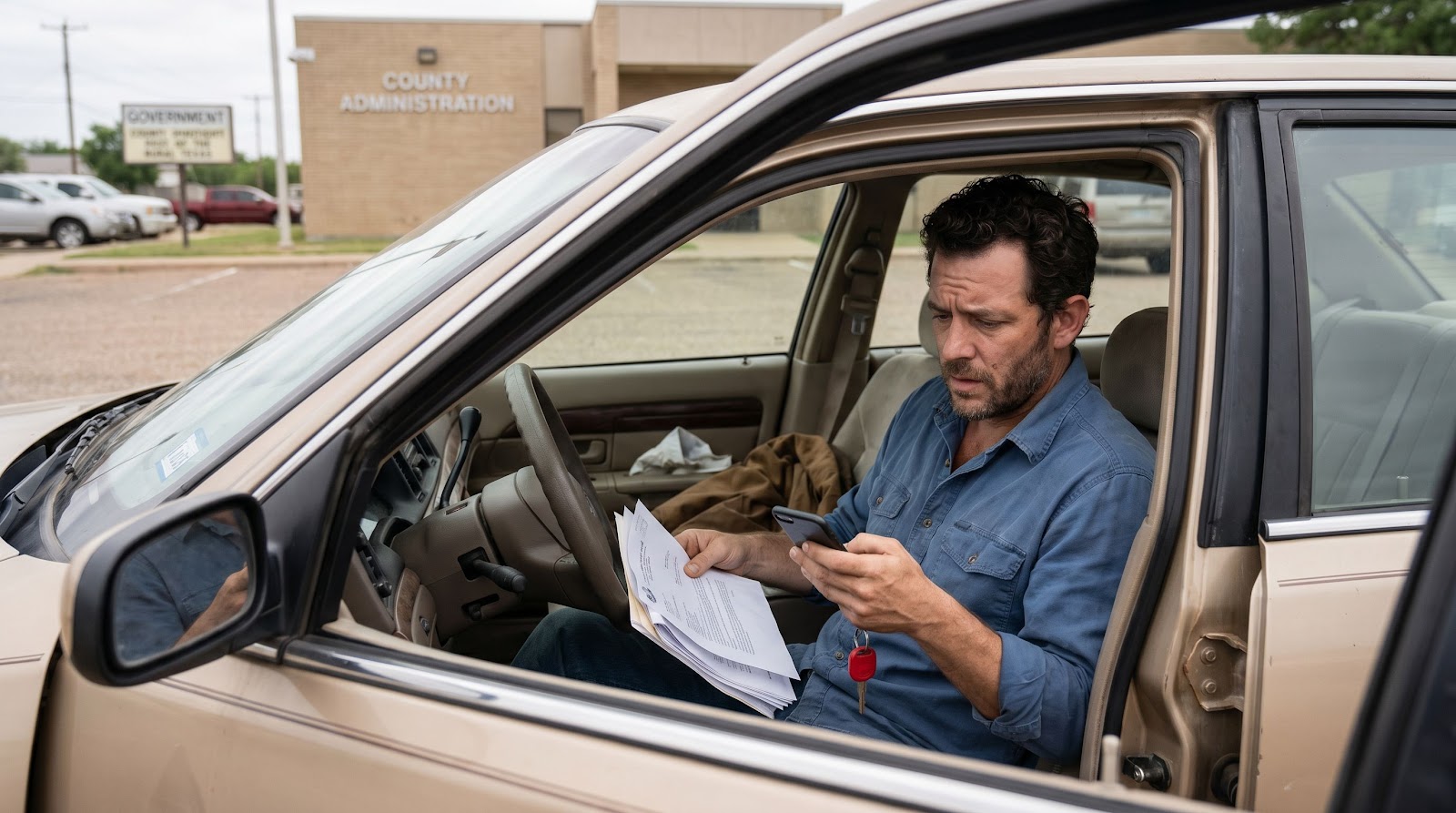
When a ticket becomes a conviction and why that matters
A citation by itself is not the key rating event. What usually matters to insurers is the conviction that stems from your driving history.
Texas insurance reporting still separates major and minor convictions for core coverages, according to the Texas Department of Insurance. That tells you carriers do not treat every speeding case the same way. A lower-level speeding conviction may be rated differently than a more serious one, but either way, it can change how your risk is priced.
How the Texas 3-year driver record can affect underwriting
The practical issue is time. Texas DPS offers a 3-year driver record that shows moving violations for three years from the date of offense, which gives insurers a clear window to review when they underwrite or rerate a policy.
If your renewal comes up during that period, the ticket may still be visible. You can even order that record yourself for $6.00 through the Texas Department of Public Safety if you want to see what an insurer is likely reviewing.
Why can one ticket cost more in a hardening insurance market
One conviction hurts more when the whole market is already pushing rates upward. Texas personal auto rate changes averaged 0.9% statewide in 2025, and TAIPA private passenger auto rates are set for a 2.8% increase effective November 1, 2026, based on Texas Department of Insurance filings.
So the surcharge from a speeding conviction does not happen in a vacuum. It can stack onto broader rate pressure already built into the market.
Texas car insurance rates in 2026: what the numbers show
The big picture is simple: a speeding ticket can raise Texas car insurance costs in a market that was already getting more expensive. There is still no fixed statewide ticket surcharge, but the broader rate trend matters because your conviction-related increase gets layered on top of it.
2025 statewide personal auto rate filings: average 0.9% increase
Texas personal auto rate changes averaged 0.9% statewide in 2025, according to the Texas Department of Insurance. That does not mean every driver got a 0.9% bill increase, but it does show the market was already moving upward before your own driving record enters the equation.
For a driver with a new conviction, that matters. Your insurer may apply its own driving-record surcharge while the base price of coverage is already under pressure.
TAIPA rate increase of 2.8% effective November 1, 2026
There is another confirmed number for 2026. TAIPA private passenger auto rates are rising 2.8% effective November 1, 2026, based on Texas Department of Insurance Bulletin B-0005-26.
That is especially relevant for drivers who end up in the assigned-risk market. If a speeding ticket makes your options tighter, the timing of that broader increase can make the total cost feel worse at renewal.
Ticket surcharge vs. broader market increases: how the costs stack up
Here is the practical difference: marketwide increases like 0.9% or 2.8% are broad trends, while a ticket surcharge is individualized. Texas statistical reporting still requires insurers to report conviction-based surcharges as percentages, and those can vary widely by company and driver profile.
So when people ask how much a speeding ticket in Texas will affect their car insurance, the honest answer is two-part. You may face a conviction-based increase from your carrier, and you may also be renewing during a period when rates are already rising across the state.
Can you keep a speeding ticket from raising your insurance?
Sometimes, yes. The key to speeding ticket Texas car insurance costs is avoiding a conviction when the law and the court allow it, because insurers rate convictions, not just the stop itself.
That is why the first move after getting a ticket is usually to review your options before you pay anything.
When deferred disposition may help prevent a conviction
Deferred disposition can help in some courts if the case is resolved without a final conviction showing up the way a paid ticket would. Whether it is available depends on the court and your specific citation, so you need to ask the court what conditions apply before making a decision.
For insurance purposes, that distinction matters. Texas insurers use conviction-based surcharges in their rating structure, according to the Texas Department of Insurance, so keeping the case from ending as a conviction may protect you from a later premium increase.
When a driving safety course may be an option
Texas law gives some drivers another path. Under Texas Transportation Code Chapter 542, an eligible driver may request a driving safety course for dismissal in certain speeding cases, including when the speed was less than 10% over the posted limit and the violation did not happen in a school crossing zone.
If you qualify and the court approves it, that can be one of the clearest ways to reduce the odds that speeding ticket Texas car insurance rates climb at renewal.
Why paying the ticket too quickly can be a costly mistake
Paying fast feels efficient, but it can shut the door on options that might have kept the ticket from becoming a conviction. Once that happens, the case may stay visible on a Texas 3-year driver record, which DPS sells for $6.00.
Before you pay, check what the court offers, confirm whether you qualify for a driving safety course, and understand what outcome will appear on your record. A rushed payment can cost a lot more than the fine itself.
Which drivers usually see the biggest insurance increase after a speeding ticket?
Drivers with a riskier profile usually feel the biggest jump in speeding ticket Texas car insurance costs. The ticket itself matters, but the larger increase often shows up when that conviction is added to an already fragile rating profile.
Texas does not apply a standard surcharge for everyone. The Texas Department of Insurance still requires insurers to report conviction-based surcharges and to separate major and minor convictions, so the same speeding ticket can hit two drivers very differently.
A driver with one recent conviction may get a smaller chance than someone who already has other violations or an at-fault accident on record. The same goes for drivers who are already in tougher underwriting situations, where one more conviction can narrow options at renewal.
Severity can also change the outcome. Texas statistical reporting separates major and minor convictions, which tells you that insurers do not rate every speeding case the same way.
Another group to watch is drivers shopping in the higher-risk market. If your choices are already limited, a new ticket can hurt more because you are dealing with conviction-based pricing on top of broader increases like the 2.8% TAIPA rate increase effective November 1, 2026, approved by the Texas Department of Insurance.
The practical point is simple: the biggest increases usually go to drivers who give the insurer more than one reason to worry. A speeding conviction that stays visible on a 3-year Texas driver record can be much more expensive when it is stacked onto prior trouble.
Should you shop for a new policy after a speeding ticket in Texas?
Yes, it is usually worth comparing quotes after a conviction. There is no fixed statewide surcharge for speeding tickets in Texas car insurance, so one company may price that ticket much harder than another.
If your renewal already reflects the conviction, shopping can show whether the increase is mostly your insurer’s rating approach or part of the broader Texas market. That matters even more when statewide personal auto rate changes averaged 0.9% in 2025, and TAIPA rates are rising 2.8% effective November 1, 2026.
| Metric | Verified value |
|---|---|
| DPS 3-year driver record fee | $6.00 |
| Minimum liability – bodily injury per person | $30,000 |
| Minimum liability – bodily injury per accident | $60,000 |
| Minimum liability – property damage per accident | $25,000 |
| Average statewide personal auto rate change in 2025 | 0.9% |
| TAIPA private passenger auto rate change effective Nov. 1, 2026 | 2.8% increase |
When comparing quotes can save money despite the conviction
Comparing quotes can save money when the ticket is now part of your record, but carriers still view the rest of your profile differently. Texas Department of Insurance reporting confirms insurers use conviction-based surcharges, and they even separate major and minor convictions. That is why two quotes can land far apart after the same speeding case.
What information to gather before requesting new quotes
Get your current declarations page, your renewal offer, and the date of the speeding conviction. It also helps to order your Texas DPS 3-year driver record first, since it costs $6.00 and shows the moving violations insurers commonly review.
Have your current limits ready, too. At a minimum, Texas requires $30,000/$60,000/$25,000 liability coverage, and quote comparisons only make sense when the coverage levels match.
How to avoid coverage gaps while changing insurers
The safest move is simple: do not cancel the old policy until the new one is issued and the effective date is confirmed. Start the replacement policy first, then end the old one on the same day.
Check the vehicles, drivers, deductibles, and liability limits line by line. A cheaper premium after a speeding ticket is helpful only if the new policy is actually replacing what you had.
What mistakes make a Texas speeding ticket more expensive over time?
The cost usually grows when a driver turns one ticket into a longer insurance problem. With speeding ticket Texas car insurance, the biggest mistakes are missing court deadlines, stacking the ticket with an at-fault accident, and cutting coverage so far that one claim creates a much larger financial hit.
Ignoring the court deadline or missing payment terms
This is where a manageable ticket often gets more expensive. If you miss the court date, pay late, or fail to complete the terms the court gave you, you can lose options that might have helped you avoid a conviction in the first place.
That matters because Texas insurers rate convictions, and a speeding case can remain visible on a 3-year driver record that insurers commonly review. If you are not sure what is already showing, Texas DPS lets you order that record for $6.00.
Letting a minor violation combine with an at-fault accident
A minor speeding ticket by itself may be one thing. A speeding conviction plus an at-fault accident is another.
Texas Department of Insurance statistical reporting tracks surcharges tied to both convictions and at-fault accidents. In plain terms, you are giving the insurer two separate rating reasons to charge more. That is why a driver can go from annoyed at renewal to shocked by the new premium.
Choosing the cheapest policy and losing important coverage
After a ticket, some drivers focus only on the lowest premium. That can backfire fast if the cheaper quote strips protection down to Texas’s minimum liability limits of $30,000/$60,000/$25,000.
If you then cause an accident, the insurance problem is no longer just the surcharge from the speeding ticket. It is the combination of a ticket, a claim, and coverage that may not go far enough. Saving a little on premiums can cost far more when the next mistake happens.
 Vehicle
  Home & Property
  Commercial
  Life
Life  Health