


If a texas road rage intentional car accident insurance case involves a deliberate hit, standard auto coverage can fall apart fast. In Texas, insurance is built around accidents, so a driver who acts on anger may end up facing the damage personally. If you want to review coverage options in the state, start with Texas auto insurance.
What happens if road rage causes an intentional car accident in Texas?
If road rage turns into an intentional crash, the biggest insurance issue is simple: the claim may be treated as deliberate harm, not an accident. That can mean denied coverage, out-of-pocket exposure, and a very hard fight over who pays.
Why Texas auto insurance is built for accidents, not deliberate harm
Texas personal auto policies generally cover accidental losses. The Texas Department of Insurance says personal auto policies generally do not cover damages you caused intentionally. That is the core problem in a Texas road rage intentional car accident insurance dispute.
Texas law draws the same line in uninsured and underinsured motorist coverage. Insurance Code Chapter 1952 requires Texas UM/UIM coverage to exclude bodily injury or property damage resulting from the insured’s intentional acts. If a driver intentionally rams another car, the event can move outside the normal insurance framework.
When an insurer can deny liability, collision, or other parts of a claim
An insurer may deny liability coverage when the facts point to a deliberate act instead of negligence. The same claim can also trigger disputes over other coverages, depending on policy wording and the investigation.
For example, if a driver admits they chased another vehicle and hit it on purpose, that is very different from misjudging a lane change. Texas consumer guidance also explains what each coverage is meant to do: liability for damage you cause others, collision for your own car, PIP for medical and related costs, and UM/UIM in qualifying situations involving an uninsured or underinsured driver. In a suspected intentional-crash case, those distinctions matter immediately.
How personal liability can follow after an intentional crash
If coverage is denied, the driver may be left personally responsible for injuries and property damage. Texas requires minimum liability limits of 30/60/25, and the Texas Department of Insurance warns that even those minimums may leave a driver paying the rest out of pocket and facing a lawsuit.
This is not a rare thought experiment. TxDOT recorded 1,713 road-rage-related crashes in 2024, including 7 fatal crashes. That is why a Texas road rage intentional car accident insurance claim can become a personal financial crisis just as fast as a traffic case.
Why won’t auto insurance cover an intentional crash?
Because auto insurance in Texas is built for accidents. In a Texas road rage intentional car accident insurance dispute, the moment the facts suggest a deliberate hit, the claim can move outside what a standard policy is meant to pay.
That is why these cases turn on one question fast: was this a mistake behind the wheel, dangerous driving, or an intentional act?
Texas Department of Insurance guidance on intentional acts
The clearest consumer guidance comes from the Texas Department of Insurance. Its auto insurance guide says personal auto policies generally do not cover damages you caused intentionally.
Applied to road rage, that means a driver who swerves into another car on purpose, chases someone down, or uses a vehicle to strike another vehicle intentionally may not have liability protection for that damage. The insurer will look at statements, police findings, video, and the sequence of events.
Texas Insurance Code rules affecting UM/UIM exclusions for intentional harm
Texas law draws the same line. Texas Insurance Code Chapter 1952 requires UM/UIM coverage in Texas to exclude bodily injury or property damage resulting from the insured’s intentional acts.
That rule matters because some drivers assume uninsured or underinsured motorist coverage fixes every bad crash. It does not erase intentional-act exclusions tied to the insured’s own conduct.
The difference between negligence, reckless driving, and intentional vehicle assault
Negligence is a driving mistake. Reckless driving is more dangerous behavior, but still not always a deliberate crash. Intentional vehicle assault is different: the harm itself is the point.
A missed blind spot may be negligence. Speeding through traffic in anger may look reckless. Turning your car into another vehicle to punish, scare, or stop that driver is where a Texas road rage intentional car accident insurance claim can collapse on coverage.
If the other driver acted intentionally, what coverage may still help you?
Sometimes, yes. If the other driver’s insurer denies liability because the crash looks deliberate, your own policy may still help with your car damage, medical bills, or possibly an uninsured or underinsured motorist claim, depending on the facts.
| Item | Current Texas figure or rule |
|---|---|
| Road-rage crashes as contributing factor in Texas (2024) | 1,713 crashes |
| Road-rage fatal crashes in Texas (2024) | 7 fatal crashes |
| Road-rage serious-injury crashes in Texas (2024) | 41 crashes |
| Minimum liability limit per injured person | $30,000 |
| Minimum liability limit per accident for bodily injury | $60,000 |
| Minimum property damage liability limit | $25,000 |
When collision coverage may pay for your vehicle damage
Collision coverage is often the clearest first place to look for your own car. Texas Department of Insurance says collision pays to repair or replace your vehicle after an accident, so in a Texas road rage intentional car accident insurance case, it may respond even when the other driver’s liability coverage is disputed.
That matters if your car is hit, pushed into a barrier, or left undrivable while the carriers argue over intent.
How PIP or Med Pay may help with immediate medical bills
For medical costs, PIP can be especially useful because it is designed to pay medical and related expenses. Texas Department of Insurance also explains Med Pay as a coverage people may carry for medical bills, which can help while fault and coverage are still being sorted out.
If you need an ER visit, follow-up care, or ambulance bills handled quickly, these coverages may provide faster help than waiting on the other side’s investigation.
When UM/UIM could apply depending on policy wording and claim facts
UM/UIM may come into play if the at-fault driver has no insurance or not enough insurance, according to the Texas Department of Insurance. In an intentional-crash case, the argument is sometimes that the other vehicle is effectively uninsured for this loss because liability coverage is being denied.
Still, this is where wording and claim facts matter most. Texas Insurance Code Chapter 1952 requires UM/UIM to exclude losses resulting from the insured’s intentional acts. That rule does not automatically answer what happens when the other driver acted intentionally, so the policy language and the investigation become critical.
How much can road rage cost in Texas when insurance denies the claim?
Potentially a lot. In a Texas road rage intentional car accident insurance case, once the carrier treats the crash as intentional, the bill can shift from your policy to your bank account.
Texas Department of Insurance makes the basic risk clear: personal auto policies generally do not cover damages you caused intentionally. That changes the financial picture fast.
Out-of-pocket vehicle repair and medical exposure
If your liability claim is denied, you may have to pay for the other driver’s car, your own vehicle damage, and injury-related costs yourself. Even a crash that starts with a damaged bumper can grow into towing, storage, body work, emergency care, and follow-up treatment.
Texas minimum liability limits are 30/60/25. Texas Department of Insurance already warns those limits may be too low in a serious crash. If the event is treated as intentional, the problem can be worse because the issue may not be low limits. It may be no liability payment at all.
Lawsuit risk, judgments, and wage or asset pressure
When insurance steps back, the other driver can pursue you directly. That can mean a lawsuit for property damage, medical expenses, and other claimed losses tied to the crash.
In practical terms, a Texas road rage intentional car accident insurance dispute can become a personal-asset problem. A family checking account, savings, or other property may suddenly matter more than the declarations page you thought would protect you.
Criminal consequences that can increase the financial damage
A road-rage crash can also bring criminal exposure, which adds cost and pressure beyond the insurance fight. Police reports, witness statements, and any criminal case can shape how the insurer evaluates intent.
This is not a fringe scenario. TxDOT recorded 1,713 road-rage crashes in 2024, including 41 serious-injury crashes and 7 fatal crashes. Texas DPS also warns that road rage causes hundreds of injuries and deaths each year.
Texas road rage by the numbers: how common and how severe is the risk?
It is common enough to matter, and severe enough to ruin lives. For a Texas road rage intentional car accident insurance dispute, the numbers show this is not a rare edge case. It is a real Texas crash pattern with deadly outcomes.
TxDOT data: 1,713 crashes with road rage as a contributing factor in 2024
TxDOT recorded 1,713 crashes in Texas in 2024 with road rage listed as a contributing factor. That number matters because it moves this issue out of the hypothetical and into everyday driving risk.
Texas DPS also warns in its driver handbook that road rage, also called aggressive driving, causes hundreds of injuries and deaths each year. Put plainly, insurers, police, and drivers are dealing with a behavior Texas agencies already recognize as dangerous.
Fatal crashes and what the numbers say about severity
The same TxDOT data shows 7 fatal crashes and 41 serious-injury crashes tied to road rage in 2024. So while many people picture road rage as yelling, brake-checking, or a reckless lane cut, the consequences can escalate far beyond property damage.
TxDOT also reported 4,150 total traffic deaths statewide in 2024. Road rage is a small slice of that larger picture, but it is clearly one of the slices with life-changing stakes.
Comparison: accidental crash claims versus intentional-act claim denials
Here is the practical split. In an ordinary accident claim, liability coverage is built to respond when a driver causes damage by mistake. In a Texas road rage intentional car accident insurance case, the fight starts when the facts suggest the driver meant to hit, chase, corner, or strike another vehicle.
That is where claim handling can change sharply. Texas Department of Insurance says personal auto policies generally do not cover damages caused intentionally, so a routine crash claim can turn into a denial issue fast if the conduct looks deliberate.
What should you do after a suspected intentional road rage crash?
First, protect yourself and build a clean claim record. In a Texas road rage intentional car accident insurance situation, the steps you take in the first minutes can affect your safety, medical care, and how the insurer evaluates what happened.
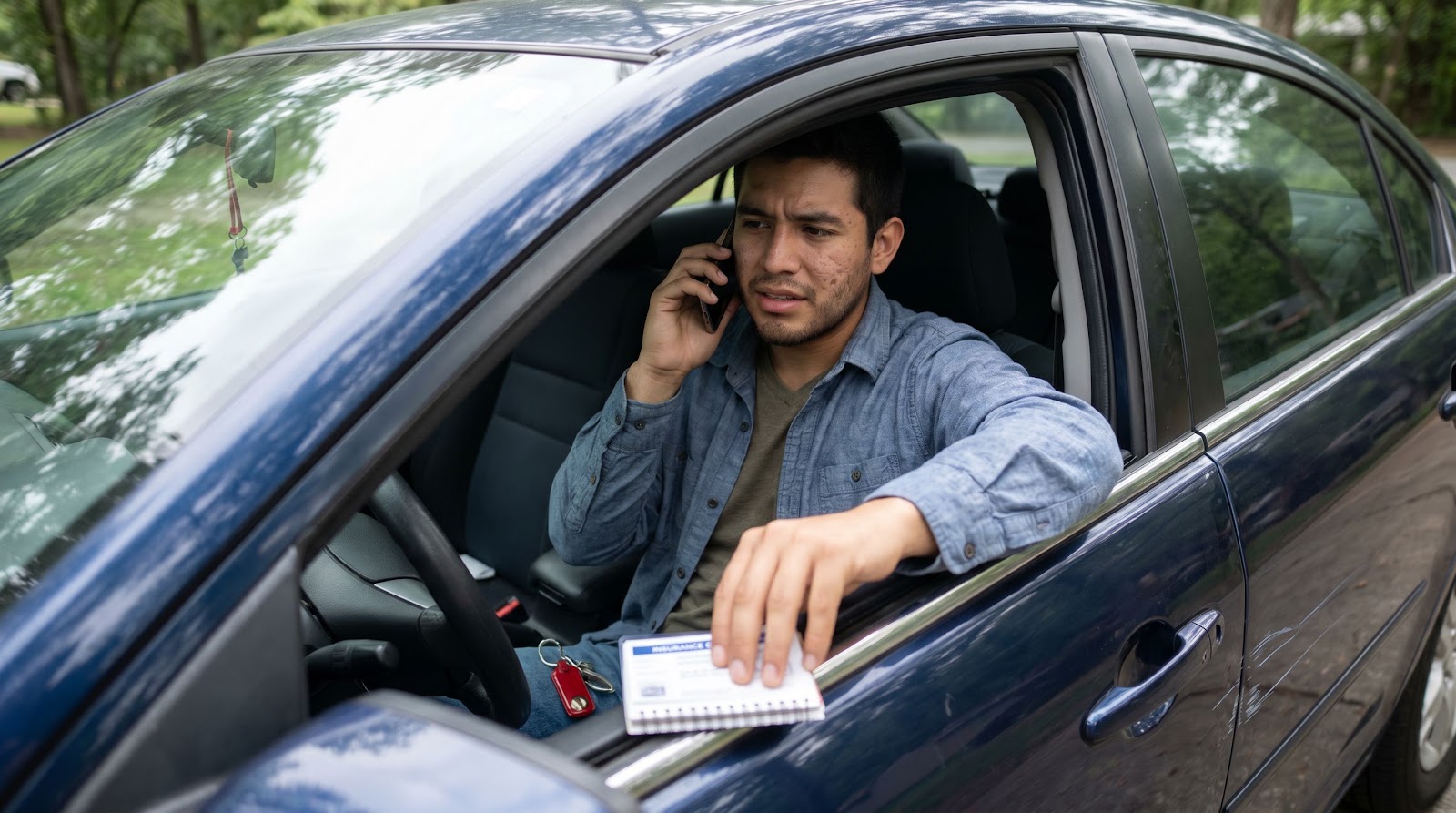
Call 911, seek medical care, and avoid escalation
If you think the crash was intentional, call 911 right away and ask for police and medical help. Do not argue with the other driver, do not chase them, and do not answer anger with anger.
If you are hurt, dizzy, or shaken, get checked. Texas Department of Public Safety warns that road rage is a serious safety problem, and TxDOT recorded 1,713 road-rage-related crashes in 2024. Treat the situation as dangerous, not as a normal fender bender.
Document statements, vehicle damage, witnesses, and video evidence
Take photos of the damage, the road, skid marks, debris, license plates, and the position of the vehicles if it is safe. Save dashcam footage, phone video, and screenshots if the other driver made threats before or after the impact.
Write down exact words you heard, not your interpretation. If a witness says the other driver swerved at you on purpose, get their contact information and keep that separate from your own notes. Details fade fast after a high-stress crash.
What to say to your insurer without guessing about intent
Report the facts clearly and stick to what you saw. Say what the other vehicle did, what you heard, where the impact happened, and whether police responded.
Avoid guessing about motive or making legal conclusions. You can say, “I believe the contact may have been intentional because the driver followed me, yelled, and then turned into my lane,” without claiming facts you cannot prove. That gives the adjuster usable information without boxing your claim into a bad statement.
What mistakes can ruin your claim or make your situation worse?
The fastest way to damage a Texas road rage intentional car accident insurance claim is to hand the insurer facts that make the crash sound deliberate, or to realize too late that your own policy was never set up for this kind of mess.
These cases are hard enough when the evidence is clear. They get harder when your own words, assumptions, or weak coverage choices work against you.
Admitting you acted on purpose or speculating before the facts are clear
If you say you “meant to scare them,” “nudged them back,” or “taught them a lesson,” you may be giving the carrier exactly what it needs to frame the crash as intentional. The Texas Department of Insurance says personal auto policies generally do not cover damages you caused intentionally.
The same problem happens when people guess. Saying “I blacked out,” “maybe I swerved at him,” or “she definitely hit me on purpose” before the investigation is complete can create contradictions that follow the claim from day one.
Assuming liability coverage will protect you no matter what
It will not. Liability insurance is meant to pay for damage and injuries you cause to others, but Texas consumer guidance draws a clear line between accidental loss and intentional harm.
Some drivers lean on the state minimum of 30/60/25 as if having a policy card solves everything. It does not. Texas Department of Insurance also warns that low limits can still leave you paying out of pocket and being sued, and an intentional-act denial can be worse than low limits because coverage may fail altogether.
Failing to review collision, PIP, and UM/UIM limits before a problem happens
If another driver acts intentionally, your own first-party coverage may matter more than their liability policy. That is why collision, PIP, and UM/UIM should be reviewed before there is a crash, not after.
Collision may help with your car. PIP may help with medical and related costs. UM/UIM may matter depending on the facts and policy wording if the other side has no usable coverage. Waiting until after impact to check those limits is how people learn, too late, that they kept only the bare minimum.
 Vehicle
  Home & Property
  Commercial
  Life
Life  Health