


The Florida hurricane car insurance deductible that most people talk about does not exist in standard auto insurance. For your vehicle, hurricane damage usually comes down to whether you added comprehensive coverage to your Florida auto insurance policy and what deductible you chose before the storm.
Is there a special Florida hurricane car insurance deductible during hurricane season?
Why does the Florida hurricane deductible apply to homes, not standard auto insurance?
No. A special Florida hurricane car insurance deductible is a myth for standard personal auto policies.
Florida’s hurricane deductible rules are tied to residential property coverage. The Florida Department of Financial Services explains that this deductible applies to personal lines residential hurricane losses, not standard auto physical damage claims. That is why the “once per season” rule people hear about belongs in homeowners coverage, not in a regular car policy.
For vehicles registered in Florida, the legal minimum is $10,000 in PIP and $10,000 in property damage liability, according to the Florida Department of Highway Safety and Motor Vehicles. Those required coverages do not pay to repair your own car after hurricane winds or flooding.
What your car policy deductible really is after wind, flood, or falling tree damage
After a hurricane, your deductible is usually the comprehensive deductible already listed on your auto policy. Florida Department of Financial Services consumer guidance says comprehensive, also called Other than Collision, covers windstorm and flood damage to the insured vehicle.
That means if a storm surge floods your parked car, or a tree limb falls on the hood during hurricane season from June 1 to November 30, the claim typically goes through comprehensive coverage, not a separate hurricane deductible. Common comprehensive deductibles shown in Florida DFS guidance are $250, $500, or $1,000.
If you never bought comprehensive coverage, there is usually no coverage for damage to your own vehicle from hurricane-related events. The National Association of Insurance Commissioners and Florida DFS both make that distinction clear.
What coverage pays for hurricane damage to your car in Florida?
How comprehensive coverage handles storm, flood, hail, and debris losses
If you are wondering which part of your policy applies, the answer is usually comprehensive coverage. For a Florida hurricane car insurance deductible, that means the deductible is typically the one already listed under comprehensive on your auto policy, not a separate hurricane percentage deductible.
The Florida Department of Financial Services says comprehensive, or Other than Collision, pays for damage to the insured vehicle caused by windstorm and flood. The National Association of Insurance Commissioners also places water, flood, and windstorm under comprehensive. So if rainwater floods a parked car, hail cracks the windshield, or flying debris dents the roof, that claim generally falls under comprehensive.
Florida DFS consumer guidance shows common comprehensive deductibles of $250, $500, or $1,000. And the Insurance Information Institute explains that auto deductibles generally apply each time you file a claim. That is very different from Florida’s residential hurricane deductible rules.
What does mandatory Florida auto insurance not pay for
Florida’s required auto insurance is much narrower than many drivers think. To register a vehicle, the state requires $10,000 in PIP and $10,000 in property damage liability, according to the Florida Department of Highway Safety and Motor Vehicles.
Those coverages do not repair your own car after a hurricane. PIP helps with injury-related costs. Property damage liability pays for damage you cause to someone else’s property. If your own vehicle is hit by floodwater, wind, hail, or a fallen branch, mandatory coverage does not step in for that loss.
That gap is where many Florida drivers get caught. If comprehensive coverage was never added to the policy, hurricane damage to the car is usually uninsured.
How much will you pay out of pocket if a hurricane damages your vehicle?
If you have comprehensive coverage, your out-of-pocket cost is usually your selected Florida hurricane car insurance deductible under that coverage. For most drivers, that means a fixed dollar amount on the policy, not a separate hurricane percentage deductible.
Florida Department of Financial Services guidance shows common comprehensive deductibles of $250, $500, or $1,000. Some policies may carry a higher deductible. The key point is simple: the amount you chose before the storm is usually the amount that applies to covered hurricane-related damage to your car.
Your selected comprehensive deductible: $250, $500, $1,000, or more
A lower deductible usually means you pay less when you file a covered claim. A higher deductible means you keep more of the risk yourself. So if your comprehensive deductible is $500, that is generally the amount you pay before insurance covers the rest of a covered loss, up to the policy terms.
The Insurance Information Institute says auto deductibles generally apply each time you file a claim. That matters if separate storm losses happen and you report them as separate claims.
Claim examples for flooding, windshield damage, and a total loss
If floodwater gets into a parked vehicle and the repair is covered under comprehensive, you would usually pay your chosen deductible first. If the damage is less than your deductible, you may end up paying the full bill yourself.
If hurricane debris or wind cracks the windshield, the same idea applies: the Florida hurricane car insurance deductible is typically your comprehensive deductible, not a one-time seasonal hurricane deductible.
If the car is declared a total loss after flood or wind damage, the deductible still generally applies to the comprehensive claim. What changes is the size of the loss, not the deductible structure.
What happens if you only carry Florida’s minimum required auto insurance?
If you only have the state minimum, your own car is largely unprotected from hurricane damage. That is the hard truth behind the Florida hurricane car insurance deductible confusion: mandatory Florida auto insurance is about basic legal compliance, not fixing your vehicle after wind or flood.
Florida requires $10,000 in PIP and $10,000 in property damage liability to register a vehicle, according to the Florida Department of Highway Safety and Motor Vehicles.
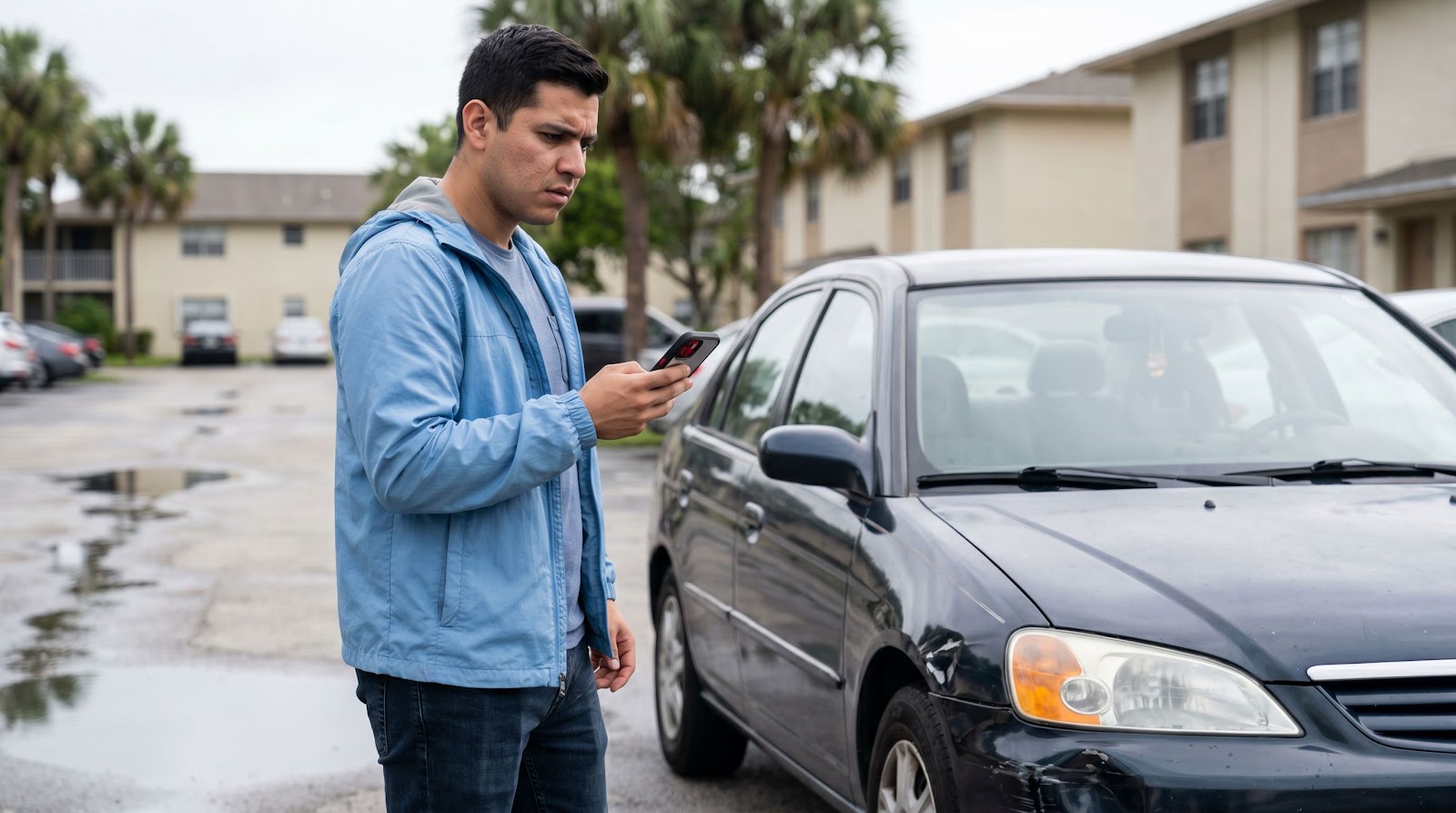
Why PIP and property damage liability do not cover damage to your own car
PIP is for injury-related costs. Property damage liability pays when you damage someone else’s property. Neither one is designed to repair or replace your own car after a hurricane.
So if your sedan is parked outside and floodwater gets into the engine, or heavy wind drops debris onto the roof, minimum coverage does not step in for that loss. The Florida Department of Financial Services makes clear that windstorm and flood damage to your insured vehicle fall under comprehensive coverage, which is optional.
The financial risk of having no comprehensive coverage from June 1 to November 30
From June 1 to November 30, that gap becomes much more expensive. Without comprehensive coverage, there is usually no payment for hurricane-related damage to your own vehicle, even if you assumed a special Florida hurricane car insurance deductible would apply.
And if you do carry comprehensive, the deductible is usually a fixed amount chosen in the policy, often $250, $500, or $1,000 in Florida DFS consumer guidance. Without it, there may be no claim to file on your own car at all.
Florida hurricane car insurance deductible vs. homeowners hurricane deductible: what is the difference?
The difference is simple: a homeowner’s hurricane deductible in Florida is typically tied to hurricane losses on residential property, while a Florida hurricane car insurance deductible is usually just the fixed comprehensive deductible already listed on your auto policy.
That is where people get tripped up. They hear “hurricane deductible” and assume the same rule follows the storm from the house to the car. It usually does not.
Percentage-based hurricane deductibles on home policies
On the home side, Florida’s hurricane deductible rules apply to personal lines residential hurricane losses. The Florida Department of Financial Services explains that this deductible works on an annual basis and can carry from a first to a second hurricane claim in the same year when the same insurer group remains in place.
That structure is very different from auto insurance. It is a special hurricane-loss framework for residential property, not a standard car insurance setup. If you are comparing your vehicle protection with your home insurance coverage, this is one of the biggest differences to watch.
Fixed-dollar deductibles on auto comprehensive coverage
For cars, hurricane damage is generally handled under comprehensive coverage, and the deductible is usually a fixed dollar amount. Florida DFS consumer guidance shows common comprehensive deductibles of $250, $500, or $1,000.
So if wind throws debris onto your parked SUV or floodwater damages the interior, the deductible is usually the amount you selected before the storm, not a percentage hurricane deductible. The National Association of Insurance Commissioners also describes comprehensive coverage as coverage for non-collision events like windstorm, water, or flood.
One more practical difference: the Insurance Information Institute says auto deductibles generally apply each time you file a claim. That is not the same as Florida’s residential “once per season” hurricane deductible rule.
Which costly mistakes do Florida drivers make before and after a hurricane claim?
The biggest mistakes are simple and expensive: assuming hurricane damage is automatic in auto insurance, waiting until the storm is close, and misunderstanding which deductible applies. That confusion around a Florida hurricane car insurance deductible can leave a driver with no payment at all, or a much larger out-of-pocket bill than expected.
Assuming storm damage is covered automatically
Many drivers think any hurricane loss to their car is built into a standard Florida policy. It usually is not. Florida only requires $10,000 in PIP and $10,000 in property damage liability to register a vehicle, and those coverages do not repair your own car after wind or flood damage, according to the Florida Department of Highway Safety and Motor Vehicles.
For your own vehicle, storm losses usually depend on comprehensive coverage. If that coverage was never added, a flooded interior, broken glass, or wind damage may be uninsured.
Waiting too long to add comprehensive or document damage
A common pre-storm mistake is checking the policy after watches or warnings start and realizing comprehensive coverage is missing. Since comprehensive coverage is optional, you need to know whether it is already on the policy and what deductible you selected before the loss happens.
After the storm, the delay creates a different problem. If your car took visible damage from floodwater, debris, or a fallen limb, document it right away with clear photos and notes before cleanup or towing changes the scene. Auto deductibles generally apply each time you file a claim, according to the Insurance Information Institute, so the timing and way losses are reported can matter.
Confusing flood damage, wind damage, and collision damage deductibles
Drivers also mix up the type of loss. Flood and wind damage to your parked car usually point to comprehensive, not collision. Collision is generally for impact-related losses, and Florida DFS consumer guidance shows common deductibles for both coverages at $250, $500, or $1,000.
That means a Florida hurricane car insurance deductible is usually the comprehensive deductible already listed in the policy, even when the storm involves water, wind, or debris.
How should you choose the right deductible before peak Florida hurricane season?
Pick the Florida hurricane car insurance deductible based on two things: what you can truly pay fast after a storm, and whether you even have comprehensive coverage in place. For car claims, the deductible is usually the fixed comprehensive amount on your policy, and the Insurance Information Institute says auto deductibles generally apply each time you file a claim.
How to balance premium savings against emergency cash on hand
A higher deductible can lower your premium, but it also means more cash out of pocket when hurricane damage hits your car. Florida Department of Financial Services consumer guidance shows common comprehensive deductibles of $250, $500, or $1,000. The practical question is simple: if your vehicle is flooded this week, which of those amounts could you pay without putting rent, groceries, or utilities behind?
That is the better way to shop for a Florida hurricane car insurance deductible. Do not compare deductibles to a homeowner’s hurricane deductible rule. Compare them to your emergency cash. If you would struggle to come up with $1,000 on short notice, choosing the lowest premium may backfire when you need repairs or a total-loss claim processed.
When lowering your deductible may make sense for an older or financed vehicle
Lowering the deductible can make sense when a car still matters a lot to your daily life, even if it is older. If a paid-off vehicle is your only way to get to work, a smaller deductible may be easier to absorb after windstorm or flood damage.
It can also make sense for a financed vehicle. Florida DFS says comprehensive and collision are optional, though lenders commonly require them for financed cars. If your lender requires comprehensive coverage, review whether the current deductible still fits your budget before June 1 and November 30. A deductible that looked manageable months ago may feel very different when a storm is near.
 Vehicle
  Home & Property
  Commercial
  Life
Life  Health