


July events can turn a routine promotion into a serious liability problem fast. General liability coverage for businesses is often the base layer, but Florida event liability commercial insurance matters because holiday crowds, fireworks, and rented venues create claims that can grow in one night.
What does Florida event liability commercial insurance actually cover during July holiday events?
It usually covers three big buckets: injuries to guests, damage to someone else’s property, and the cost to defend your business if you are accused of negligence. For many permitted Florida events, public agencies already expect at least $1,000,000 per occurrence in liability coverage, according to the City of Tampa and City of Jacksonville rules.
Bodily injury claims from slips, falls, crowd surges, and fireworks incidents
If a guest slips near a drink station, gets knocked down during a crowd surge, or is hurt by fireworks debris, this is the part of Florida event liability commercial insurance that usually responds first. It is built for third-party bodily injury claims tied to your event operations.
That matters in July. The U.S. Consumer Product Safety Commission estimated 14,700 fireworks injuries in 2024 nationwide, a reminder that even a short display or vendor demo can end in an ER visit and a claim.
Property damage involving vendors, rented spaces, neighboring businesses, and public venues
Coverage can also apply when your event damages a rented pavilion, a city facility, a vendor’s setup, or nearby property. Think of a fireworks ember, a toppled display, or event equipment scraping walls and flooring in a leased space.
Permit rules often get more specific than a standard policy. Jacksonville requires $1,000,000 each occurrence for commercial general liability on larger permitted special events and can also require liquor, auto, or watercraft liability when those exposures are part of the event.
Legal defense costs and why negligence claims can survive holiday fireworks permission rules
Your policy may also help pay legal defense costs when a claim alleges your business failed to plan, supervise, secure, or control the event properly. That defense piece matters even before fault is decided.
Florida law allows consumer fireworks on July 4, but it does not override local regulation, as stated in The Florida Senate’s Chapter 791. So a business cannot point to holiday permission alone if a lawsuit says the event was handled carelessly, especially where local fire rules, permits, or crowd controls were ignored.
Why are Florida businesses more exposed to lawsuits during the July holiday rush?
Because July events stack several risk factors on top of each other in a short window. Florida event liability commercial insurance becomes more relevant when a business is dealing with bigger crowds, rushed event buildouts, alcohol service, and extra vehicle or water activity at the same time.
That mix is why a claim can start as a routine incident and turn into a serious negligence lawsuit by the end of the night.
Higher foot traffic, temporary setups, and understaffing risks
Holiday promotions, parking lot sales, pop-up bars, vendor tents, and fireworks viewing areas create conditions that are harder to control than normal daily operations. More people mean more chances for slips, falls, crowd pressure, blocked exits, and poor supervision around temporary equipment.
July also brings permit pressure. Tampa requires proof of insurance at least 30 days before the event date, according to the City of Tampa. If a business plans late, adds vendors late, or changes the setup late, the insurance side can get complicated fast.
Alcohol-related liability, hired or non-owned auto exposure, and watercraft-related incidents
Many Florida businesses assume alcohol claims always fall on the drunk adult. Florida’s dram shop law is narrower than that, but it still leaves real exposure if alcohol is unlawfully furnished to a minor or knowingly served to a person habitually addicted to alcohol, under The Florida Senate’s Section 768.125.
Then there are the add-on risks. A staff member making a supply run in a personal car, a rented shuttle, or a boat used as part of the event can all create separate liability issues. Jacksonville’s event rules reflect that reality by requiring liquor liability when alcohol is allowed and watercraft liability when watercraft are integral to the event. If your operation involves vehicles, commercial vehicle insurance may need to be part of the review.
How one severe injury can exceed basic liability limits fast
Basic limits can look adequate until a severe injury involves emergency care, surgery, lost income, and legal defense. For permitted special events, cities like Tampa and Jacksonville commonly require $1,000,000 per occurrence in general liability coverage. That is a starting point, not a guarantee that every major claim will fit neatly inside it.
The boating side shows how serious holiday exposure can be in Florida. The Florida Fish and Wildlife Conservation Commission reported 685 reportable boating accidents and 81 fatalities in 2024, and Independence Day weekend gets heightened enforcement because it is one of the busiest boating periods.
What insurance limits do Florida venues and permits commonly require for holiday events?
For many July events, the starting point is simple: venues and city permits often want $1,000,000 per occurrence in general liability. That is a common entry requirement for Florida event liability commercial insurance, especially when your business is using a public space, rented venue, or larger event setup.
Official rules from the City of Tampa and the City of Jacksonville both reflect that baseline, and Tampa also requires proof of insurance at least 30 days before the event date. If you wait until the last minute to confirm alcohol service, valet traffic, or a dockside setup, your insurance requirements can change fast.
$1 million per occurrence as the common commercial general liability starting point
Jacksonville requires $1,000,000 per occurrence for permitted special events with over 500 attendees, and Tampa requires $1,000,000 per occurrence for special events. For a business planning a July 4 promotion, that tells you what many venues and municipalities see as the minimum acceptable floor, not an unusually high limit.
When venues or municipalities require additional insured status
Many permits do not stop at the policy limit. They also require the city or venue to be named as an additional insured on your general liability coverage. Jacksonville and Tampa both require that status based on their special-event insurance rules.
That matters because your existing business policy may have the right limit, but still fail the permit review if the certificate is missing the required wording or entity name.
When liquor liability, commercial auto, watercraft, or abuse and molestation coverage may be required
Once the event includes extra exposures, Florida event liability commercial insurance usually needs to expand to include them. Jacksonville requires liquor liability when alcohol is served, sold, consumed, or otherwise allowed at a permitted event. It also requires watercraft liability when watercraft are integral to the event.
If vehicles are part of operations, Jacksonville requires a $500,000 combined single limit for automobile liability. A shuttle, delivery van, or staff-driven supply run can trigger that issue. And if your event involves minors, camps, or close-contact supervision, some venues may also ask for abuse and molestation coverage before they hand over the space.
How much coverage is enough for a Florida July event: minimum limits vs real lawsuit exposure
For many Florida July events, the permit minimum is $1,000,000 per occurrence. The problem is that a serious injury claim can burn through that floor much faster than business owners expect, especially when fireworks, alcohol, parking traffic, or waterfront activity are part of the night.
That is the real tension in Florida event liability commercial insurance: buying enough to satisfy the venue is one thing, buying enough to protect the business is another.
Comparing minimum permit limits with realistic injury claim scenarios
A city may accept $1,000,000 each occurrence, like Jacksonville, for permitted special events over 500 attendees, or $1,000,000 per occurrence, like Tampa. But that limit has to cover the claim and the defense of the claim.
If one guest suffers a severe fireworks injury, or a vehicle tied to event operations causes a major bodily injury loss, the minimum can feel small very quickly. And if your event is public-private, keep this in mind: Florida’s sovereign-immunity limits for government claims stay at $200,000 per person and $300,000 per incident under Section 768.28, while a private business can face much broader negligence exposure.
When an umbrella policy makes sense for holiday crowds and higher-severity risks
An umbrella policy starts to make sense when your event combines a big crowd with multiple loss triggers. Think alcohol service, valet or shuttle movement, fireworks, or a marina setting. That is when many owners also review excess liability coverage as a backstop above the primary policy.
It is especially relevant when the permit minimum gets you through approval, but not necessarily through a bad lawsuit.
How to evaluate exposure by attendance, alcohol service, parking, and waterfront activity
Start with four questions. How many people are expected? Will alcohol be served or even allowed? Will cars, shuttles, or staff vehicles be part of operations? Will the event touch docks, boats, or waterfront access?
Jacksonville’s rules mirror that checklist by requiring liquor liability when alcohol is allowed and watercraft liability when watercraft are integral to the event. On the waterfront side, the risk is not theoretical: the Florida Fish and Wildlife Conservation Commission reported 685 boating accidents and 81 fatalities in 2024, and Independence Day weekend gets heightened enforcement under Operation Dry Water.
What happens if your business relies on state fireworks permission instead of proper liability protection?
You still can get sued. Florida’s July 4 fireworks allowance is not a liability shield, and it does not cancel local rules, permit conditions, or your duty to run a safe event. That is where Florida event liability commercial insurance stops being a box to check and becomes real protection.
The statute is clear. Florida allows consumer fireworks use on designated holidays, including Independence Day, but it does not supersede local government regulation, according to The Florida Senate’s Chapter 791. So if your business skips crowd controls, ignores fire conditions, or treats holiday permission like legal immunity, a negligence claim can still land on your desk.
That gap catches owners off guard. A permit or a holiday rule may let the event happen, but it does not pay for a guest injury, property damage, or your legal defense. And if alcohol, parking operations, or waterfront activity are part of the setup, the exposure gets wider than fireworks alone.
City permit rules show how public entities view that risk. Jacksonville commonly requires $1,000,000 each occurrence in general liability for larger special events, and it can also require liquor or watercraft liability depending on the event. Tampa requires proof of insurance at least 30 days before the event. Those requirements exist because permission to operate and insurance protection are two different things.
There is also a practical lawsuit problem at mixed public-private events. Government liability limits remain $200,000 per person and $300,000 per incident under Florida’s sovereign-immunity statute, while a private business may face much broader negligence exposure. If your company is the sponsor, organizer, or named insured, the claim does not stop just because the event happened on a holiday.
Which costly coverage gaps trigger the biggest July holiday claims for Florida businesses?
The biggest gaps are usually the ones owners assume are already covered: alcohol claims under a basic liability policy, missing certificates from vendors or subcontractors, and event-related vehicle or boat exposure that never made it onto the insurance review. For Florida event liability commercial insurance, those blind spots can turn a permitted event into an uninsured loss.
That gets expensive fast when the city approves the event, but the policy in hand does not match what the setup actually includes.
Assuming general liability automatically covers liquor-related losses
This is one of the most common mistakes. A standard general liability policy is not the same thing as liquor liability, and Jacksonville specifically requires liquor liability when alcohol is served, sold, consumed, or otherwise allowed at a permitted special event.
Florida’s dram shop law also is not a free pass for businesses. Under Section 768.125, exposure can still exist if alcohol is unlawfully furnished to a minor or knowingly served to a person habitually addicted to alcohol. If alcohol is part of the event, Florida event liability commercial insurance should be checked line by line, not assumed.
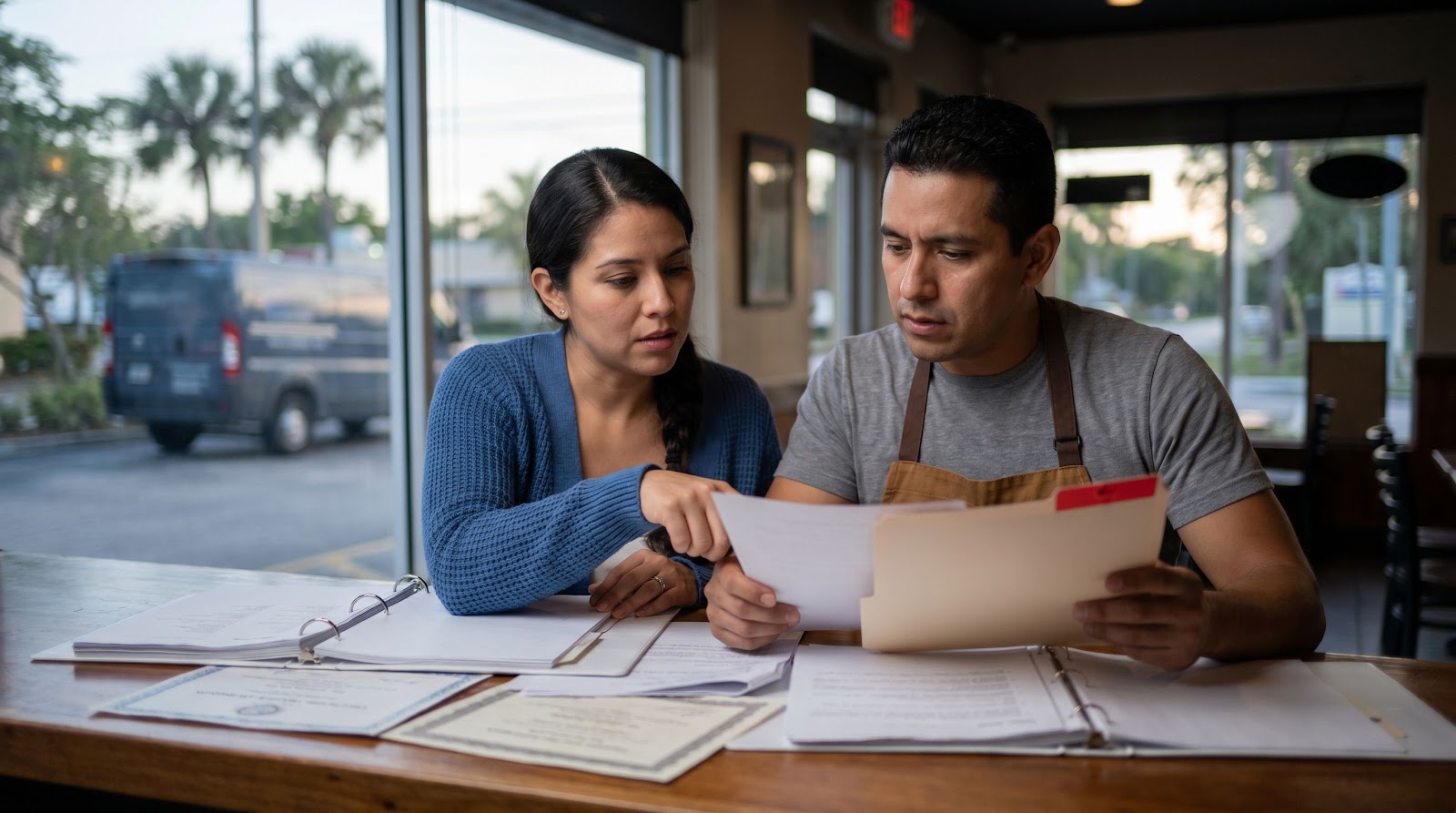
Forgetting vendor certificates, subcontractor liability, or additional insured endorsements
A food vendor, security company, stage crew, or fireworks operator may bring its own insurance, but that does not help much if you never collected the certificate or the paperwork is missing the required wording. Cities like Tampa and Jacksonville require the city to be named as an additional insured on general liability coverage.
Tampa also requires proof of insurance at least 30 days before the event. If a subcontractor is added a week before July 4, the permit file and the insurance file can fall out of sync.
Missing auto, hired and non-owned auto, or watercraft exposure tied to the event
If staff use personal cars for supply runs, if you rent a shuttle, or if the event includes dock access or boats, basic premises liability may not be enough. Jacksonville requires $500,000 combined single limit for automobile liability when vehicles are integral to the event, and a $1,000,000 combined single limit for watercraft liability when watercraft are integral.
If your setup includes that kind of movement, a review of boat insurance or business auto coverage is usually part of the same conversation.
How should a Florida business choose the right event liability policy before the holiday weekend?
Start with the contract, then the permit, then the policy. For most businesses, the right Florida event liability commercial insurance is the one that matches the venue’s wording, the city’s requirements, and the real exposures of the event, not just the cheapest certificate available.
If any one of those three pieces is off, the event can be approved late, or worse, a claim can hit a gap you thought was covered.
Questions to ask about venue contracts, permits, and indemnification clauses
Ask the venue for the exact insurance language in writing. You need to know the required limits, who must be named as additional insured, and whether alcohol, vehicles, boats, or supervision of minors changes the requirement.
Also ask whether the city permits adding separate insurance conditions. Tampa requires proof of insurance at least 30 days before the event, and Jacksonville commonly requires $1,000,000 each occurrence for certain permitted events. If the contract has an indemnification clause, have your agent review it against the policy so you know whether you are taking on obligations broader than your coverage.
Documents to secure before the event: COIs, endorsements, and carrier confirmation
Do not stop at the COI. Get the certificate, the additional insured endorsement, and confirmation from the carrier that the policy form satisfies the venue or municipality. Those are different documents, and that difference matters when the permit office reviews your file.
If vendors, security, bartenders, shuttle operators, or fireworks contractors are involved, collect their insurance documents early too. Waiting until the final week is how names, dates, and policy wording get missed.
When to bundle temporary event needs with broader commercial insurance protection
If the event relies on staff vehicles, alcohol service, or waterfront activity, a one-off event policy may not be enough by itself. That is usually the moment to review your broader business owners policy, plus any auto, liquor, or umbrella needs tied to the event.
For some Florida businesses, the smartest move is not a standalone fix. It is aligning the temporary event coverage with the rest of the company’s commercial protection before the holiday rush starts.
 Vehicle
  Home & Property
  Commercial
  Life
Life  Health