


A texas falling asleep driving accident insurance claim gets dangerous fast after summer vacation trips because fatigue crashes are often violent, sudden, and expensive. For Texas families reviewing protection, this is where Texas auto insurance options stop feeling abstract and start feeling urgent.
What makes a Texas falling asleep driving accident insurance claim so dangerous after summer vacation trips?
The short answer is this: tired drivers often crash at highway speed, on the way home, with little chance to correct the vehicle. That combination can turn one sleepy moment into major injuries, a totaled car, and a hard insurance fight.
NHTSA says drowsy-driving crashes are likely undercounted, yet it still estimated 91,000 police-reported crashes, about 50,000 injuries, and nearly 800 deaths nationwide in 2017. See NHTSA.
Why return-to-routine fatigue, early alarms, and late-night driving raise crash risk
After a summer trip, many families leave late to “beat traffic” or push through the final hours to sleep at home. Then the next day brings early alarms, work, camp drop-offs, or school prep. That sleep debt stacks up.
Texas heat adds another layer. TxDOT warns that dehydration can cause fatigue and lightheadedness, even without alcohol. A driver may feel “just tired” and still be much less alert than they realize.
How microsleep crashes happen at full speed with little or no braking
Microsleep is what makes these claims so severe. NHTSA describes a common pattern: a single driver, high speed, the vehicle drifting off the road, and little or no braking. In insurance terms, that often means heavier vehicle damage and more serious injuries inside the car.
If a family is hit by a fatigued driver who never touched the brakes, repair costs and medical bills can climb quickly.
Why rural Texas roads and single-vehicle run-off-road patterns matter to families
This risk fits Texas too closely to ignore. TxDOT reports 50.12% of Texas traffic deaths in 2024 happened on rural roads, and 1,353 deaths came from single-vehicle run-off-road crashes. Those are the same conditions NHTSA ties to drowsy driving.
For families coming back from beaches, parks, or long interstate drives, the road home is often the most dangerous stretch.
What should you do immediately after a drowsy driving crash in Texas?
First, protect people before you protect the claim. In a Texas falling asleep driving accident insurance situation, get medical help, call police, and start preserving anything that shows the other driver was too tired to drive safely.
How to protect medical safety, call law enforcement, and document fatigue clues
If anyone is hurt, ask for emergency help right away. If the cars can be moved safely, get out of traffic and wait in a secure spot.
Then call law enforcement and make sure the report captures what you observed. Fatigue cases are often disputed later, so details matter: drifting across lanes, a run-off-road impact, no obvious braking, a late-night return from vacation, or a driver saying they were trying to “push through” the last stretch.
Take photos of the road, shoulder, skid marks or the lack of them, vehicle positions, damage, and anything inside the other car that may support fatigue, like travel bags, snacks, or navigation showing a long route. NHTSA says drowsy-driving crashes often involve little or no braking and vehicles leaving the road, especially on highways and rural roads.
What evidence can support that the other driver fell asleep
The strongest evidence is usually a combination of small facts. The other driver’s statements, witness observations, dashcam footage, 911 audio, the police report, and scene photos can all help show fatigue.
Look for clues that fit the known pattern: a single-vehicle drift, straight-line departure from the lane, high-speed impact, and no effort to correct before the crash. That pattern does not prove sleep by itself, but it can support your version of events when the insurer reviews fault.
When to notify your insurer and what not to say at the scene
Notify your insurer as soon as you can after everyone is safe. Stick to facts: where the crash happened, what you saw, who responded, and what injuries or damage are visible.
Do not guess why the crash happened, do not minimize pain, and do not say you are “fine” if you are not sure yet. Also avoid arguing with the other driver about fault at the roadside. Texas requires minimum liability limits of 30/60/25, but the Texas Department of Insurance warns that may be too low for a serious crash. That is one reason a Texas falling asleep driving accident insurance claim can become a coverage problem fast, especially when UM/UIM or PIP may come into play.
Which insurance pays first if a fatigued driver hits you in Texas?
In a Texas falling asleep driving accident insurance claim, the first payer often depends on the coverage you carry, not just on who caused the crash. In many Texas cases, your own PIP, Med Pay, or collision coverage can move faster first, while the tired driver’s liability coverage is sorted out.
How PIP can pay first for medical bills and lost income regardless of fault
PIP is often the quickest place to look after a fatigue crash because it can pay limited medical and funeral expenses for you, your family members, or passengers hurt in the wreck. It also pays lost-income benefits, which makes it different from several other coverages Texas drivers confuse with it.
That matters when the other insurer is still investigating whether the driver fell asleep, drifted off the road, or failed to brake. Texas Department of Insurance explains that PIP applies regardless of fault, so it may help before liability is resolved.
When bodily injury liability coverage from the at-fault driver should apply
If the other driver caused the crash, their bodily injury liability coverage should pay for your injury claim up to their policy limits. Texas requires minimum liability limits of 30/60/25, but the Texas Department of Insurance warns those minimums may be too low for serious crashes.
That is a real problem in a high-speed fatigue wreck. If injuries are severe, the at-fault driver’s coverage may run out fast, especially if several people were hurt.
How Med Pay differs from PIP in Texas
Med Pay can help with medical bills, but it does not offer the same lost-income protection that makes PIP valuable after a Texas falling asleep driving accident insurance claim. If you miss work for days or weeks, that difference shows up quickly.
For a family coming home from vacation, PIP usually gives broader immediate help than Med Pay.
When collision coverage helps repair your vehicle faster
Collision coverage can help repair or replace your vehicle sooner, even when the tired driver was clearly at fault. That can be useful if the other insurer delays its decision or if the driver has too little coverage.
Texas also has meaningful uninsured and underinsured exposure. The Insurance Information Institute estimates 14.5% of Texas drivers were uninsured in 2023, and 14.7% were underinsured. In those situations, your own coverages often make the biggest difference in how fast you recover.
What happens if the at-fault drowsy driver has too little insurance or no insurance at all?
You may end up filing part of the claim on your own policy. In a Texas falling asleep driving accident insurance case, that usually means looking at UM/UIM, PIP, and possibly collision coverage when the tired driver’s liability limits run out or do not exist.
How Texas UM/UIM coverage can protect your family
Texas insurers must offer uninsured and underinsured motorist coverage, and if you reject it, you must do that in writing, according to the Texas Department of Insurance. That matters more than many families realize until after a bad highway crash.
If the at-fault driver has no insurance, too little insurance, or leaves the scene in a hit-and-run, UM/UIM can step in for covered injuries and vehicle damage. With Texas uninsured drivers estimated at 14.5% and underinsured drivers at 14.7% in 2023, according to the Insurance Information Institute, this is not a remote risk.
Where out-of-pocket costs can appear after a severe fatigue-related crash
The gaps usually show up fast. Ambulance bills, ER care, follow-up treatment, missed work, and a rental car can keep coming even while fault is clear.
PIP can help because it pays limited medical, funeral, and lost-income benefits regardless of fault, as the Texas Department of Insurance explains. But “limited” is the key word. If the crash is severe, your family can still face deductibles, unpaid medical balances, replacement transportation costs, or damage above what the other driver’s policy covers.
Why minimum liability limits may be inadequate for high-speed injury claims
Texas requires minimum liability limits of 30/60/25. That may sound decent on paper, but the Texas Department of Insurance warns those minimums may be too low for serious crashes.
A fatigue wreck at highway speed can injure several people in one vehicle and total more than one car. In that situation, the at-fault driver’s policy can be exhausted long before every medical bill and property loss is paid. That is when a Texas falling asleep driving accident insurance claim turns from a liability case into a coverage problem for your household.
Texas crash numbers and insurance limits: what do the latest figures show?
The latest Texas numbers reinforce the same warning pattern seen in many Texas falling asleep driving accident insurance claims: deadly crashes keep clustering around rural travel, single-vehicle departures, and coverage gaps that can leave families exposed after the wreck.
How 2024 Texas fatality patterns match the known drowsy-driving profile
TxDOT recorded 4,150 traffic deaths in Texas in 2024. NHTSA says drowsy-driving crashes often involve one driver, high speed, a vehicle leaving the roadway, and little or no braking. That overlap matters because fatigue is often harder to prove than alcohol, even when the crash pattern looks familiar.
Rural-road and single-vehicle death figures that matter for return-trip risk
For return trips from beaches, state parks, or family visits, the rural numbers stand out. TxDOT says 50.12% of Texas traffic deaths in 2024 happened on rural roads, and 1,353 deaths came from single-vehicle run-off-road crashes.
That is exactly the kind of setting where a tired driver drifts, overcorrects, or never brakes at all. TxDOT also notes Texas has 76 safety rest areas, a reminder that stopping is part of safe trip planning, not a delay.
Texas minimum liability limits versus real-world injury and vehicle repair costs
Texas still requires minimum liability limits of 30/60/25, but the Texas Department of Insurance warns those limits may be too low for serious crashes or multi-vehicle losses. A highway fatigue crash can exceed those amounts fast.
The insurance risk gets worse when the at-fault driver carries little or no coverage. The Insurance Information Institute estimated 14.5% of Texas drivers were uninsured and 14.7% were underinsured in 2023. That is why UM/UIM and PIP matter so much in a Texas falling asleep driving accident insurance review.
How can you prove fault and strengthen a Texas falling asleep driving accident insurance claim?
You prove this kind of claim by tying together facts that point to fatigue, then backing up your losses with clean records. A Texas falling asleep driving accident insurance case rarely turns on one dramatic piece of evidence. It usually turns on a pattern.
Police report details, witness statements, and crash-scene indicators
Start with the police report. Check whether it notes lane drift, a run-off-road path, late-night travel, lack of skid marks, or statements made by the other driver at the scene. Those details matter because NHTSA describes a common drowsy-driving pattern involving one driver, high speed, the vehicle leaving the road, and little or no braking.
Witnesses can fill in what the report misses. A passenger, another driver, or a nearby motorist may have seen the car wandering, crossing the shoulder, or failing to react before impact. Photos help too, especially when they show a straight departure from the lane or a crash with no clear avoidance attempt.
Phone records, trip timelines, and driver admissions about sleep loss
Next, build a timeline. If the other driver had been on the road for hours returning from vacation, drove overnight, or admitted they were trying to “make it home,” that can support your claim. The same goes for statements about being exhausted, not sleeping, or stopping for caffeine instead of rest.
Phone records or navigation history may also help show the length and timing of the trip. Keep those facts with your claim notes, along with any 911 recording or dashcam footage that captured the driver’s words right after the crash.
Medical records and wage documentation that support damages
Fault is only half the claim. You also need records that show what the crash cost you. Save ER records, follow-up visits, imaging, prescriptions, and treatment recommendations. If you missed work, gather employer wage statements and proof of lost hours.
If you use PIP, those documents matter even more because the Texas Department of Insurance says it pays limited medical, funeral, and lost-income benefits. Strong paperwork makes it harder for an insurer to question either the seriousness of your injuries or the value of your claim.
What coverage mistakes do Texas drivers make before and after summer road trips?
The biggest mistake is treating a Texas falling asleep driving accident insurance review like paperwork instead of risk planning. After a long summer drive, the wrong coverage choices can leave a family paying out of pocket even when the other driver clearly caused the crash.
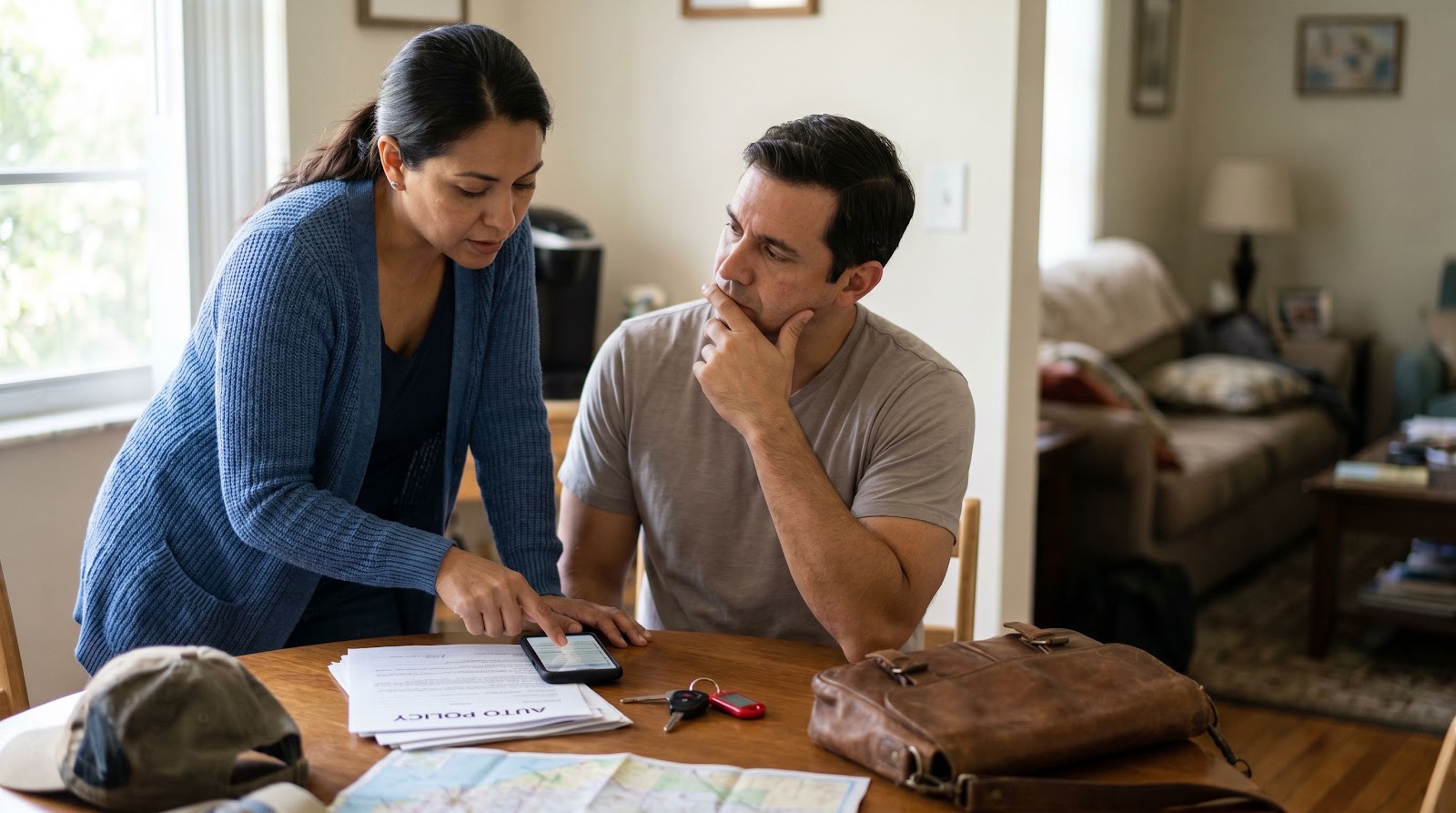
Rejecting or undervaluing PIP and UM/UIM coverage
Many drivers focus on the state minimum and skip the coverages that help most after a fatigue crash. Texas insurers must offer UM/UIM, and if you reject it, that rejection must be in writing, according to the Texas Department of Insurance.
PIP gets overlooked too. TDI says it can pay limited medical, funeral, and lost-income benefits after a crash, regardless of fault. That matters when injuries show up fast, but liability takes time to sort out.
Assuming the other driver’s liability insurance will always be enough
That assumption fails in serious highway wrecks. Texas requires only 30/60/25, and TDI warns those limits may be too low for severe injuries or major property damage.
The risk is not theoretical. The Insurance Information Institute estimated 14.5% of Texas drivers were uninsured and 14.7% were underinsured in 2023.
Waiting too long to seek care or report the crash
After a fatigue-related impact, some people go home first and hope soreness passes. That can hurt both health and the claim. Prompt medical records and early notice to your insurer make it easier to connect injuries to the crash.
Failing to review deductibles, rental reimbursement, and roadside options before travel
A tired-driver crash can leave you stranded far from home, waiting on repairs or a tow. Before a summer trip, check whether your deductible feels manageable, whether rental reimbursement is included, and whether roadside assistance is active. Those details do not prevent the wreck, but they change how hard the week after the wreck becomes.
 Vehicle
  Home & Property
  Commercial
  Life
Life  Health