


If extreme July heat contributes to an engine fire in Florida, the key insurance question is simple: do you carry comprehensive coverage? Florida minimum auto insurance usually will not pay for fire damage to your own car, so checking your Florida auto insurance matters before a summer emergency happens.
What happens if extreme July heat causes your car engine to catch fire in Florida?
For most drivers, Florida extreme heat car fire insurance comes down to one coverage: comprehensive. Florida requires $10,000 in PIP and $10,000 in PDL for most registered vehicles, but those coverages do not pay to repair your own burned car, according to Florida Highway Safety and Motor Vehicles.
If you have comprehensive coverage, a fire loss to your vehicle is generally handled there, subject to your deductible. If the car is totaled, Florida Department of Financial Services guidance says the payment is typically based on the vehicle’s actual cash value, minus the deductible.
When heat is a contributing factor, but the loss is still treated as a vehicle fire claim
July heat can be part of the story without changing the type of claim. If high temperatures worsen an engine problem, fluid leak, or wiring issue and the car catches fire, insurers still usually treat it as a vehicle fire loss rather than as collision damage.
That matters because Florida extreme heat car fire insurance usually depends on whether comprehensive was on the policy the day of the fire.
What to do immediately: get out, move at least 100 feet away, and call 911
If you see smoke or flames, pull over safely, turn off the engine, get everyone out, and move at least 100 feet away. The U.S. Fire Administration also warns not to open the hood if you think the fire is underneath. Call 911 right away.
Why mechanical and electrical failures often matter more than temperature alone
Heat by itself is rarely the whole explanation. The U.S. Fire Administration says mechanical and electrical issues are common causes of vehicle fires. In real life, extreme heat often makes an existing weakness worse: damaged wiring, an overheating engine, or a fluid-system problem can ignite faster on a brutally hot Florida afternoon.
That is why claim handling often focuses on the fire damage itself and the coverage on the policy, not just the outside temperature.
Which car insurance covers fire damage to your own vehicle?
For your own car, Florida extreme heat car fire insurance usually means one thing: comprehensive coverage. If your engine fire damages or totals your vehicle, that is generally the part of the policy that responds, not Florida’s basic required coverage.
Why does comprehensive coverage usually pay for fire damage
Florida consumer guidance says comprehensive, also called other-than-collision coverage, pays for vehicle damage from events such as fire, theft, vandalism, windstorm, and flood. So if extreme heat contributes to an engine fire, the claim for your car itself is usually handled under comprehensive, according to the Florida Department of Financial Services.
This is also why many financed vehicles carry it. The Insurance Information Institute explains that comprehensive coverage is optional, but lenders often require it.
Why Florida minimum coverage does not pay to repair or replace your burned car
Florida’s minimum required auto insurance for most registered vehicles is $10,000 in PIP and $10,000 in PDL. That protects injuries and property damage in specific situations, but it does not insure your own vehicle against fire loss.
PIP is for covered medical expenses. PDL pays for damage you cause to someone else’s property. If your car catches fire in a parking lot, driveway, or on I-95 and you only carry the Florida minimum, you may have no payment for repairs to your own vehicle.
How do deductibles apply to a fire claim?
If you do have comprehensive coverage, your deductible comes out of the claim payment. When a car is declared a total loss, Florida consumer guidance says the insurer typically pays the vehicle’s actual cash value minus your deductible.
That matters in real dollars. A lower deductible usually means less out of pocket after a fire, while a higher deductible means you keep more of the loss yourself before insurance pays.
Why won’t basic liability insurance pay if your car burns in Florida?
Florida’s basic required coverage is built for injuries and damage you cause to others, not for fire damage to your own vehicle. In a Florida extreme heat car fire insurance claim, that difference is where many drivers get stuck.
For most registered vehicles, Florida requires $10,000 in PIP and $10,000 in PDL, according to Florida Highway Safety and Motor Vehicles. Those are the state minimums, but they are not designed to repair or replace your burned car.
What Florida PIP covers
PIP stands for personal injury protection. In Florida, it pays 80% of necessary and reasonable medical expenses up to $10,000 for covered injuries, based on the Florida Department of Financial Services consumer guidance summarized in the state’s auto insurance materials.
That means if an engine fire causes burns or smoke-related injuries, PIP may help with eligible medical bills. It does not pay for the vehicle itself. If the hood, wiring, and engine compartment are destroyed, PIP does not step in for those repairs.
What Florida PDL covers
PDL stands for property damage liability. It pays for damage you cause to another person’s property, not your own car.
Say your vehicle catches fire and the flames spread to another parked car or a garage door. That is the kind of situation where PDL may matter. But if your own car is the one that burns, PDL is not the coverage that pays you.
The coverage gap drivers face when they carry only the state minimum
This is the gap: you can be fully legal in Florida and still have no payment for your own fire-damaged car. That is why Florida extreme heat car fire insurance usually comes back to comprehensive coverage, which Florida consumer guidance says is the coverage that generally handles fire losses to your vehicle.
If you only carry the minimum and the car is totaled, the out-of-pocket loss can be the entire value of the vehicle.
How much could you lose if your burned car is declared a total loss?
You could lose more than the insurance check suggests. In a Florida extreme heat car fire insurance claim, a total loss payment is usually based on your car’s actual cash value, not what you paid for it and not what it would cost to buy the same model again today.
Florida Department of Financial Services guidance says the insurer typically pays the vehicle’s actual cash value when the car is totaled, and the deductible is still taken out. That is where the gap starts.
How insurers calculate actual cash value
Actual cash value means the vehicle’s value at the time of the fire after depreciation. Florida’s Automobile Insurance Toolkit describes it as replacement cost less depreciation.
So if your car was older, had high mileage, or already had wear and tear, the payment may be lower than you expected. That can be frustrating after an engine fire, especially when Florida extreme heat car fire insurance coverage exists but the payout still reflects the car’s pre-fire market value, not your remaining transportation needs.
What happens after your deductible is subtracted
After the insurer determines the car’s value, your comprehensive deductible comes off the top. If the vehicle’s actual cash value is $12,000 and your deductible is $1,000, the insurance payment would typically be $11,000
That deductible is your share of the loss. The higher it is, the more cash you may need right away to replace the vehicle after a total fire claim.
Why loan balance and vehicle value may not match
A loan payoff and a car’s actual cash value are two different numbers. Your lender cares about what is still owed. Your insurer pays based on the vehicle’s value at the time of loss, according to Florida consumer guidance.
That means a burned-financed car can leave you short if the loan balance is higher than the insurer’s payment after depreciation and the deductible. This is one of the hardest parts of a total loss: the car is gone, but the remaining balance may not be.
Florida coverage comparison: minimum insurance vs. comprehensive after a car fire
After a fire, the coverage difference is blunt: Florida minimum insurance keeps you legal, but it usually does not pay for your burned car. For Florida extreme heat car fire insurance, comprehensive is generally the coverage that responds to damage to your own vehicle.
Florida requires most registered vehicles to carry $10,000 in PIP and $10,000 in PDL, according to Florida Highway Safety and Motor Vehicles. Those coverages have a different job. PIP helps with covered injuries, and PDL pays for damage you cause to someone else’s property.
If your engine catches fire in July and the flames destroy your own vehicle, minimum coverage usually leaves that loss with you. Florida Department of Financial Services guidance says comprehensive coverage covers fire damage to the insured vehicle, which is why this part of the policy matters so much in a heat-related fire claim.
The next difference shows up in the payout. With comprehensive coverage, the claim is still subject to your deductible, and if the car is totaled, the insurer typically pays the vehicle’s actual cash value at the time of the loss, based on Florida Department of Financial Services consumer guidance.
Put simply, two Florida drivers can face the same engine fire on the same hot afternoon and get very different results. The one with only minimum coverage may get nothing for the car itself. The one with comprehensive coverage may have coverage for the vehicle, minus the deductible and depreciation.
What mistakes do Florida drivers make after a vehicle fire claim?
The biggest mistakes are usually simple: waiting to document the damage, assuming the heat itself guarantees coverage, and misunderstanding how the payout is calculated. In a Florida extreme heat car fire insurance claim, those errors can slow the process or lead to the wrong expectations from day one.
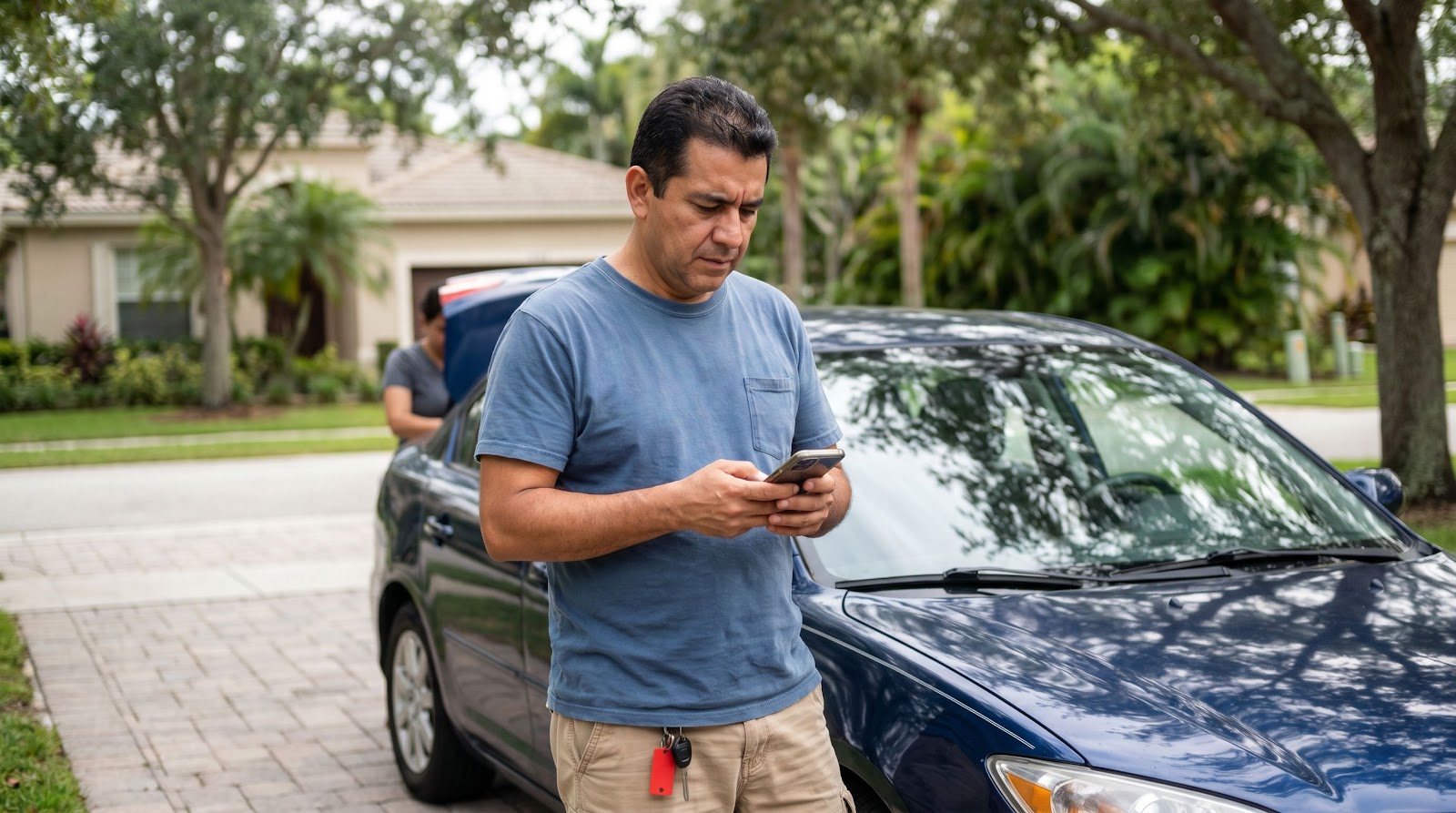
Waiting too long to document the damage
After everyone is safe, drivers often wait before taking photos, saving tow receipts, or noting what happened. That can hurt the claim. Fire damage changes fast once the vehicle is moved, inspected, or exposed to rain, and details are easier to explain when they are fresh.
Keep the basic record tight: photos of the burned areas, the location, the date, and any paperwork from towing or emergency response. If the vehicle caught fire while running, write down what you noticed first, like smoke, a warning light, or flames under the hood.
Assuming heat alone guarantees payment
Florida heat may be part of the event, but heat by itself does not automatically trigger a payment. The Florida Department of Financial Services says comprehensive coverage is the coverage that generally handles fire damage to your own vehicle.
The cause can still matter. The U.S. Fire Administration says mechanical and electrical issues are common causes of vehicle fires, which is why insurers often look beyond the weather and focus on the actual loss and the coverage on the policy.
Not understanding exclusions, deductibles, and total-loss valuation
Many drivers hear “fire is covered” and stop there. But Florida extreme heat car fire insurance still depends on whether comprehensive was active, what deductible applies, and whether the car is repairable or a total loss.
If the vehicle is totaled, Florida consumer guidance says the insurer typically pays the car’s actual cash value, and the deductible is still subtracted. That means the check may be lower than expected, even when the claim is covered.
How can you reduce the risk of a summer car fire before the hottest months hit?
You lower the odds by catching small mechanical or electrical problems early, staying current on heat-sensitive maintenance, and checking your policy before heavy summer driving starts, for many Florida drivers, prevention and coverage review belong on the same checklist.
Warning signs of mechanical or electrical trouble
Most vehicle fires do not start out of nowhere. The U.S. Fire Administration says mechanical and electrical issues are common causes, so pay attention to the warnings your car gives you before July gets brutal.
Take smoke, a burning smell, repeated overheating, flickering lights, blown fuses, or fluid leaking from the engine area seriously. If your hood feels unusually hot after a short drive or you notice wiring problems around the battery, that is not a wait-until-next-week issue.
Maintenance checks that matter most in extreme Florida heat
In Florida, extreme heat car fire insurance matters, but maintenance still comes first. Ask your mechanic to inspect the cooling system, battery connections, wiring, and fluid lines before peak summer use, especially if the car already runs hot or sits outside for long periods.
Heat can make an existing weakness worse. A worn hose, damaged wire, or neglected leak may stay manageable in mild weather and turn dangerous on a very hot afternoon in traffic.
When to review your policy before peak summer travel
Review your policy before road-trip season, not after smoke comes out from under the hood. Confirm whether you carry comprehensive coverage, because Florida’s required minimums of $10,000 in PIP and $10,000 in PDL do not pay for fire damage to your own car, according to Florida Highway Safety and Motor Vehicles.
If you rely on your vehicle every day, also check your deductible now. It is easier to adjust coverage before the hottest stretch of the year than after a fire leaves you on the shoulder waiting for help.
 Vehicle
  Home & Property
  Commercial
  Life
Life  Health