


If someone dents your car in a Texas mall lot and disappears, act fast. Your first steps can protect both your safety and your Texas parking lot hit-and-run insurance claim. If you want help reviewing your options later, start with Texas auto insurance.
What should you do immediately after a parking lot hit-and-run in Texas?
First, make sure everyone is safe. Then preserve evidence before it disappears. In a busy mall parking lot, cars move, cameras overwrite footage, and witnesses leave within minutes.
Check for injuries and move to a safe area if needed
If anyone in your car feels pain, dizziness, or shock, treat that as a priority. If the vehicle is creating a hazard and it can be moved safely, pull into a nearby space or safer area without losing track of the original location.
Document the damage, the parking space, and nearby vehicles with photos and video
Take wide shots first. Capture your car, the parking lines, nearby vehicles, broken parts on the ground, paint transfer, skid marks, and any posted lot signs. Then get close-up photos and a slow video walkaround.
Try to include the exact parking space or row marker. That small detail can help match your timeline later.
Look for witnesses, store security cameras, and time-stamped evidence
Ask nearby drivers, cart attendants, or store employees if they saw the impact. Look around for cameras on storefronts, light poles, garage entrances, or security booths. Save time-stamped proof too, like a parking receipt, purchase receipt, or phone photo metadata.
Report the incident to mall security and request the incident report number
Tell mall security what happened as soon as possible. Ask whether cameras may cover the area and request the incident report or reference number before you leave.
Call local law enforcement and ask how to file the official Texas crash report
Call the local police or sheriff’s office and ask whether an officer will respond and how the crash should be documented. According to the Texas Department of Transportation, if a peace officer investigates, the official report is the Texas Peace Officer’s Crash Report (CR-3); the old CR-2 is no longer retained by the state.
Texas law can apply in business parking areas like mall lots, and a driver who hits an unattended car must stop and leave identifying information under the Texas Legislature Online.
What does Texas law require when someone hits an unattended car in a parking lot?
Texas law requires the driver to stop, identify themselves, and leave written notice if they hit an unattended car in a mall lot. That matters for any Texas parking lot hit-and-run insurance case, because the driver’s legal duty starts before your claim does.
When Chapter 550 duties apply in business parking areas
These rules are not limited to public streets. Under Texas Transportation Code Chapter 550, they also apply in a private access way or parking area provided for clients or patrons of a business. That includes many mall parking lots, even though the property is privately owned.
So if someone backs into your parked car outside a department store and drives off, this is not a harmless “parking lot mistake.” Texas Legislature Online makes clear that the driver still has duties under Chapter 550.
What information must the at-fault driver leave behind
If the car is unattended, the driver must immediately stop and try to locate the owner. If they cannot find the owner, they must leave a conspicuous written notice with their name and address, the owner’s name and address, and a statement of what happened.
A phone number is helpful in real life, but the statute specifically requires those identification details and the circumstances of the collision.
Possible criminal consequences for leaving the scene
Leaving after hitting an unattended vehicle can bring criminal consequences in Texas. The exact charge can depend on the facts, but the key point is simple: driving away from a parked-car crash can be more than rude. It can be a criminal hit-and-run issue.
Why the police report matters for your insurance claim
The police report helps anchor the timeline, location, and visible damage. If an officer investigates, the official report is the Texas Peace Officer’s Crash Report (CR-3), according to the Texas Department of Transportation.
That report can support your Texas parking lot hit-and-run insurance claim, especially when the other driver is unknown, security footage is limited, or your insurer asks for proof that the damage happened when and where you say it did.
Which insurance covers Texas parking lot hit-and-run insurance claims?
For your own car, Texas parking lot hit-and-run insurance usually comes down to collision coverage or UM/UIM property damage. Your basic liability coverage is required in Texas, but it is designed to pay for damage you cause to someone else’s property, not to fix your own vehicle after a driver vanishes.
| Coverage | What official/reputable sources say |
|---|---|
| Liability | Required in Texas, but pays for damage you cause to other people’s property; it does not repair your own car after a hit-and-run. |
| Collision | Pays to repair or replace your car after an accident, subject to your policy deductible. |
| UM/UIM property damage | Can pay when a hit-and-run driver cannot be found; Texas consumer guidance says the deductible is $250 and insurers must offer UM/UIM unless rejected in writing. |
Why liability coverage does not pay to repair your own car
That surprises many drivers. Texas Department of Insurance says liability insurance will not pay to repair your own car after a hit-and-run, even though Texas requires property-damage liability with a minimum limit of $25,000 per accident.
How collision coverage applies to parking lot hit-and-run damage
Collision coverage can pay to repair or replace your car after a parking lot crash, even if the other driver is unknown. You would still be responsible for your deductible, which often falls somewhere between $250 and $1,000, according to the Insurance Information Institute.
When UM/UIM property damage can help if the other driver disappears
If the driver cannot be found, UM/UIM property damage may help with repairs. Texas Department of Insurance says this coverage applies to hit-and-run accidents, and the deductible is $250, which may be lower than a collision deductible.
Why Texas insurers must offer UM/UIM unless you rejected it in writing
In Texas, insurers must offer UM/UIM when you buy auto insurance unless you turned it down in writing, according to the Texas Department of Insurance. So if you are not sure whether your Texas parking lot hit-and-run insurance includes it, check your declarations page before you file the claim.
How much will you pay out of pocket after a Texas mall parking lot hit-and-run?
Your out-of-pocket cost usually comes down to which coverage applies and what deductible follows that claim. For many Texas parking lot hit-and-run insurance cases, the difference between collision and UM/UIM property damage can mean paying less upfront.
UM/UIM property damage deductible in Texas as of June 2026
If your policy includes UM/UIM property damage and the driver cannot be found, the Texas Department of Insurance says the deductible is $250. That is the fixed deductible tied to this type of claim in Texas consumer guidance as of June 2026.
This matters in a mall parking lot hit-and-run because the other driver often disappears before anyone gets a plate number or full identification.
How collision deductibles compare with UM/UIM deductibles
Collision can still be the fallback if you do not have UM/UIM property damage or if your insurer handles the loss that way under your policy terms. But collision deductibles are often higher. The Insurance Information Institute says a typical collision deductible ranges from $250 to $1,000.
So if your bumper repair costs $1,800, a $250 UM/UIM deductible may feel very different from a $1,000 collision deductible.
When deductible recovery may be possible
Paying a deductible does not always mean that money is gone for good. Under Texas’s Personal Automobile Insurance Consumer Bill of Rights, if another person may be liable and you used your own policy, your insurer must seek to recover your deductible within 1 year after the claim is paid, refund it, or tell you it will not pursue recovery so you can try yourself.
In a true hit-and-run, recovery is harder if the driver is never identified. If police or security footage later identifies the vehicle, that can change the picture.
What not-at-fault claim protections may mean for your final cost
In some situations, being clearly not at fault can affect whether you ultimately bear the deductible. Texas consumer guidance confirms protections around deductible recovery and some not-at-fault claim situations, which may reduce your final cost even if you had to pay first.
The practical takeaway is simple: ask your adjuster which coverage is being used, what deductible applies, and whether recovery rights could put money back in your pocket later.
How do you file a successful claim without being blamed for the damage?
To protect a Texas parking lot hit-and-run insurance claim, give your insurer a tight, consistent timeline and back it with evidence. The goal is simple: show when the car was last undamaged, where it was parked, and what you found when you returned.
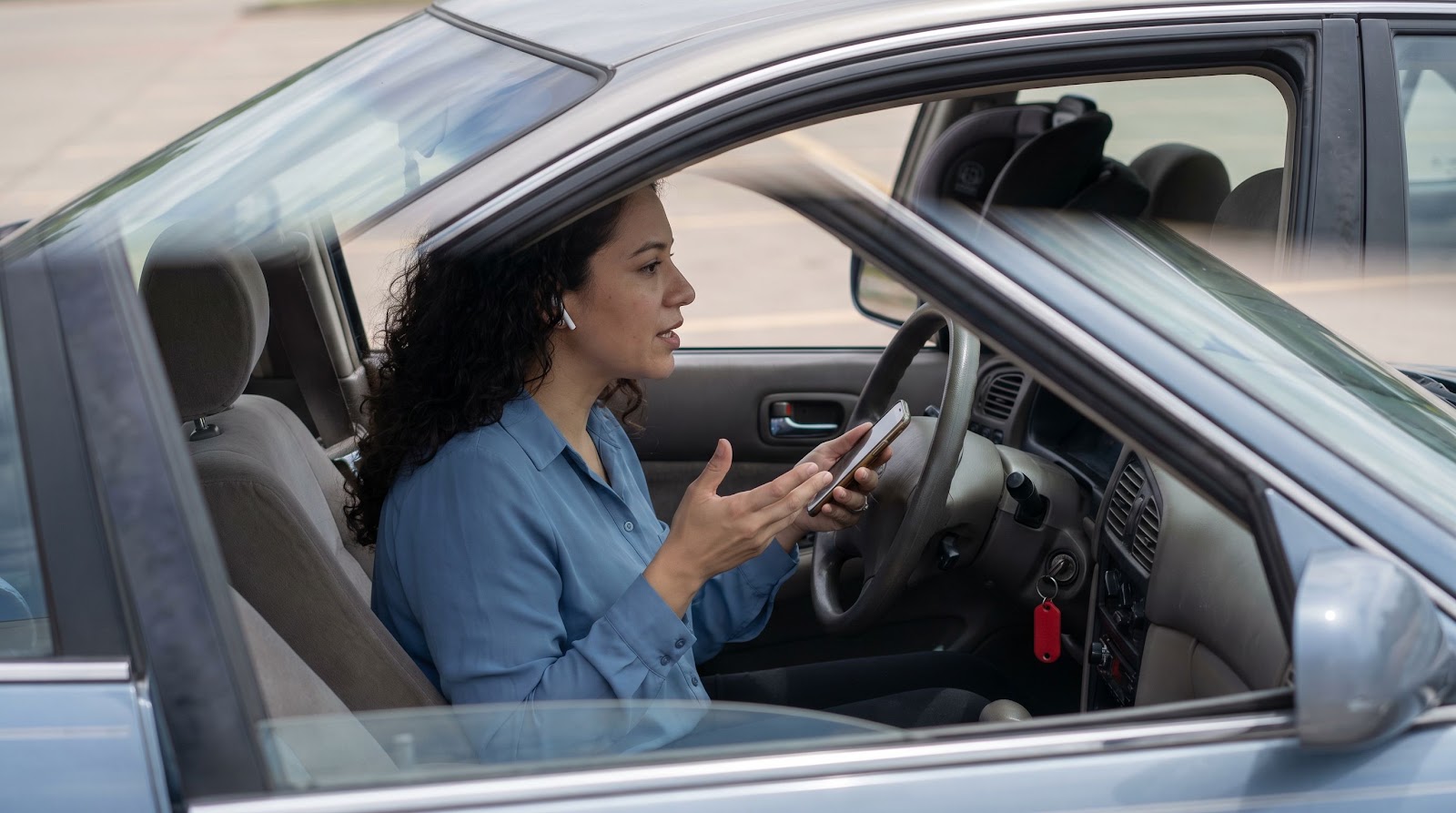
What to tell your insurer in the first notice of loss
Stick to facts. Tell them the mall name, the parking area, the approximate time you parked, when you came back, and what damage you saw. Mention whether you spoke with mall security, whether police were contacted, and whether a CR-3 may be available if an officer investigated, as explained by the Texas Department of Transportation.
Do not guess about speed, vehicle type, or exactly how the other driver moved unless you actually saw it.
Which evidence do adjusters want to approve a hit-and-run claim
Adjusters usually want photos of the damage, wide shots of the parking spot, paint transfer, debris, and anything that ties the damage to that location. Time-stamped receipts, phone metadata, and the mall incident report help because they support the sequence of events.
If you are using UM/UIM property damage, remember Texas Department of Insurance says this coverage can apply when the hit-and-run driver cannot be found, with a $250 deductible.
How to prove the damage happened in the parking lot and not earlier
The strongest proof is a before-and-after timeline. Maybe you took a photo when you parked. Maybe a store receipt shows you were inside for 40 minutes, and your return video shows fresh damage, broken plastic, or paint still on the panel.
Consistency matters. If your photos, receipts, security report, and statement all point to the same window of time, it is harder for the insurer to argue the damage was preexisting.
When to use mall surveillance, witness statements, and repair estimates
Use surveillance and witnesses early, before footage is overwritten and memories fade. Ask the mall to preserve video from the exact row, entrance, or camera angle near your car. Witness statements are especially useful when no plate number exists.
Repair estimates come later, after liability and timing are clearer. They show the cost of the damage, but they do not prove where it happened by themselves.
What mistakes can reduce or delay your payout after a parking lot hit-and-run?
The fastest way to weaken a Texas parking lot hit-and-run insurance claim is to leave gaps in the story. Adjusters look for timing, proof, and consistency. If those pieces do not line up, payment can slow down, or the claim may be paid under less favorable coverage.
One common mistake is waiting too long to report the loss to security, police, or your insurer. In a mall lot, video can disappear quickly, witnesses scatter, and small details fade. If an officer investigates, the Texas Department of Transportation says the official report is the CR-3, not the old CR-2.
Another problem is giving guesses instead of facts. Saying “a truck probably hit me” or “it must have happened around noon” can create avoidable questions. A cleaner version is better: where you parked, when you went inside, when you returned, what damage you saw, and what evidence backs that up.
Coverage mistakes matter too. Some drivers assume liability will fix their own car, but the Texas Department of Insurance says it will not. Others forget to ask whether UM/UIM property damage applies to a hit-and-run claim, which can matter because the Texas deductible for that coverage is $250.
There is also a money mistake after the claim is paid: not following up on deductible recovery. Under Texas’s Personal Automobile Insurance Consumer Bill of Rights, your insurer must try to recover your deductible within 1 year after the claim is paid, refund it, or tell you it will not pursue recovery so you can try.
 Vehicle
  Home & Property
  Commercial
  Life
Life  Health