


Home insurance in Katy is not required by Texas law. According to the Texas Department of Insurance, no state law forces you to carry it. But if you still owe money on the house, your lender will require it. And if the home sits in a designated flood zone, your lender requires flood insurance too.
That distinction matters when you are signing papers on a house west of Houston. The rule you have to satisfy is not the state’s, it’s the one written into your mortgage. Below is what that means in practice, section by section, with the two sources we used. For the full picture of what these policies cover, start with our home and property insurance page. Then come back to the flood part, because in the Katy and Cypress area that is the piece people miss.
What does your lender require when you buy in Katy or Cypress?
Your lender requires a home insurance policy for as long as you owe money on the property. If the home is in a designated flood zone, it requires flood insurance on top of that. The Texas Department of Insurance states both conditions plainly in its consumer guide to home insurance.
Think of it as two separate questions at closing. First: is there a home insurance policy in force on the day the loan funds? Second: does the address fall inside a designated flood zone, which would add a second policy to the file? The answer to the first is yes for every borrower. The answer to the second depends on the specific address, not on the city.
So ask your loan officer directly what coverage the lender requires for that house. Get the answer in writing, before you are at the closing table with a stack of documents in front of you.
The requirement follows the loan, not the house
The Texas Department of Insurance ties the requirement to the debt: if you still owe money on your home, your lender will require insurance. Pay the house off and the legal picture changes. The practical picture does not, for the reason in the next section.
Is home insurance a good idea if the law doesn’t require it?
Yes. The Texas Department of Insurance says that even though home insurance is not legally required, it’s a good idea because it helps protect your home and your other assets. That second part is the one worth reading twice. The policy is not only about the structure.
For a family that has been paying a mortgage for years in Katy or Cypress, the house is usually the largest thing they own. Dropping coverage once the loan is paid off removes the requirement and removes the protection at the same time. The state’s position is that the coverage makes sense on its own merits.
Does your home policy cover flood damage?
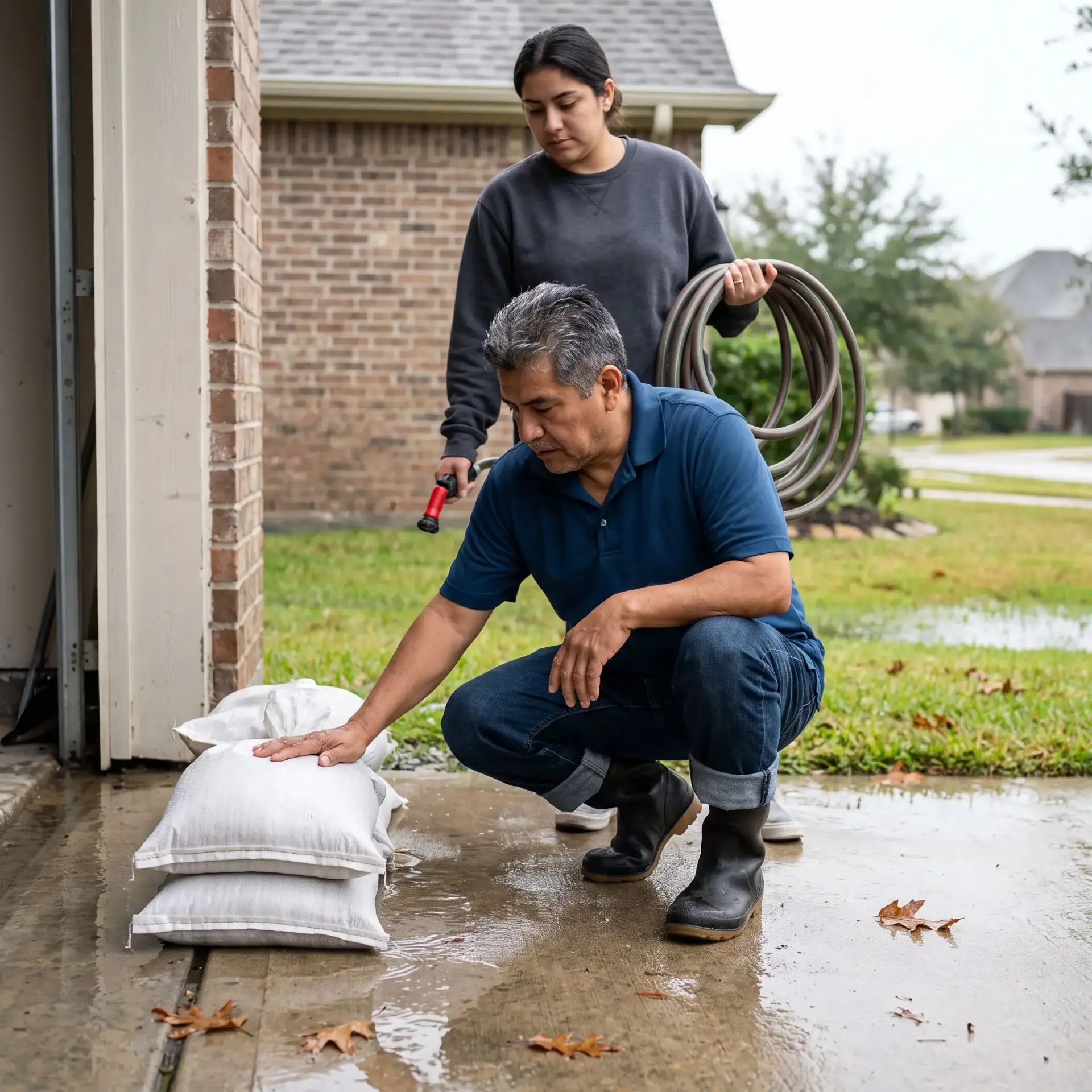
No. Most home policies don’t cover damage caused by floods, according to the Texas Department of Insurance. FEMA states the same thing: most homeowners insurance does not cover flood damage, and only flood insurance covers the cost of rebuilding after a flood. Flood coverage comes in its own policy.
This is the single most common gap between what a homeowner believes is covered and what the policy actually says. The home policy and the flood policy are two different contracts, with two different sets of rules. Water that rises from outside the house falls under the second one.
Where a flood policy comes from
The Texas Department of Insurance says you can get a flood policy from your insurance company or from the National Flood Insurance Program. Neither the state nor FEMA writes the policy for you at a counter. You buy it the way you buy the rest of your coverage, through an insurance company or an agent. You can read what that coverage involves on our flood insurance page.
Who decides whether the home is in a flood zone?
Your lender does, by checking the flood map for the specific address you are buying. FEMA explains on FloodSmart that flood maps show a community’s flood zone, the floodplain boundaries and the base flood elevation. Many property owners, particularly those in high-risk flood areas, may be required to have flood insurance.
Note what that sentence does not say. It does not say a city is or isn’t in a flood zone. Katy and Cypress each cover a lot of ground, and the determination is made address by address. Two houses a few minutes apart can land on different sides of a mapped boundary.
Outside the zone is not the same as out of reach
The Texas Department of Insurance makes two points that belong together. Floods can happen anywhere. And more than half of the homes flooded by Hurricane Harvey were outside of designated flood zones.
That is a Houston-area fact, from the regulator of this state, about a storm that most people reading this lived through. If the lender tells you flood insurance is not required for your address, that answers the lender’s question. It does not answer yours. Ask an agent what a flood policy would look like for that house anyway, and then decide with the number in front of you.
How does the claim check work when you still owe on the house?
The Texas Department of Insurance explains it this way. If you owe money on your home, the insurance company makes the check for repairs out to both you and your mortgage company. You endorse it and send it to the mortgage company. In most cases the mortgage company deposits it and releases the money as the work is done.
Knowing this in advance prevents a bad surprise after a loss. The check arriving with two names on it is not an error and it is not the insurance company doubting you. It reflects the fact that the lender has a financial interest in the property until the loan is paid.
The practical consequence: the money comes out in stages, tied to the progress of the repairs, not in one lump sum on day one. Plan the work with your contractor knowing that is how the funds move.
What to settle before you close
Three things, and none of them take long.
- Ask your lender what coverage it requires for that specific house, including whether flood insurance is part of the requirement.
- Confirm the flood determination by address, not by city or neighborhood, since the map draws its own lines.
- Ask an agent about flood coverage either way, because the home policy will not pay for flood damage no matter how complete it looks.
UniVista Insurance has offices in Houston and Katy, and you can go through all three points with an agent in person, by phone or online. More answers on coverage, deductibles and claims are collected in our homeowners insurance FAQs.
Frequently asked questions
Does Texas law require home insurance in Katy?
No. The Texas Department of Insurance states that the law doesn’t require you to have home insurance. What creates the obligation is your mortgage: if you still owe money on your home, your lender will require it. The state also says the coverage is a good idea anyway, because it helps protect your home and your other assets.
Will my home policy pay for flood damage?
Most home policies don’t cover damage caused by floods, according to the Texas Department of Insurance. FEMA says only flood insurance covers the cost of rebuilding after a flood. You buy that coverage as a separate policy, either from your insurance company or from the National Flood Insurance Program.
Can my lender require flood insurance?
Yes. If your home is in a designated flood zone, your lender requires you to have flood insurance, according to the Texas Department of Insurance. FEMA adds that many property owners, particularly those in high-risk flood areas, may be required to carry it. The determination is made from the flood map for your specific address.
Review your policy with an agent before hurricane season. UniVista Insurance’s licensed agents compare more than 20 companies for you: request your free quote today by phone, online or at a UniVista Insurance office.
Reviewed on November 9, 2026, against the Texas Department of Insurance home insurance guide and FEMA FloodSmart, read that day.
 Vehicle
 Home & Property
 Commercial
 Life
 Health