


Lending your car to a friend in Texas can hit your wallet faster than most people expect. In many cases, your policy is the first one on the line if they cause a crash. That is why many drivers reviewing Texas auto insurance options look closely at who should ever borrow the car.
What happens if your friend crashes your car in Texas?
If your friend had your permission, the problem usually lands on your insurance first. That is the basic risk behind Texas car insurance lending a car to a friend situations, and it can affect your coverage, your record with the insurer, and what you pay later.
Why your auto policy is usually the primary coverage
The general rule in Texas is simple: when someone causes an accident in a borrowed car, the car owner’s insurance pays first. The Texas Department of Insurance says that if your friend borrows your car and causes the crash, your policy is typically the primary coverage.
That matters because Texas only requires 30/60/25 in minimum liability limits. According to the Texas Department of Insurance, that means $30,000 for bodily injury per person, $60,000 per accident, and $25,000 for property damage. Those limits can run out quickly in a serious crash or a multi-vehicle accident.
When your friend’s insurance may apply after your limits are exhausted
If the damage goes beyond your policy limits, your friend’s own insurance may apply after your coverage is used up. TDI makes that point clearly. Your policy is first; the borrower’s policy may be secondary.
That does not guarantee every loss is fully covered. If both policies are not enough, you could still face out-of-pocket exposure. And if your policy is a named driver policy, Texas Department of Insurance materials warn that some drivers may not be covered unless specifically listed.
How an at-fault crash can affect your rates, renewal, and future insurability
Even if you were not the one driving, a claim paid under your policy can create problems at renewal time. The immediate issue is not just the damage from one accident. It is a fact that your insurance was used because your car was involved.
That can make Texas car insurance lending a car to a friend a bigger gamble than most people think. It is also a good reason to check whether you still have PIP, which Texas policies include unless rejected in writing, and UM/UIM, which insurers must offer if you do not reject it in writing.
Why is lending your car in Texas such a high-risk financial decision?
Because the financial gap can become yours very quickly. In Texas, in car insurance lending a car to a friend situations, a simple favor can leave you exposed when the damage is more serious than your policy limits.
Texas minimum liability limits: 30/60/25 and why they can fall short
Texas requires at least 30/60/25: $30,000 for bodily injury per person, $60,000 per accident, and $25,000 for property damage. The Texas Department of Insurance also warns that these minimums may not be enough after a serious crash.
That is easy to see in real life. A chain-reaction accident, multiple injured people, or one newer vehicle with major damage can push costs past minimum limits faster than most owners expect.
How a serious injury or multi-vehicle accident can create out-of-pocket exposure
If your friend causes a major wreck in your car, the claim does not stop when your liability limit is reached. Texas Department of Insurance says the borrower’s insurance may pay after the owner’s policy, but only if that coverage exists and only after your policy goes first.
If both policies are still not enough, the remaining balance does not disappear. That is where lending your car in Texas gets expensive. The owner can end up facing out-of-pocket costs tied to injuries, vehicle damage, or both.
This risk is one reason optional coverages matter too. Texas policies include PIP unless rejected in writing, and insurers must offer UM/UIM unless rejected in writing.
Why permissive use can turn a casual favor into a major liability problem
Permissive use sounds harmless. You hand over the keys, your friend has your consent, and you assume their driving is their problem. Usually, it is not that simple.
The Insurance Information Institute says a personal auto policy generally covers someone driving your vehicle with your permission. That means your insurance can be pulled directly into the claim because you allowed the car to be used. What felt like helping someone for one afternoon can become a liability issue attached to your own policy.
How much coverage is enough before anyone else drives your car?
If you ever say yes to a borrower, the safest answer is this: state minimums are a weak starting point. In Texas car insurance lending car to friend situations, your liability limits, PIP, and UM/UIM can make the difference between a manageable claim and a very expensive one.
Liability limits that better protect assets beyond the Texas minimum
Texas requires 30/60/25, which means $30,000 for one injured person, $60,000 per accident, and $25,000 for property damage. The Texas Department of Insurance warns those limits may be too low for a serious wreck or a multi-car crash.
That matters even more when someone else is driving your vehicle with permission, because your policy is usually first in line. If you own a home, have savings, or simply do not want a thin margin of protection, this is the part of the policy to review before lending out the keys.
Why PIP matters if your passenger or driver is injured
PIP helps with the people inside your car after a crash. Texas auto policies include it unless you rejected it in writing, and the Texas Department of Insurance says it can pay medical bills, lost wages, and other nonmedical expenses for you and your passengers.
That can help when your friend is driving and your passenger gets hurt, or when your borrower is injured and needs immediate help with costs. It is one of the few coverages that can respond without waiting on the other driver’s insurance situation to become clear.
Why UM/UIM matters in Texas when the other driver has little or no insurance
UM/UIM is the backup many owners forget about until after the crash. Texas insurers must offer it, and you must reject it in writing if you do not want it.
There is a real reason to keep it. TexasSure estimates 11.87% of Texas drivers were uninsured as of September 2025. If your friend is behind the wheel of your car and the other driver has no insurance or too little, UM/UIM can become one of the most valuable parts of your policy.
Texas car insurance lending car to friend: who pays first and what pays later?
In Texas, the payment order is usually straightforward. If your friend causes the crash in your car, your auto policy pays first, and your friend’s insurance may step in only after that if your limits are not enough.
That is the core problem with Texas car insurance when lending a car to a friend in certain situations. You are not just lending a vehicle. You are putting your own liability coverage at the front of the line.
The Texas Department of Insurance says the owner’s insurance is generally primary for an at-fault accident in a borrowed car. If the loss is bigger than your policy, the borrower’s insurance may pay next. May is the keyword here. It depends on whether that driver has coverage that applies and whether there is still unpaid damage after your policy is used.
This becomes more serious when the owner carries only the Texas minimum of 30/60/25. That means $30,000 for bodily injury per person, $60,000 per accident, and $25,000 for property damage, according to the Texas Department of Insurance. TDI also warns those limits may be too low for a serious or multi-vehicle wreck.
There is another layer people miss. If someone inside your car is hurt, PIP can help with medical bills, lost wages, and other nonmedical costs if you did not reject it in writing. And if the other driver has little or no insurance, UM/UIM can matter a lot because Texas insurers must offer it unless you reject it in writing.
So when people ask who pays first and what pays later, the short answer is this: your policy first, the borrower’s policy second if it applies, and any gap can still become your problem.
What does the real cost comparison look like after a borrowed-car accident?
After a serious borrowed-car crash, the difference between low limits and stronger coverage can be the difference between an insurance claim and a personal financial problem. That is the real issue behind Texas car insurance and lending a car to a friend decisions.
| Issue | What current Texas/industry guidance says |
|---|---|
| Primary liability after your friend crashes your car | TDI says the car owner’s insurance pays first for an at-fault accident in a borrowed car. |
| If damages exceed the owner’s limits | TDI says the borrower’s insurance may pay only after the owner’s policy, leaving potential out-of-pocket exposure if limits are still not enough. |
| If you only carry state minimum limits | TDI warns 30/60/25 may be too low for a serious or multi-vehicle accident. |
| If the policy is a named driver policy | TDI materials warn some drivers may be uninsured unless specifically named on the policy. |
| If the at-fault other driver has no insurance | Texas insurers must offer UM/UIM, and TDI says it helps pay when the other driver has no insurance or not enough coverage. |
Texas minimum limits vs higher liability limits in a severe crash scenario
Texas minimum liability is still 30/60/25: $30,000 per injured person, $60,000 per accident, and $25,000 for property damage. The Texas Department of Insurance warns those limits may be too low in a severe or multi-vehicle crash.
That means one bad wreck can exhaust the owner’s policy first, because the borrowed car is tied to the owner’s insurance before the borrower’s policy is even considered.
Insurance deductible, premium increase, and lawsuit exposure side by side
The out-of-pocket hit can come from different directions at once. You may deal with a deductible if your own vehicle is damaged, a higher premium later because your policy paid a claim, and possible lawsuit exposure if damages go beyond your liability limits.
Texas drivers already spend an average of $1,428.94 per insured vehicle per year, according to the National Association of Insurance Commissioners. A claim caused by a friend can push that cost in the wrong direction.
The cost of saying yes vs the cost of arranging another ride
Compare those risks with the price of a rideshare, a taxi, or simply telling your friend to find another way home. One choice may cost a small amount today. The other can put your policy, your limits, and your savings in play after one mistake behind the wheel.
Which mistakes do Texas drivers make when they let a friend borrow their car?
The biggest mistakes are usually bad assumptions. In Texas car insurance lending-car-to-friend situations, people often think the borrower’s policy will handle everything, when Texas guidance says the owner’s insurance generally pays first after an at-fault crash.
Assuming insurance follows the driver instead of the vehicle
This is the mistake that causes the most surprise after a wreck. If your friend crashes your car with permission, the Texas Department of Insurance says your policy is generally primary. The borrower’s insurance may come into play later, but only after your coverage is used first.
That matters even more if you carry only 30/60/25. Those minimum limits can be too low for a serious crash or a multi-vehicle loss, according to the Texas Department of Insurance.
Ignoring excluded drivers or business-use restrictions
Some owners say yes without checking what their policy actually allows. That is risky. Texas Department of Insurance materials warn that named driver policies can leave certain people uninsured unless they are specifically listed on the policy.
Business use can create its own problems. If your friend is using your car for work-related driving, do not assume your personal auto policy will respond the same way it would for a quick personal errand. That is the kind of detail to verify before handing over the keys, not after a claim.
Lending the car without checking whether the friend is licensed, impaired, or uninsured
A favor becomes a serious liability problem when the borrower should never have been driving in the first place. If you do not know whether your friend has a valid license, whether they are impaired, or whether they carry insurance of their own, you are taking a blind risk with your own vehicle and policy.
And if the crash involves another uninsured driver, the situation gets messier fast. Texas insurers must offer UM/UIM, and Texas policies include PIP unless rejected in writing. Those coverages can matter a lot when someone else is behind the wheel of your car.
How can you say no without creating conflict or risking your finances?
You can say no clearly, briefly, and without turning it into an argument. In Texas car insurance lending car to friend situations, the safest move is often a polite refusal before your policy, your limits, and your savings are put at risk.
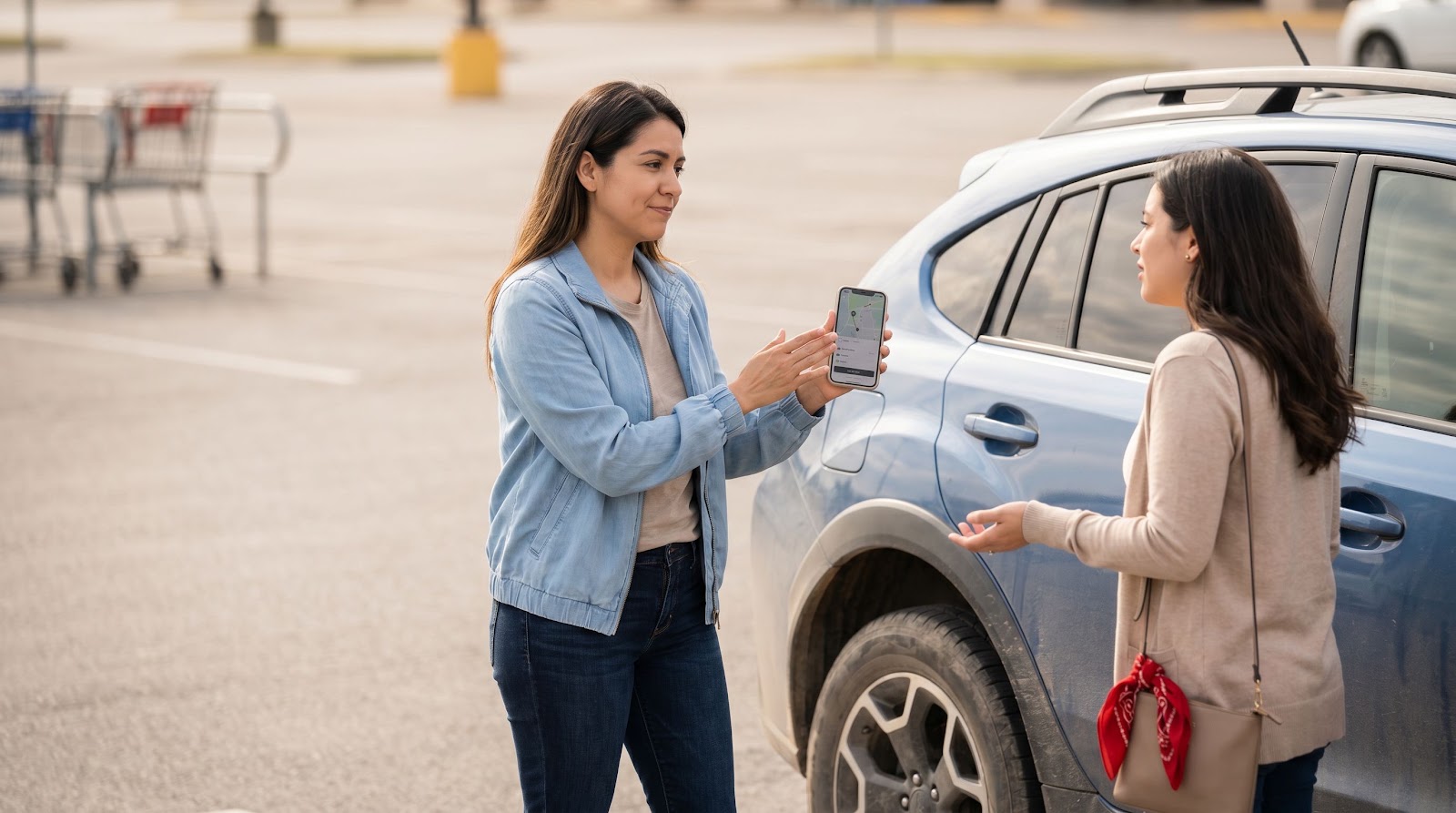
Practical scripts to refuse politely
You do not need a long explanation. Try: “I’m sorry, I don’t lend my car out.” Or: “I can’t let anyone else drive it because my insurance would be on the line first.” That last part reflects Texas Department of Insurance guidance, so you are not being dramatic. You are being accurate.
If the person pushes, keep repeating the boundary instead of debating it. “I can help you find another ride, but I can’t lend the car.” Short works better than defensive.
Safer alternatives: rideshare, adding a driver, or short-term transportation options
If you want to help, offer another solution right away. Call a rideshare. Order a taxi. Help them arrange a short-term rental or another ride home. That lowers the chance that a quick favor turns into an insurance claim.
If this is someone who regularly needs to drive your vehicle, handing over the keys casually is the wrong setup. Review whether they should be added to the policy first. That matters even more if your coverage is written as a named driver policy, because Texas Department of Insurance materials warn that some people may be uninsured unless specifically listed.
When it may be safer to drive the person yourself instead of handing over the keys
If your friend is tired, upset, has been drinking, or you have doubts about their license or insurance, driving them yourself may be the safer call. You keep control of the car, and you avoid putting another driver between your vehicle and your policy.
That choice can protect more than your car. Texas minimum liability is still 30/60/25, and TDI warns those limits may be too low for a serious crash.
 Vehicle
  Home & Property
  Commercial
  Life
Life  Health