


A Texas dust storm car accident insurance claim is different because one wreck can turn into several losses at once: wind damage, debris damage, and impact damage in a pileup. If you drive in West Texas, this is why reviewing your Texas auto insurance options before storm season matters.
What makes a Texas dust storm car accident insurance claim different from a normal crash?
The short answer is visibility collapses fast, multiple vehicles may be involved, and the damage does not always come from just one impact. That changes how fault is examined and which parts of your policy may respond first.
How zero-visibility chain-reaction pileups change fault analysis
In a normal crash, adjusters often focus on one driver, one point of impact, and one sequence of events. In a dust storm, that timeline can break apart in seconds. One driver slows, another stops, a third never sees either vehicle, and the pileup keeps growing.
Texas guidance says posted speed limits apply under normal conditions, so drivers must adjust speed for visibility hazards. The Texas Department of Transportation also warned in March 2025 that Texans should avoid travel if possible when high winds create low visibility. That matters in a claim because insurers will look closely at speed, following distance, braking, and whether a driver kept moving into near-zero visibility.
The Texas Tribune has also reported that vehicles pulled off the road with lights on can still be hit when approaching drivers mistake those lights for a car still moving in the lane.
Why dust, wind, debris, and multi-car impacts can trigger different coverages in the same event
This is where Texas dust storm car accident insurance gets more complicated than a routine rear-end crash. If wind-driven dust or debris damages your car without an impact, that usually falls under comprehensive coverage. If you hit another vehicle, a guardrail, or another object, that damage usually falls under collision coverage.
The Texas Department of Insurance said on April 16, 2026, that Texans should consider comprehensive coverage because it covers damage from wind. The Insurance Information Institute uses the same basic split between collision and comprehensive after storm-related losses.
Why West Texas and the Panhandle create higher dust-storm crash exposure
West Texas and the Panhandle have the kind of open roads, strong winds, and blowing dirt that can erase the horizon almost instantly. That is the setup for the “I never saw them” pileup.
State crash data shows 85 Texas crashes in 2024 under the weather condition “Blowing Sand/Snow,” according to the Texas Department of Transportation. The number is much smaller than fog crashes, but the claim pattern is its own problem: sudden blindness, scattered debris, and several impacts in one event.
Who does the insurance company blame after a blinding Texas dust storm pileup?
In a Texas dust storm car accident insurance claim, insurers do not blame the storm alone. They usually ask whether each driver adjusted to the visibility, slowed down, and kept enough distance once the road started to disappear.
How do Texas fault rules apply when drivers say they could not see
If a driver says, “I could not see,” that is part of the story, not the whole story. Texas guidance says posted speed limits apply under normal conditions, and drivers must adjust speed for hazards that affect visibility, according to the Texas Department of Transportation.
That means an adjuster will look at what the driver did after visibility dropped. A chain-reaction crash can involve several drivers making separate mistakes within seconds.
Why does’ I was blinded by dust ‘ not automatically remove negligence
Being blinded by dust does not automatically erase negligence because the question becomes whether the driver kept going when conditions were already dangerous. TxDOT warned in March 2025 that Texans should avoid travel if possible when high winds create low visibility.
Insurers often treat that warning as common-sense context. If someone drove into near-zero visibility at highway speed, or followed taillights too closely, the storm may explain the crash but not excuse the choices that led to it.
What evidence do insurers use to assign fault in multi-vehicle crashes
For Texas dust storm car accident insurance, fault usually turns on the sequence of impacts. Adjusters may compare the police report, vehicle damage patterns, final resting positions, photos, dashcam footage, and statements from multiple drivers.
They also study whether a vehicle was moving, slowing, stopped in a lane, or pulled off the road. The Texas Tribune has reported that cars pulled off with lights on can still be mistaken for vehicles in the roadway, which helps explain why pileups become so messy.
When comparative fault can reduce a payout
If the insurer decides you share part of the blame, your payout can be reduced by your percentage of fault. In practice, that matters when one driver slowed appropriately, another stopped abruptly, and another never reduced speed enough for the dust.
So after a pileup, the dispute is rarely just who hit first. It is often about speed for conditions, spacing, and whether each driver reacted reasonably once visibility collapsed.
What does Texas dust storm car accident insurance cover: comprehensive, collision, or liability?
In most Texas dust storm car accident insurance claims, the answer depends on what damaged the car first. Wind and flying debris usually point to comprehensive; impact with another vehicle or object usually points to collision; and damage you cause to someone else’s property may fall under liability.
| Scenario | Likely first-party coverage |
|---|---|
| Wind-driven dust/debris damages the vehicle without an impact | Comprehensive |
| Driver hits another car, guardrail, or other object in near-zero visibility | Collision |
| Pileup damage to your own car after impact with vehicles/objects | Collision |
| Fallen object or storm-related projectile strikes parked vehicle | Comprehensive |
Wind or flying debris damage is usually a comprehensive claim
If the storm throws dirt, rocks, or debris into your car and there is no crash impact, that is usually a comprehensive claim. The Texas Department of Insurance said Texans should consider comprehensive coverage because it covers damage from wind, and the Insurance Information Institute places storm-related non-collision losses in the same bucket.
The Insurance Information Institute says comprehensive coverage costs a little over $134 per year on average. That is often the coverage people miss until a dust storm cracks glass or damages paint.
When hitting another vehicle, guardrail, or object is usually a collision claim
If you slide into a stopped pickup, strike a median, or hit a guardrail when visibility disappears, your own vehicle damage is usually handled by collision coverage. That is true even when the dust storm triggered the whole event.
The Insurance Information Institute says collision coverage pays for damage from hitting another vehicle or object. Its average annual cost is $290 per year.
When the at-fault driver’s property damage liability should pay
If another driver is found at fault for hitting your car, that driver’s property damage liability should typically pay for the damage to your vehicle. In a pileup, though, fault may be split among several drivers, so liability decisions can take longer than a one-car claim.
How uninsured/underinsured motorist coverage can matter after a pileup
After a chain-reaction crash, uninsured or underinsured motorist coverage can become relevant if the at-fault driver has no insurance or not enough coverage to pay for the damage. In a multi-car dust storm loss, that can matter when several damaged vehicles are competing against one driver’s policy limits.
What should you do immediately after a dust storm crash in Texas to protect your claim?
Start with safety, then document what you can without creating a second accident. In a Texas dust storm car accident insurance claim, the first minutes matter because insurers will later compare your actions, the scene, and the visibility conditions.
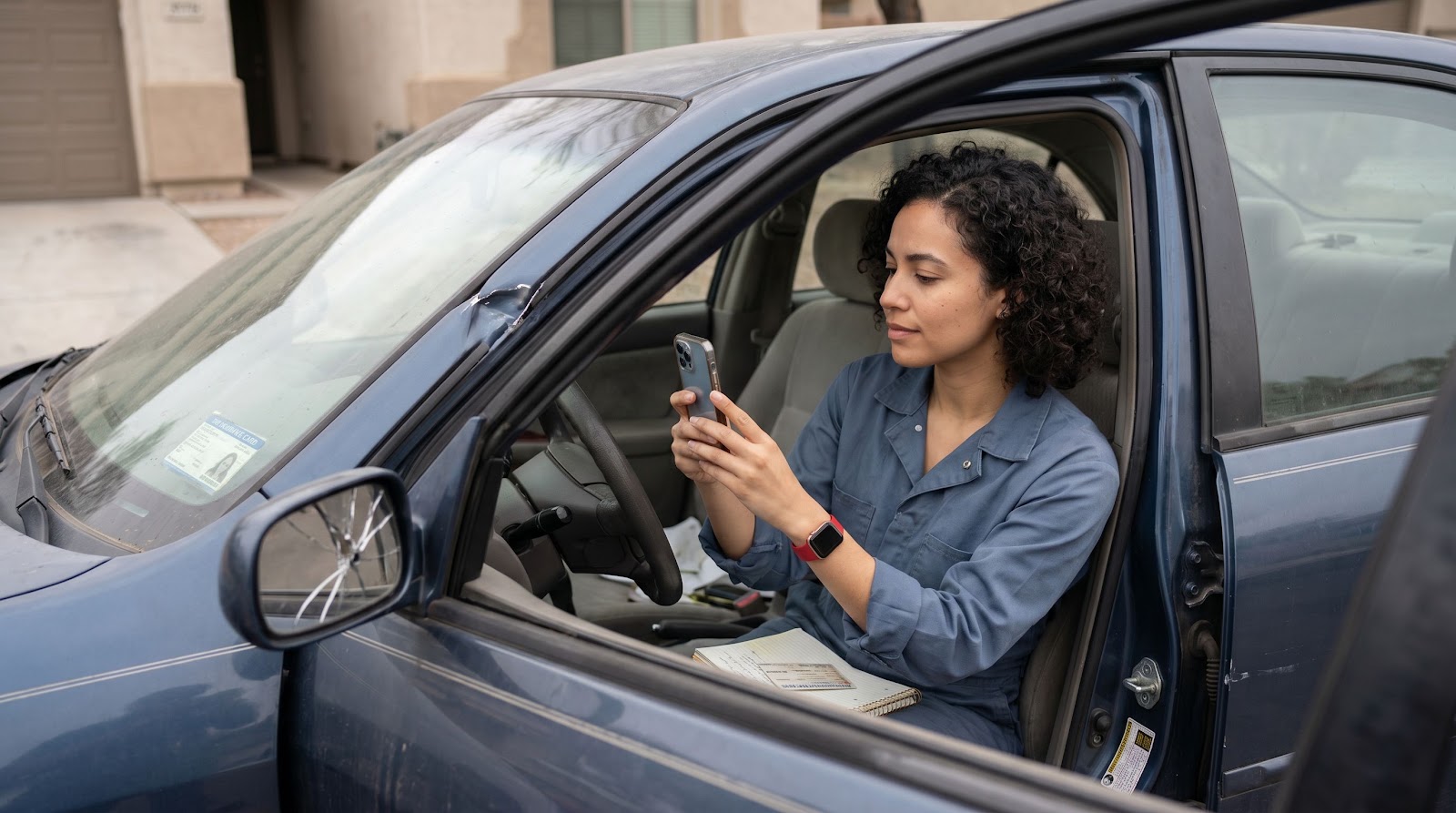
Safety steps when visibility is still near zero
If dust is still blinding the roadway, do not stand outside taking pictures in moving traffic. TxDOT has warned Texans to avoid travel if possible when high winds create low visibility, and The Texas Tribune has reported that vehicles pulled off with lights on can still be struck when other drivers mistake those lights for a vehicle still in the lane.
Your claim is not helped if you get hit again. Call 911, report injuries, and move only if it is safe and necessary.
What photos, videos, and scene details help prove conditions
Take photos or short videos from a safe spot as soon as visibility improves enough to do it without risk. Focus on dust density, skid marks, vehicle positions, lane markers, shoulder location, damage points, debris, and any blocked sight lines.
Also save screenshots that show the time, your location, and the weather app conditions you were seeing when the crash happened. Those details help show this was not a routine fender bender.
Why the police report, weather data, and witness statements matter
The police report helps lock in the basic timeline. Weather records help show that visibility hazards were real, and witness statements can confirm whether traffic was slowing, stopped, or still moving into the dust.
That is useful when drivers give conflicting versions of a chain-reaction pileup.
What to say and what not to say to any insurer
Keep your statement factual: where you were, what you saw, when visibility dropped, and what happened next. Say if you slowed, stopped, or were already impacted.
Do not guess about speed, distance, or who caused every impact. Do not say “I could have avoided it” or “it was my fault” if you do not know the full sequence yet. Stick to facts, injuries, damage, and the order of events you personally observed.
How much can a Texas dust storm car accident insurance claim cost?
A Texas dust storm car accident insurance claim can range from a smaller comprehensive loss to a much more expensive collision claim with several vehicles involved. The price tag depends on what hit your car, how many impacts happened, and what your policy makes you pay first.
Claim scenarios: debris-only damage vs single-impact crash vs chain-reaction pileup
If wind-driven debris damages your car and there is no impact, the claim usually runs through comprehensive. If you hit a guardrail, another car, or the median when visibility disappears, that is usually a collision. In a pileup, your own vehicle damage still typically falls into the collision lane after impact.
That difference matters because the severity often climbs fast in chain-reaction crashes. The Texas Tribune has described how blinding dust can make drivers misread lights and strike vehicles almost instantly, which helps explain why one event can turn into several impacts.
Out-of-pocket costs drivers forget, including deductibles, towing, rental, and storage
The first number many drivers feel is the deductible. Then come the extras people forget: towing from a remote highway, rental car days while fault is sorted out, and storage fees if the vehicle sits at a tow yard.
Your policy may or may not cover each of those items the same way. That is why a dust storm wreck that looks manageable at first can still become a costly Texas dust storm car accident insurance problem for your budget.
How a fault claim can affect future premiums
If you are found at fault, the claim can keep costing you after repairs are done. A fault-based collision loss may affect renewal pricing, especially when the insurer decides you did not slow down enough for conditions or kept driving into near-zero visibility.
That risk is different from paying for coverage itself. The Insurance Information Institute says collision costs $290 per year on average and comprehensive costs a little over $134 per year, but a charged claim can change what you pay later.
Why the approved November 1, 2026, Texas residual-market private-passenger auto rate increase matters for higher-risk drivers
For higher-risk drivers, this matters because the Texas Department of Insurance approved a 2.8% increase effective November 1, 2026, for residual-market private-passenger auto rates through TAIPA. If a dust-storm crash pushes a driver into a harder-to-place situation, shopping for replacement coverage may get more expensive.
What mistakes ruin a dust storm insurance claim after a rear-end crash?
The biggest mistakes are usually simple: assuming fault is automatic, opening the wrong claim first, and failing to preserve evidence before the story gets blurry. In Texas dust storm car accident insurance, a rear-end crash may still involve disputed visibility, speed for conditions, and multiple impacts.
Assuming the rear driver is always 100 percent at fault without reviewing conditions
A rear-end hit does not end the analysis by itself. In a dust storm pileup, the insurer will still examine whether drivers slowed for visibility, stopped in a travel lane, or kept moving into near-zero conditions.
Texas Department of Transportation guidance says posted speed limits apply under normal conditions, so drivers must adjust to visibility hazards. That gives adjusters room to look beyond the last vehicle in line.
Filing under the wrong coverage first
This mistake delays claims and creates confusion. If wind or debris damaged the car without impact, the claim usually points to comprehensive. If your car struck another vehicle, a barrier, or any object, your own damage usually goes through collision coverage, based on Texas Department of Insurance guidance and the Insurance Information Institute.
After a rear-end crash in blowing dust, many drivers focus on the storm and forget that impact damage usually starts in collision coverage.
Waiting too long to document damage and roadway conditions
Dust clears. Skid marks fade. Vehicles get towed. If you wait, it becomes harder to show what visibility looked like and where each impact likely happened.
Take photos as soon as it is safe. Include damage angles, lane position, shoulder location, debris, and the general visibility around the crash scene.
Repairing or moving the vehicle before the insurer inspects it
If the car is repaired too soon, you may lose physical evidence that helps explain whether the damage came from debris, one rear-end strike, or a chain reaction. Even moving the vehicle unnecessarily can create new questions about the point of impact and resting position.
When possible, let the insurer document the vehicle first, especially if fault is disputed.
Giving a recorded statement without understanding comparative fault exposure
A recorded statement can hurt your Texas dust storm car accident insurance claim if you guess about speed, distance, or what other drivers did. The safer approach is to stick to what you personally saw when visibility dropped, and what happened before and after impact.
If there is any chance the insurer may argue you shared blame, do not speculate and do not volunteer fault percentages.
How can Texas drivers lower the risk of denial and reduce future costs before dust-storm season?
The best way to lower trouble with a Texas dust storm car accident insurance claim is to fix gaps before the wind starts blowing. That usually means choosing the right physical damage coverage, picking deductibles you can actually afford, and carrying limits that can hold up in a pileup.
Coverage choices that matter most in dust-prone areas
In dust-prone parts of Texas, the biggest mistake is assuming liability coverage is enough. If wind-driven dust, rocks, or debris damage your car without a crash, that usually points to comprehensive. The Texas Department of Insurance said Texans should consider comprehensive coverage because it covers damage from wind.
If the storm leads to an impact with another vehicle, a guardrail, or the median, your own car damage usually falls under collision. For many drivers, carrying both is what keeps a dust-storm loss from turning into an out-of-pocket repair bill.
Deductible decisions for comprehensive and collision
Choose deductibles based on what you could pay this week, not what sounds good during a quote call. A lower deductible can mean a higher premium, but it also makes it easier to file a claim after a dust-storm loss without delaying repairs.
The Insurance Information Institute says collision costs $290 per year on average, and comprehensive costs a little over $134 per year. Those averages are modest compared with the shock of paying a large deductible after a multi-impact crash.
Why minimum limits may be too low for multi-car highway crashes
Minimum limits can run out fast when several vehicles are damaged in one low-visibility event. That is the real problem with Texas dust storm car accident insurance in highway pileups: one driver may face multiple property damage claims at once.
If your record worsens after a major crash and you need residual-market coverage, costs may climb further. The Texas Department of Insurance approved a 2.8% increase effective November 1, 2026, for TAIPA private-passenger auto rates.
Safe-driving steps Texas agencies and national guidance consistently recommend when dust reduces visibility
Texas guidance is clear on the basics. TxDOT says avoid travel if possible when high winds create low visibility, and drivers must slow for conditions because posted limits apply under normal conditions.
Those habits matter for safety, but they also matter for claims. When insurers see that a driver kept moving too fast into disappearing visibility, denial risk and future pricing problems become more likely.
 Vehicle
  Home & Property
  Commercial
  Life
Life  Health