


The real danger with Florida rideshare insurance Uber Lyft is simple: your coverage can change the second you turn the app on. Many drivers assume their regular policy still follows them, but Florida rules treat rideshare time differently from normal personal driving. If you want a broader view of Florida car coverage, start with Florida auto insurance.
What is the real insurance trap for Uber and Lyft drivers in Florida?
The trap is not driving for Uber or Lyft itself. The trap is believing your personal auto policy still protects you during rideshare activity, when Florida law allows that policy to exclude coverage once you are logged into the app or carrying a rider.
That is why Florida rideshare insurance Uber Lyft works by phases, not by one simple policy all day.
Why a personal auto policy may stop protecting you once the app is on
A standard personal policy may stop covering you as soon as you log into the rideshare platform. The Insurance Information Institute says personal auto coverage generally stops from app-on until the customer exits and the trip is closed.
Florida law goes even further. Under the Florida Legislature, Online Sunshine, a personal insurer may exclude liability, UM/UIM, collision, comprehensive, medical payments, and PIP during rideshare use. In plain English, a crash that looks routine can turn into a denied claim fast.
How rideshare insurance periods change your coverage from waiting for a ride to carrying a passenger
Florida requires different coverage depending on what you are doing in the app. While you are logged in and waiting for a request, the required minimum is $50,000 for bodily injury per person, $100,000 per incident, and $25,000 for property damage, plus required PIP and UM/UIM.
Once you accept a ride or have a passenger in the car, the minimum jumps to $1,000,000 in primary liability coverage, plus required PIP and UM/UIM, according to Florida Legislature, Online Sunshine.
What financial risks do Florida drivers face after a denied claim
If your claim is denied, you may be left paying for damage, injuries, or both out of pocket. That can happen even if you thought your usual policy was enough for a quick side hustle between errands.
There is another layer many drivers miss. Florida-registered vehicles must carry $10,000 PIP and $10,000 PDL continuously, and the Florida Department of Highway Safety and Motor Vehicles says failure to maintain required insurance can trigger driver’s license or registration suspension, with reinstatement fees up to $500.
Florida law does say the TNC’s insurance must step in from the first dollar and defend the claim if the driver’s rideshare coverage has lapsed or does not provide the required coverage. But getting to that point after a crash is very different from having the right coverage lined up before one.
What insurance does Florida require for Uber and Lyft drivers?
Florida requires different rideshare coverage depending on the moment you are in the app. For Florida rideshare insurance Uber Lyft, the legal minimum changes when you are waiting for a request and jumps again once you accept a trip or carry a passenger.
Coverage required while logged in and waiting for a ride request
If you are logged in but have not accepted a ride yet, Florida law requires at least $50,000 for bodily injury per person, $100,000 per accident, and $25,000 for property damage. The law also requires PIP benefits and UM/UIM coverage during this phase, according to the Florida Legislature, Online Sunshine.
That waiting period catches many drivers off guard because it does not look risky. You may be parked near a shopping center in Miami or circling a busy block in Orlando, but legally, you are already in a different insurance phase.
Coverage required during an accepted trip and while carrying passengers
Once you accept a ride request, the requirement gets much higher. Florida requires at least $1,000,000 in primary automobile liability coverage, plus required PIP benefits and UM/UIM coverage, under the Florida Legislature, Online Sunshine.
This applies during the accepted trip and while the passenger is in the vehicle. In other words, the biggest exposure starts before the rider even opens your door and continues until the trip is fully over.
Why Florida’s minimum personal auto insurance is not enough for rideshare driving
Florida’s basic requirement for a registered private vehicle is only $10,000 PIP and $10,000 PDL, according to the Florida Department of Highway Safety and Motor Vehicles. That is far below the rideshare limits Florida requires once you are working through Uber or Lyft.
There is a second problem. Florida law allows personal auto insurers to exclude rideshare activity, and the Insurance Information Institute says standard personal coverage generally stops from app-on until the rider exits and the trip is closed. So even a driver who stays legal for normal Florida driving may still be badly underinsured for rideshare work.
What happens if you crash while driving for Uber or Lyft and only have personal auto insurance?
You can end up in a bad gap fast. For Florida rideshare insurance Uber Lyft, a personal policy may leave you exposed the moment you are logged in, even before you pick anyone up.
That is the part many drivers miss. The crash may look ordinary, but the insurance phase is not.
When your insurer can deny liability, collision, comprehensive, MedPay, UM/UIM, and PIP claims
Florida law allows a personal auto insurer to exclude coverage while you are logged into the rideshare app or giving a prearranged ride. That can include liability, collision, comprehensive, MedPay, UM/UIM, and PIP, according to the Florida Legislature, Online Sunshine.
The Insurance Information Institute says standard personal auto coverage generally stops from app-on until the rider exits and the trip is closed. So if you back into another car while waiting for a request, or get hit after accepting a trip, your personal carrier may say the loss happened during rideshare activity and deny the claim.
How a coverage lapse can affect your license, registration, and ability to keep driving
A denied rideshare claim and a lapse in required coverage are not the same problem, but both can hurt you. Florida says registered vehicles must carry $10,000 PIP and $10,000 PDL continuously. If that required insurance is not maintained, FLHSMV says your driver’s license and registration can be suspended, with reinstatement fees of up to $500.
For a rideshare driver, that can mean losing the ability to keep working while you sort out coverage, paperwork, and reinstatement.
Out-of-pocket costs that can threaten your savings after a serious accident
If your personal insurer denies the loss, you may have to deal with repair bills, injury claims, deductibles, rental costs, and missed income at the same time. A serious crash can drain savings quickly because the dollars start moving before the coverage dispute is fully sorted out.
Florida law does provide a backstop: if the driver’s rideshare insurance has lapsed or does not provide the required coverage, the TNC’s insurance must provide the required coverage from the first dollar of the claim and defend it. But that does not make the aftermath simple, especially when your own policy was never built for rideshare use.
How much does Florida rideshare insurance for Uber and Lyft cost compared with the risk of going without it?
No verified statewide price fits every driver, so the honest answer is this: the cost depends on your insurer and risk profile, but the financial danger of going without proper rideshare coverage is clearly much bigger than relying on a personal policy that may not apply.
That is the real math behind Florida rideshare insurance, Uber, and Lyft. You are comparing a policy adjustment against exposure that can reach $50,000, $100,000, $25,000, or even $1,000,000 depending on the phase of the trip under Florida law.
Typical rideshare endorsement or hybrid policy cost factors in Florida
Florida drivers usually see pricing shaped by the same things that affect regular auto insurance: where you drive, your driving record, your vehicle, how often you use the app, and whether you want an endorsement added to a personal policy or a policy built for mixed personal and rideshare use.
The key question is not just premium. It is whether the policy recognizes rideshare activity when the app is on. Florida law requires primary coverage that applies during rideshare use, and the Florida Legislature, Online Sunshine, also allows personal carriers to exclude that use entirely.
Cost comparison: personal auto policy vs rideshare endorsement vs claim exposure after a crash
A personal auto policy may look cheaper on paper. But if it excludes rideshare time, that lower bill can become very expensive after one crash.
For example, a driver with only ordinary Florida minimum coverage may be carrying just $10,000 PIP and $10,000 PDL for a private vehicle, according to FLHSMV. Once that same driver logs into Uber or Lyft, Florida requires much higher limits. If the claim falls into a denied period, the gap is not theoretical.
You could be dealing with repairs, injuries, lost work time, and coverage disputes at once.
Which driver profile usually pays more in Florida
Drivers who spend more time on the road, work in busier traffic areas, or have prior violations generally face higher insurance costs. The same tends to happen with vehicles that cost more to repair or insure.
What matters most is matching the policy to how you actually drive. A part-time weekend driver and someone who logs in every day across South Florida do not present the same exposure, even before a passenger gets in the car.
Which coverage should Florida Uber and Lyft drivers buy beyond the platform policy?
For most drivers, the safest answer is simple: buy coverage that fills the gaps the platform policy does not fully solve. With Florida rideshare insurance Uber Lyft, the right add-on depends on how often you drive, whether you depend on the car for daily income, and how much loss you could handle out of pocket after a crash.
Rideshare endorsement vs commercial policy: which one fits part-time and full-time drivers
A rideshare endorsement usually makes more sense for a part-time driver who uses the car mostly for personal errands and only logs into Uber or Lyft on certain days. It can help align your personal policy with rideshare use, which matters because Florida law allows personal insurers to exclude coverage once you are logged into the app or on a prearranged ride.
A commercial-style auto policy can be the better fit for someone driving full time, spending long hours on the road, or treating rideshare work like a primary business use. If you want to compare broader business-use protection, see commercial vehicle insurance.
Physical damage coverage, deductible concerns, and when contingent coverage may not be enough
Do not focus only on liability. Your own car may be your biggest risk. Florida law lets personal insurers exclude collision and comprehensive coverage during rideshare activity, so a driver with a financed vehicle or limited savings should pay close attention to physical damage coverage.
Contingent platform coverage may help in some situations, but it does not automatically mean your repair bill will feel manageable. If your car is badly damaged after a trip, the real issue is whether your policy setup leaves you facing a deductible or repair gap you cannot comfortably absorb.
UM/UIM, medical payments, and other protections Florida drivers often overlook
Many Florida drivers overlook UM/UIM first, even though Florida’s rideshare law requires UM/UIM while you are app-on waiting and during an active trip, along with required PIP benefits, according to Florida Legislature, Online Sunshine.
That matters when the other driver has too little coverage or none at all. Also, review medical payments carefully. Florida law allows personal insurers to exclude UM/UIM, medical payments, and PIP during rideshare use, so assuming your regular protections still follow you can be an expensive mistake.
What are the most expensive mistakes Florida rideshare drivers make?
The costliest mistake is assuming the platform or your personal policy automatically handles every phase of driving. With Florida rideshare insurance Uber Lyft, the biggest losses usually come from drivers who do not realize their coverage changes the moment they go app-on.
A close second is buying coverage based only on price. A cheaper policy can become brutally expensive if it excludes rideshare use and a crash happens while you are waiting for a request or carrying a passenger.
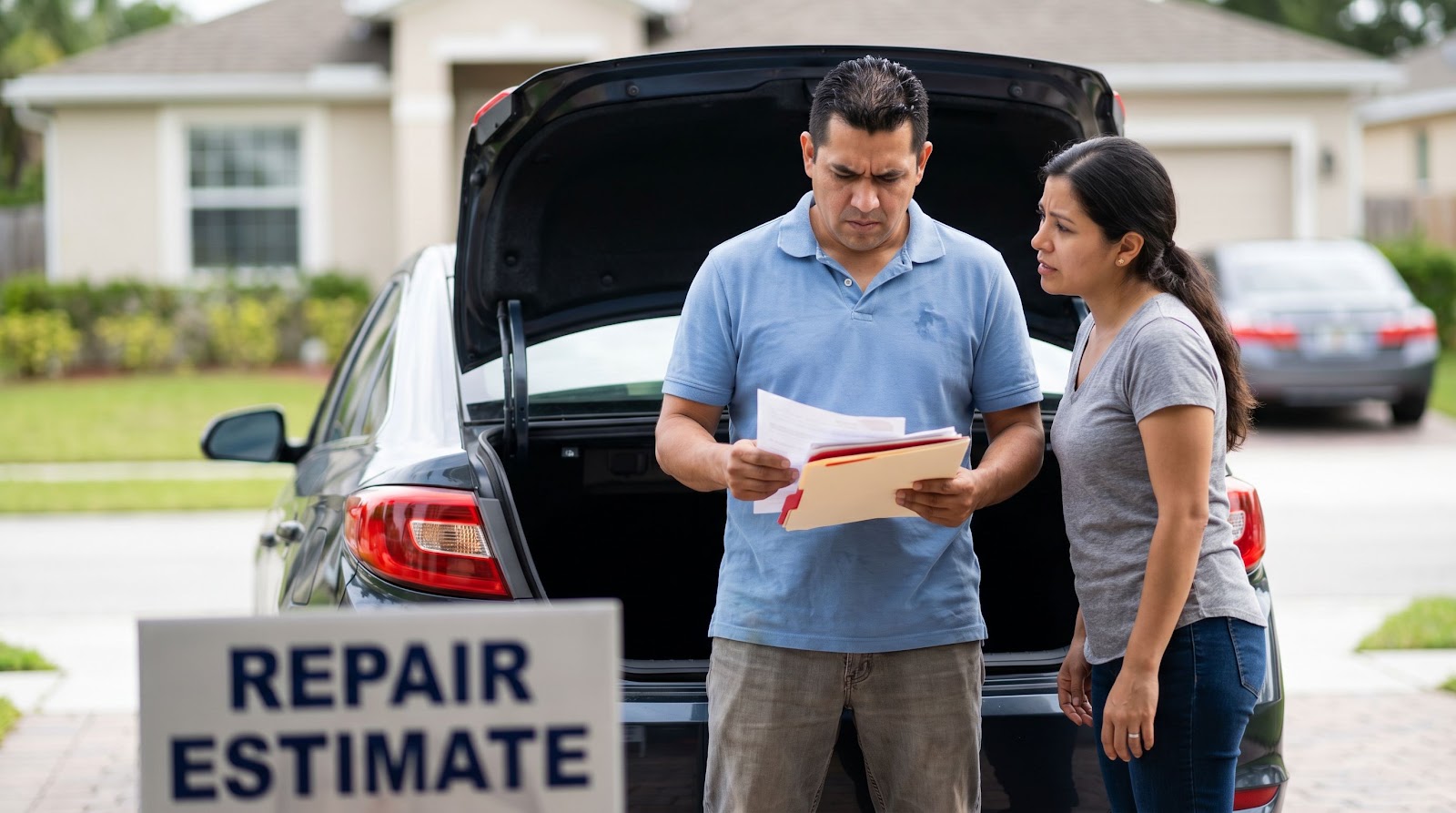
Another common mistake is thinking Florida’s minimum personal insurance is close enough. It is not. A private Florida vehicle must carry $10,000 PIP and $10,000 PDL continuously, but rideshare rules require much more once you are logged into Uber or Lyft, according to the Florida Department of Highway Safety and Motor Vehicles and Florida Legislature, Online Sunshine.
Drivers also get burned by ignoring physical damage gaps. Florida law allows personal insurers to exclude collision, comprehensive, PIP, UM/UIM, liability, and medical payments during rideshare use. So even a minor crash in a parking lot while waiting for a ping can turn into a denied claim and an out-of-pocket repair problem.
The last expensive mistake is waiting until after a wreck to ask who was at fault. Florida law requires primary coverage that recognizes rideshare use, and if the driver’s rideshare coverage has lapsed or does not provide what the law requires, the TNC’s coverage must step in from the first dollar and defend the claim. That backstop helps, but it is a terrible time to learn how your policy actually works.
How can you choose the right rideshare insurance policy in Florida without overpaying?
Start with one filter: the policy must clearly recognize rideshare use from the moment you go app-on. If it does not, cheap Florida rideshare insurance, Uber, Lyft, is not really cheap.
The goal is simple. Pay for coverage that matches how you actually drive, and avoid extras that do not fix your real gap.
Questions to ask an agent before you start driving for Uber or Lyft
Ask direct questions, not broad ones. Does this policy cover me while I am logged in and waiting for a request? Does it apply after I accept a trip? Does my personal insurer exclude rideshare activity?
You should also ask what happens to liability, collision, comprehensive, PIP, and UM/UIM during rideshare use. Florida law allows personal insurers to exclude all of those during app-on and prearranged rides, according to the Florida Legislature, Online Sunshine.
If the answers sound vague, keep asking. Florida requires at least $50,000 per person, $100,000 per incident, and $25,000 property damage while waiting for a ride, then $1,000,000 in primary liability during an active trip.
Documents and proof of coverage you should keep in your vehicle
Keep proof of your personal auto insurance in the car at all times. Florida-registered vehicles must continuously carry $10,000 PIP and $10,000 PDL, according to the Florida Department of Highway Safety and Motor Vehicles.
Also keep any rideshare endorsement, declarations page, or other proof showing your policy recognizes Uber or Lyft driving. If there is a crash, that paperwork helps show which coverage applies and when.
When to update your insurer if you switch apps, cars, or driving frequency
Update your insurer before the change starts, not after. That includes switching from Uber to Lyft, driving for both apps, replacing the vehicle, or going from occasional weekends to daily driving.
The reason is practical: Florida rideshare insurance for Uber and Lyft depends on how the car is used. If your real driving pattern changes, your policy should change with it.
 Vehicle
  Home & Property
  Commercial
  Life
Life  Health