


The 4th of July weekend is one of the riskiest times to be on Texas roads because traffic surges, risky driving rises, and many families hit the highway with thin protection. Before a trip, it helps to review your Texas auto insurance options with the holiday in mind.
Why is the 4th of July weekend one of the most dangerous times to drive in Texas?
Texas crash and fatality trends drivers should know before the holiday
Texas starts the holiday period with a high crash baseline. TxDOT recorded 4,150 traffic deaths in 2024, including 1,053 alcohol-related fatalities and 1,467 speed-related deaths. That matters before Independence Day because the risks that fuel serious crashes are already common on Texas roads.
The timing makes it worse. According to the Texas Department of Transportation, July and August are the two deadliest months for drunk-driving fatalities in the state. Add a holiday weekend built around parties, late-night returns, and long rural highway drives, and the danger climbs fast.
How holiday traffic volume, alcohol, speeding, and distraction raise claim risk
More cars usually mean more chances for mistakes. AAA projected 61.6 million people would travel by car during the 2025 Independence Day holiday period nationwide, a useful sign of the kind of road volume Texans can expect around late June and early July. Heavy traffic turns small errors into chain-reaction crashes, especially on interstates and busy connectors.
Alcohol, speeding, and distraction push claim risk even higher. TxDOT reports 299 distracted-driving deaths in 2025, showing that a quick glance at a phone is not a minor issue. On a crowded holiday road, one distracted driver can trigger damage across several vehicles.
There is also the insurance side. Texas requires only 30/60/25 minimum liability limits, according to the Texas Department of Insurance, and the agency warns that these limits may be too low after a multi-vehicle crash or total loss. With an estimated 14.5% of Texas drivers uninsured in 2023, holiday traffic can raise both crash odds and out-of-pocket costs.
Texas 4th of July travel car insurance: what coverage matters most before you leave?
For Texas 4th of July travel car insurance, the most important question is simple: will your policy still protect you if one crash involves several cars, injuries, or an uninsured driver? On a packed holiday highway, minimum coverage can run out fast.
Why Texas minimum liability limits may fail in a multi-vehicle highway crash
Texas requires only 30/60/25 in liability coverage. The Texas Department of Insurance warns that those limits may be too low if you cause a multi-vehicle crash or total another driver’s vehicle.
That matters on holiday routes where one hard brake can trigger a chain reaction. If damage and injuries go beyond your limits, the unpaid balance may fall on you. For many drivers, this is the biggest gap in Texas 4th of July travel car insurance.
When a collision occurs, comprehensive, medical payments, and roadside assistance become valuable
Liability coverage pays for damage you cause to others. It does not repair your own car after a wreck. Collision coverage becomes valuable if your vehicle is hit in stop-and-go traffic or during a lane-change crash on the interstate.
Medical coverage also deserves a look before a trip. In Texas, Personal Injury Protection is included unless you rejected it in writing, according to the Texas Department of Insurance. If you are not sure whether you kept it, check before you leave. Roadside assistance can also help when a dead battery or flat tire strands you far from home.
Why uninsured/underinsured motorist coverage matters on busy Texas highways
This coverage matters because many Texas drivers still have no insurance or too little of it. The Insurance Information Institute estimated that 14.5% of Texas drivers were uninsured in 2023.
Texas insurers must offer uninsured/underinsured motorist coverage, and you have to reject it in writing if you do not want it, according to the Texas Department of Insurance. On a crowded holiday weekend, that protection can make a major difference if the driver who hits you cannot pay.
How much financial risk do Texas drivers face with minimum coverage during holiday travel?
The risk can be large. For Texas 4th of July travel car insurance, minimum liability may satisfy the law, but it can leave you paying the rest yourself after a serious holiday crash.
That gap matters more on crowded highways. Texas still requires only 30/60/25, and the Texas Department of Insurance warns that those limits may be too low if you cause a multi-vehicle wreck or total someone else’s car.
Coverage comparison: Texas 30/60/25 minimum vs higher liability limits
With 30/60/25, your policy covers up to $30,000 for injuries to one person, $60,000 total per crash for bodily injury, and $25,000 for property damage. That may sound workable until several people are hurt or more than one vehicle is damaged.
Higher liability limits give you more room before your coverage runs out. That is the real financial difference during holiday travel: minimum coverage protects your legal compliance, while higher limits better protect your savings, paycheck, and assets if a chain-reaction crash turns expensive.
Out-of-pocket cost scenarios after a holiday crash involving injuries, multiple vehicles, or an uninsured driver
Picture a July highway crash with three vehicles. If you are found at fault and the damage goes beyond your property damage limit, you could owe the unpaid balance yourself. The same problem applies if injuries to several people push the claim past your bodily injury limit.
There is another exposure that many drivers miss. The Insurance Information Institute estimated that 14.5% of Texas drivers were uninsured in 2023. If one of them hits you and you rejected UM/UIM in writing, or if you declined PIP in writing, your own recovery options may be much thinner than expected.
Texas also tracks insurance through TexasSure, and official state notices warn that driving without insurance can bring a fine of up to $350, plus court costs and additional fees. So, for Texas 4th of July travel car insurance, the real question is not whether minimum coverage is legal. It is whether it is enough for the crash you could actually face.
What should you check on your policy before driving Texas highways this busy 4th of July weekend?
Before you leave, check the parts of your policy that decide what you pay after a breakdown or claim delay. For Texas 4th of July travel car insurance, that usually means your deductible, rental coverage, towing, and the fine print on who is covered when someone else drives.
Deductibles, rental reimbursement, towing, and roadside assistance
Your deductible matters more than many drivers think. If you have collision coverage but the deductible is higher than you can comfortably pay this weekend, a covered crash can still turn into a cash problem fast.
Look at whether you added rental reimbursement. If your car is stuck in a body shop after a holiday wreck, that coverage can help keep the trip or your workweek from falling apart. Then check towing and roadside assistance. A flat tire, dead battery, or roadside breakdown on a busy Texas highway is very different when your policy already includes help.
Also, confirm whether these protections appear on the declarations page or only as optional endorsements. If you do not see them listed, do not assume they are there.
Policy exclusions, permissive drivers, and vehicle-use details that can affect a claim
This is where small details create big surprises. Review any exclusions for unlisted drivers, delivery use, rideshare activity, or business use of the car. If the vehicle is being used in a way your policy does not allow, the claim can get complicated quickly.
Check who can drive your car with permission. Many people assume every relative visiting for the holiday is automatically covered. That is not always how a policy works, so verify permissive-driver rules before handing over the keys.
Finally, make sure your policy matches the car’s real use and your current address. Texas Department of Insurance rules require insurers to offer UM/UIM coverage unless you rejected it in writing, and PIP is included unless you rejected it in writing. If you are unsure, this is the right moment to confirm both in writing with your agent.
What happens if you are hit by a drunk, distracted, or uninsured driver in Texas?
If another driver hits you in Texas, your own policy may step in before their insurer pays. That is a big issue for Texas 4th of July travel car insurance, especially when the other driver is uninsured, underinsured, or clearly impaired.
Holiday risk is not theoretical. TxDOT says July and August are the deadliest months for drunk-driving fatalities in Texas, and distracted driving caused 299 deaths in 2025. When a crash happens, the order of payment often depends on the coverages you kept on your policy before the trip.
Which coverages may pay first after the crash?
Your medical costs may start with PIP, which is included in Texas policies unless you rejected it in writing, according to the Texas Department of Insurance. That can help with immediate bills while the fault is still being sorted out.
If the other driver has no insurance or not enough of it, UM/UIM coverage may become critical. Texas insurers must offer it, and you have to reject it in writing if you do not want it. For car repairs, collision coverage may pay for your vehicle, depending on your policy and deductible, even before the other carrier finishes its investigation.
How fault, police reports, medical bills, and vehicle damage affect the claim process
Fault still matters. A police report can help document signs of intoxication, distraction, road conditions, and who was cited, but the insurer will also review statements, photos, repair estimates, and medical records.
Medical treatment affects the timeline, too. The more serious the injuries, the more documentation the adjuster will usually request. Vehicle damage can also shape the claim fast. A totaled car, multiple damaged vehicles, or injuries that go beyond 30/60/25 can turn a simple claim into a limits problem, especially if the at-fault driver carried only the Texas minimum.
And if the other driver had no coverage at all, that delay can shift the pressure back to your own policy very quickly.
Common Texas holiday travel insurance mistakes that can leave families exposed
The biggest mistakes are usually simple: driving into a crowded July 4 weekend with state-minimum limits, rejecting useful coverage years ago, or assuming every holiday driver in your household is fully covered. For Texas 4th of July travel car insurance, those small oversights can become expensive fast.
One common problem is treating legal minimums as real protection. Texas requires 30/60/25, but the Texas Department of Insurance warns that this may be too low after a multi-vehicle crash or a total loss. On a packed interstate, one mistake can damage several cars in seconds.
Another mistake is forgetting what you declined when you first bought the policy. In Texas, PIP is included unless you reject it in writing, and insurers must offer UM/UIM coverage, which also has to be rejected in writing if you do not want it. If you skipped those coverages to lower the premium, a holiday crash with injuries or an uninsured driver can leave much more of the bill on your side.
Some families also assume occasional drivers are automatically covered. Before a holiday trip, check how your policy handles permissive drivers and whether the vehicle’s listed use still matches reality. If the car is being used in a way the policy does not allow, the claim can get harder.
And then there is the risk that other drivers bring. The Insurance Information Institute estimated that 14.5% of Texas drivers were uninsured in 2023. Add heavy holiday traffic and the deadliest months for drunk-driving fatalities, as identified by TxDOT, and weak coverage becomes more than a paperwork issue.
How can families lower both crash risk and insurance losses on a Texas road trip?
Start before the engine turns on. For Texas 4th of July travel car insurance, the smartest move is pairing a simple car-and-paper check with safer choices about when and how you drive.
That matters on Texas highways because risk is coming from both directions: traffic density and claim exposure. With TxDOT reporting major ongoing danger from distraction and the Texas Department of Insurance warning that minimum limits may fall short in a multi-vehicle crash, prevention and preparation work together.
Pre-trip vehicle and document checklist
Check your tires, lights, brakes, wipers, fuel level, and phone charger before you leave. Then confirm the basics that make a claim or traffic stop easier to handle: your insurance card, vehicle registration, driver’s license, and roadside contact information.
This is also the time to verify whether you still carry PIP unless rejected in writing and whether you kept UM/UIM coverage or rejected it in writing. If your family will rotate drivers, make sure the person behind the wheel is allowed under the policy you are actually carrying, not the one you think you bought years ago.
Safer driving decisions for peak congestion, night driving, and return-day traffic
The safest holiday driving decision is often a timing decision. Leave earlier, avoid late-night returns after fireworks or parties, and expect heavier traffic on the drive back home.
Night driving raises the stakes during this holiday stretch. TxDOT says July and August are the deadliest months for drunk-driving fatalities in Texas, so a tired or rushed return can put your family near impaired drivers when visibility is already worse.
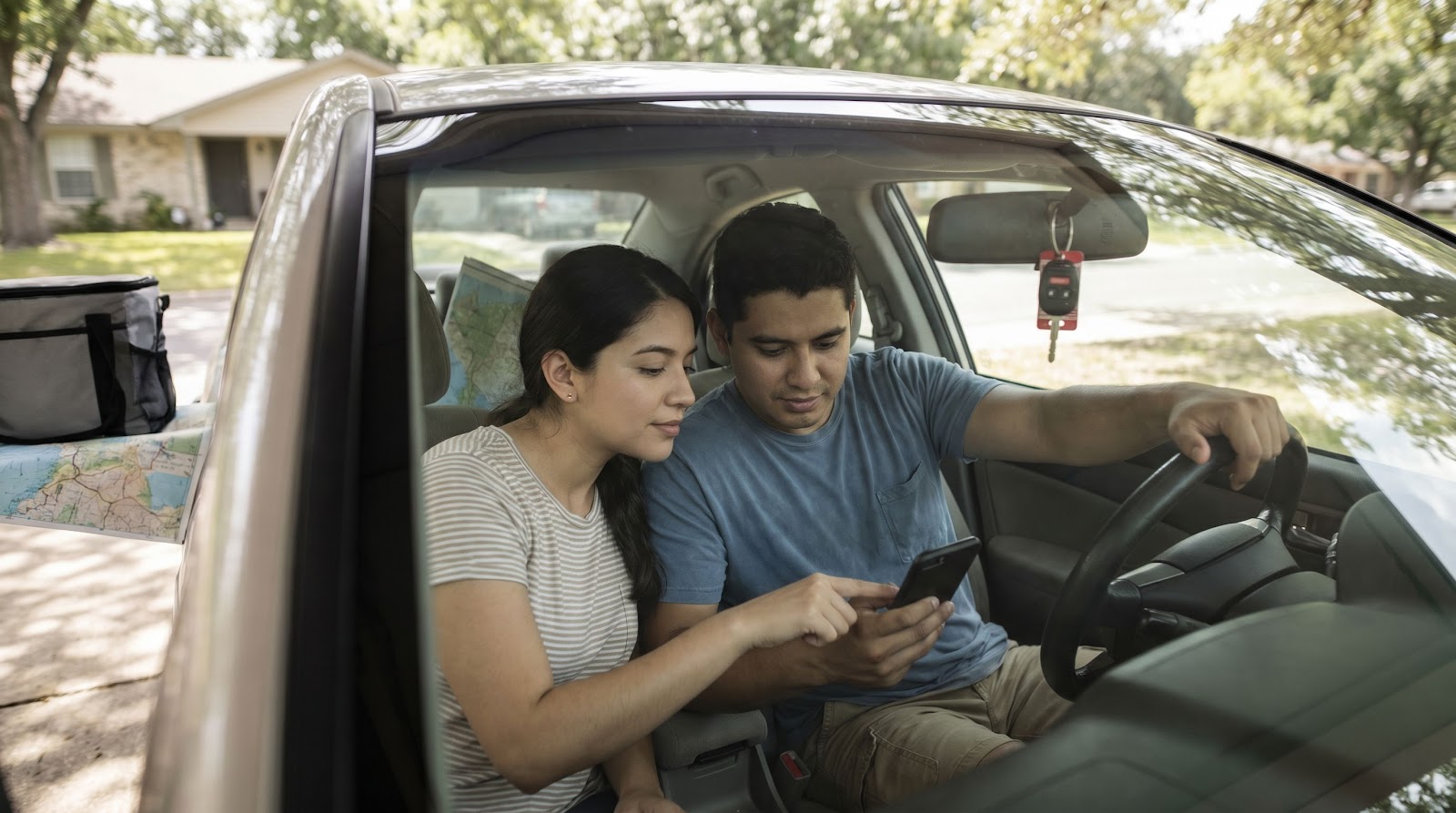
Inside the car, cut distractions on purpose. Set navigation before moving, keep one passenger in charge of texts or playlist changes, and do not let impatience push your speed. TxDOT reported 299 distracted-driving deaths in 2025. On a packed return-day highway, one glance away is enough to turn a holiday trip into a claim.
 Vehicle
  Home & Property
  Commercial
  Life
Life  Health