


If your driver hits a pedestrian in a company vehicle, the case can start with Florida no-fault benefits and then turn into a lawsuit against the business fast. For many delivery operations, that is exactly why commercial vehicle coverage matters from day one.
What actually happens if your delivery employee hits a pedestrian in a company vehicle?
Usually, more than one insurance and liability issue starts at the same time. A pedestrian may seek immediate injury benefits first, but if the harm is serious, the business can face a much larger claim tied to the crash.
How Florida no-fault rules may apply first through Personal Injury Protection
Florida requires at least $10,000 in PIP and $10,000 in property damage liability for many registered vehicles, according to the Florida Office of Insurance Regulation / MyFloridaCFO. Under Florida’s PIP statute, benefits can extend to people struck by a motor vehicle, which may include a pedestrian.
That does not mean the whole claim ends there. The Florida Senate states that PIP generally pays 80% of necessary medical expenses and 60% of lost income, up to the statutory limit, with a $5,000 death benefit.
When a pedestrian injury becomes a liability claim against the business
If the injuries are severe, the claim can move beyond first-party PIP benefits. At that point, the pedestrian may pursue damages against the driver and the delivery business for bodily injury and related losses.
This is where Florida commercial auto insurance delivery coverage becomes critical. State minimums help with registration, but they do not automatically give every business the liability protection needed for a serious pedestrian accident.
Why can the company, the driver, and the vehicle owner all be pulled into the same case
A single crash can bring in several parties because each one may have a different legal role. The driver may be accused of negligent driving. The employer may be drawn in because the employee was making deliveries for the business.
If the company owns the vehicle, Florida’s dangerous instrumentality doctrine can also make the owner vicariously liable when it entrusted that vehicle to the driver, according to the Supreme Court of Florida. And if a business is relying on a personal auto policy for a company-owned vehicle, the NAIC says that policy generally does not cover commercial vehicles.
Who is legally responsible in Florida when a delivery driver causes a serious accident?
In Florida, legal responsibility can extend beyond the driver. If the employee was working, the employer and the company that owns the vehicle may also be on the hook, which is why Florida commercial auto insurance delivery exposure has to be taken seriously.
Employer liability for employees acting within the scope of work
When a delivery driver is making a scheduled drop-off, picking up an order, or driving between job locations, the business can be pulled into the claim because the employee was acting within the scope of the job. That usually puts the employer in the case alongside the driver.
For a serious pedestrian injury, that matters fast. PIP may apply first, but once damages go beyond those benefits, the claim can shift toward the business’s liability exposure.
Owner liability exposure for company-owned vehicles
If the business owns the vehicle, Florida law creates another layer of risk. Under Florida’s dangerous instrumentality doctrine, the vehicle owner can face vicarious liability after entrusting that vehicle to a driver whose negligent operation hurts someone else, according to the Supreme Court of Florida.
That is a big reason a company car should be insured as a business vehicle, not treated like a personal one. The NAIC says personal auto insurance does not cover commercial vehicles, and if the vehicle is owned by a business, a commercial auto policy must be purchased instead.
When negligent hiring, training, supervision, or retention increases the business’s risk
A company’s exposure can grow even more if the claim includes allegations that the business should never have put that driver on the road in the first place. Think of a delivery operation that ignores driving issues, skips training, or fails to monitor who is using company vehicles.
That kind of allegation is different from basic vicarious liability. It argues that the business itself acted carelessly. For many fleets, this is where stronger vehicle rules and the right business insurance setup become part of the same risk decision.
Does personal auto insurance cover delivery driving or a company-owned vehicle?
Usually, no. If the car is owned by the business, a personal auto policy is generally the wrong policy, and that is where Florida commercial auto insurance delivery coverage becomes essential.
A delivery loss can expose two problems at once: the policy may not fit the vehicle, and the available limits may be far too low for a pedestrian injury claim.
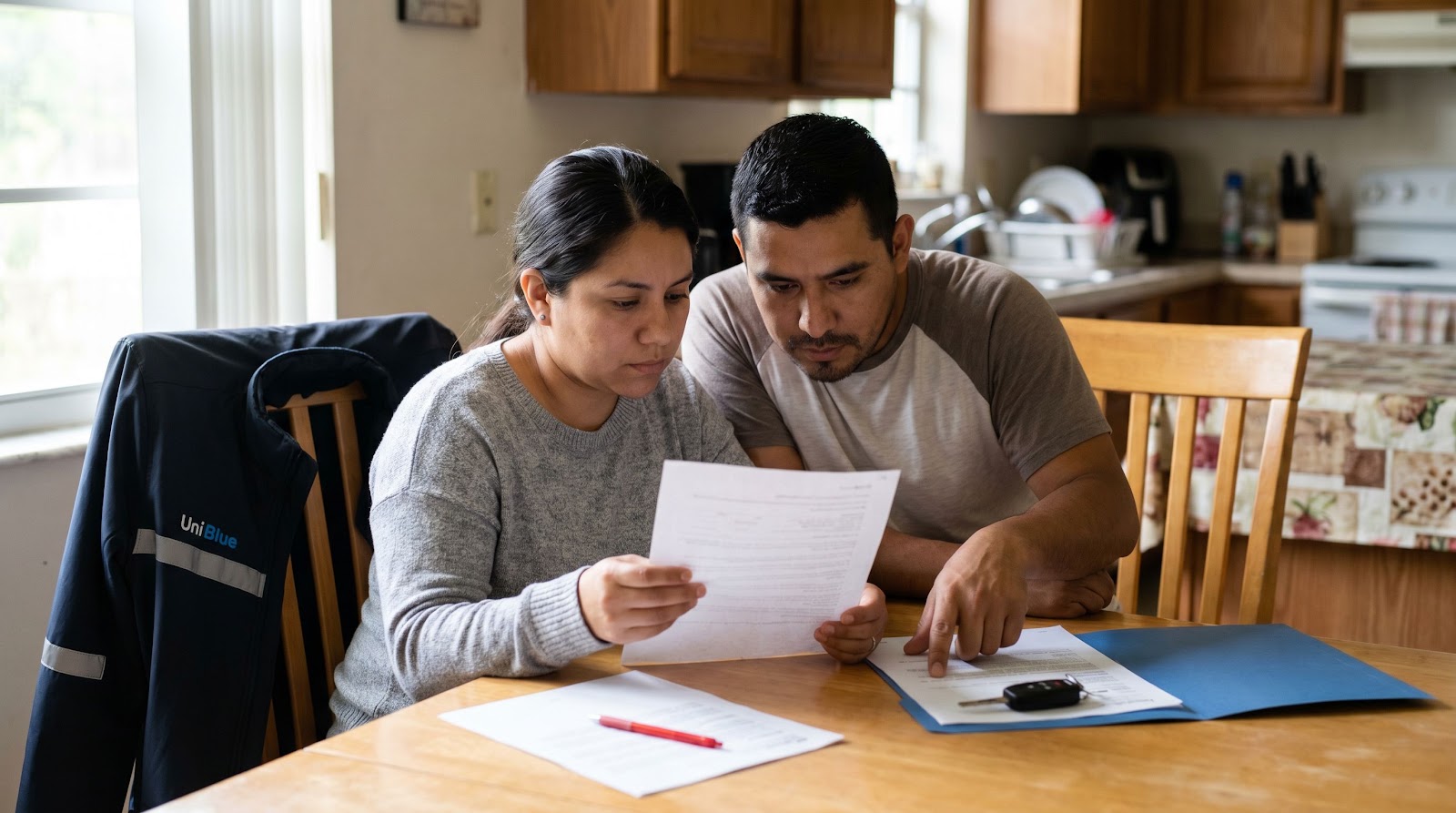
Why do personal auto policies generally exclude business use or company vehicles?
The basic rule is straightforward. The NAIC says personal auto insurance does not cover commercial vehicles, and if a vehicle is owned by a business, a commercial auto policy must be purchased instead.
That matters for delivery companies because the crash may involve the driver, the employer, and the vehicle owner in the same case. If the business is trying to insure a company car under a personal policy, coverage problems can surface right when the claim gets serious.
The gap between Florida’s minimum limits and real pedestrian injury exposure
Florida requires at least $10,000 in PIP and $10,000 in property damage liability for many registered vehicles, according to MyFloridaCFO. Those numbers may satisfy registration, but they do not create broad bodily injury liability protection for every routine crash.
And a pedestrian claim can move past no-fault quickly. Under Florida’s PIP statute, benefits may apply to a person struck by the vehicle, but PIP generally pays 80% of necessary medical expenses and 60% of lost income up to the legal limit. A serious injury can leave much more on the table.
How commercial auto insurance for delivery businesses fills those coverage gaps
Commercial coverage is built for business-owned vehicles and delivery exposure. It is also the place to address liability tied to employees driving for work, including situations where workers use their own cars for business. The Insurance Information Institute says a company can still face liability in those cases unless it has the right business auto coverage for non-owned autos.
For many businesses, the Insurance Information Institute points to $1,000,000 as a common business auto liability limit. If your operation also needs broader protection around lawsuits, that conversation often connects with excess liability coverage.
How much commercial auto insurance does a Florida delivery business really need?
For most delivery businesses, Florida minimums are nowhere near enough. If you are using company vehicles for deliveries, the real question is not whether the state lets you register the vehicle. It is whether your limits can absorb a serious injury claim.
Florida requires at least $10,000 in PIP and $10,000 in property damage liability for many registered vehicles, according to MyFloridaCFO. But those minimums do not automatically give a delivery company broad bodily injury liability protection after a pedestrian accident.
Florida minimum requirements versus practical liability protection
A delivery van can meet Florida registration rules and still leave the business badly exposed. That gap shows up fast when the injured person’s losses go beyond PIP, especially in a severe pedestrian case.
The Insurance Information Institute says many businesses carry $1,000,000 in business auto liability. That does not mean every company needs the exact same setup, but it shows how far practical protection can sit above the legal minimum.
Bodily injury, property damage, collision, comprehensive, and uninsured motorist considerations
For Florida commercial auto insurance delivery risks, liability coverage is usually the core issue because it responds when your driver injures someone or damages another person’s property. Property damage matters too, but it does not solve the bodily injury side of a serious crash.
Collision and comprehensive are different. They help with damage to the business vehicle itself, whether the loss comes from a crash or another covered event. Uninsured motorist coverage is also worth discussing because not every driver on the road carries enough insurance.
Why do many delivery businesses add hired and non-owned auto coverage and umbrella liability?
Many delivery operations do not rely only on company-owned vehicles. If an employee uses a personal car for a bank run, supply pickup, or overflow delivery, the Insurance Information Institute says the business can still face liability unless it has the right business auto coverage for non-owned autos.
That is why many owners add hired and non-owned auto coverage, then look at umbrella liability options when they want another layer above the underlying auto limits.
What does a pedestrian accident claim actually cost a delivery business?
It can cost far more than the first insurance payment. In a serious pedestrian case, a delivery business may face medical claims, wage-loss demands, vehicle damage, legal fees, and the risk that the final amount goes past the policy.
Medical bills, lost wages, pain and suffering, and property damage
A pedestrian may first receive help through PIP, and Florida law can extend those benefits to a person struck by the vehicle. Under the Florida Senate’s statute, PIP generally pays 80% of necessary medical expenses and 60% of lost income, up to the legal limit.
That still leaves gaps. If the injuries are serious, the claim can expand into damages for pain and suffering and other losses outside PIP. Property damage can also be part of the file if the crash damaged a phone, bicycle, stroller, or another item the pedestrian had with them.
Defense costs, settlement pressure, and excess judgments beyond policy limits
The cost is not just what the injured person asks for. The business may also spend money defending the claim, responding to lawyers, and dealing with pressure to settle before expenses grow.
If the company owns the vehicle, Florida’s dangerous instrumentality doctrine can pull the owner into the case. And if the claim value rises above the policy, the business can be exposed to an amount beyond its insurance limits. That is why many owners pair stronger auto limits with excess liability coverage.
Coverage comparison table: minimum limits vs stronger commercial auto protection for delivery operations
| Issue | What current authoritative sources indicate |
|---|---|
| State minimum to register many vehicles in Florida | $10,000 PIP + $10,000 PDL required. |
| Pedestrian struck by company vehicle | PIP statute can extend benefits to persons struck by the motor vehicle, subject to statutory conditions and limits. |
| If injuries are serious | Liability claims against the driver and potentially the employer/vehicle owner may exceed PIP and proceed in court. |
| If the company owns the vehicle | Florida’s dangerous instrumentality doctrine can create vicarious liability for the vehicle owner who entrusted the vehicle. |
| If relying on a personal auto policy for a company-owned vehicle | NAIC says personal auto policies do not cover commercial vehicles; a commercial auto policy is needed. |
| If employees use personal cars for deliveries or errands | III says the business can still be liable and should consider non-owned auto coverage under a business auto policy. |
Which policy mistakes leave Florida delivery companies exposed after a crash?
The biggest policy mistakes are usually basic ones: the wrong policy type, incomplete driver or vehicle information, loose vehicle-use rules, and almost no fleet controls. For a business with Florida commercial auto insurance delivery exposure, those gaps can turn one crash into a coverage fight.
Using a personal policy for business deliveries
This is the cleanest mistake to spot and one of the most expensive. The NAIC says personal auto insurance does not cover commercial vehicles, and if the vehicle is owned by a business, a commercial auto policy must be purchased instead.
The problem is not limited to company-owned vans. The Insurance Information Institute says a business can still face liability when employees use personal cars for work unless the company has the right business auto coverage for non-owned autos. If your delivery operation depends on borrowed, employee-owned, or company-titled vehicles, the policy setup has to match that reality.
Not listing all drivers or vehicles correctly
A policy cannot protect what the insurer was never told about properly. If a business adds a second car, rotates part-time drivers, or lets office staff jump into delivery runs, outdated information can create serious coverage disputes after a pedestrian crash.
This is especially risky when the company owns the vehicle, because Florida’s dangerous instrumentality doctrine can pull the owner into the claim. Good Florida commercial auto insurance delivery planning starts with a current vehicle schedule and a real driver list, not last year’s paperwork.
Allowing broad personal use of company vehicles without written rules
If employees can take company vehicles home, run personal errands, or let relatives drive them, the business is creating confusion it may later have to defend. Written rules help define who may drive, when business vehicles may be used, and what is strictly off-limits.
Skipping MVR checks, training, and crash-response procedures
Bad claims often get worse because the company had no screening process and no plan for what happens after impact. A delivery business should know who it puts on the road, what safe-driving expectations apply, and what drivers must do immediately after a crash.
That means checking driving records, documenting training, and giving drivers a simple response checklist. Insurance matters, but day-to-day controls matter too.
What should a business owner do immediately after a delivery employee runs over someone?
Act fast, document everything, and get your commercial auto carrier involved right away. In a Florida commercial auto insurance delivery claim, the first hour can affect medical response, liability, and how cleanly the insurer can step in.
Emergency response, police report, and evidence preservation steps
First, call 911 and make sure the scene is secure. If the pedestrian needs urgent care, that comes before anything else. Then make sure the driver stays at the scene, cooperates with police, and does not move the vehicle unless safety or law enforcement requires it.
Ask the employee to preserve basic evidence immediately: photos of the vehicle, roadway, crosswalk, traffic signals, delivery route details, and visible damage. Keep the dispatch record, delivery app timestamps, dashcam footage if any, and the driver’s written account while events are still fresh.
A police report matters because severe injuries can move far beyond Florida PIP. Under the Florida Senate’s PIP statute, benefits may apply to a person struck by a motor vehicle, but those benefits are limited, and larger liability claims may follow.
What to report to the commercial auto insurer and when
Report the loss to the commercial auto insurer as soon as the business learns about it. Give the carrier the date, time, location, driver’s name, vehicle information, police report number if available, photos, and any known injury details.
If the vehicle is company-owned, this is exactly why Florida commercial auto insurance delivery coverage exists. The NAIC says personal auto insurance does not cover commercial vehicles. If employees were using personal cars for work, tell the insurer that too, because the Insurance Information Institute says the business can still face liability in non-owned auto situations.
How to protect the business before speaking with the injured party or their lawyer
Keep the conversation short and respectful. Do not admit fault, argue about what happened, or guess about coverage. Do not let the driver do that either.
Route all contact from the injured person or any lawyer to your insurer and your attorney. Internally, preserve records, stop informal text-message discussions about blame, and pull your vehicle-use policy and driver file. If your operation has broader lawsuit exposure, this is also when owners often review related excess liability coverage and business protection gaps.
 Vehicle
  Home & Property
  Commercial
  Life
Life  Health